
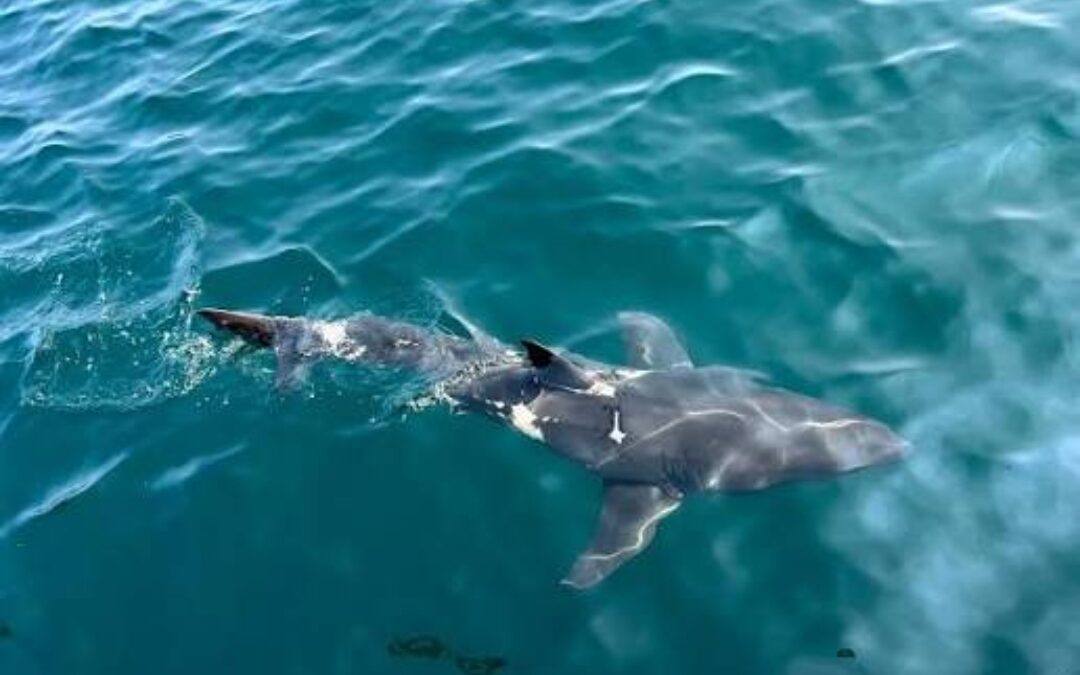
Sharks have always shared the waters off the Jersey Shore, but this summer, they seem to be getting more attention than usual.
From tagged great whites passing offshore to bull sharks and a massive tiger shark caught by anglers, reports of shark activity have made headlines up and down the coast.
In early August, a fishing crew caught and released a tiger shark estimated at roughly 12 feet long and 700 to 800 pounds off Monmouth County, adding to a string of encounters that has sparked both fascination and concern.
The sightings have even prompted debate over shark fishing from Jersey Shore beaches, particularly when anglers use bait to attract large sharks close to shore.
But marine experts offer an important reminder: seeing more sharks does not necessarily mean the Jersey Shore has suddenly become dangerous.
Sharks are native residents and seasonal visitors in New Jersey waters, and the chances of a swimmer being bitten remain extraordinarily small. Researchers with the International Shark Attack File note that shark bites are rare worldwide, with drowning presenting a far greater risk to beachgoers.
Are there really more sharks?
There are signs that shark activity — or at least human awareness of it — is increasing along portions of the Northeast coast.
New Jersey Fish and Wildlife biologist Greg Hinks recently described reports of bull sharks along the coast as unusually frequent, while abundant sand eels, squid and other prey have helped bring marine predators closer to shore. Warmer ocean temperatures can also influence where certain species travel and how long they remain in northern waters.
At the same time, technology has made sharks much easier to spot.
Satellite tags allow the public to follow the migrations of individual great white sharks, while drones, fishing videos and smartphones can turn an offshore encounter into a viral story within minutes. A shark that might once have passed unnoticed can now be photographed, tracked and shared across social media.
That distinction matters. An increase in reported sightings is not automatically evidence of an equal increase in the number of sharks swimming immediately beside crowded beaches.
Shark populations have also benefited from decades of conservation measures and fisheries management after many species were severely depleted by fishing.
For beachgoers, that can actually be viewed as a positive sign: sharks are an important part of a healthy marine ecosystem.
Who is swimming off the Jersey Shore?
New Jersey waters host a surprisingly diverse lineup of sharks, ranging from small, harmless dogfish to some of the ocean’s largest predators.
Smooth dogfish are common in New Jersey’s estuaries and shallow coastal waters and generally grow to around three feet long. Their diet consists largely of crustaceans, squid, shellfish and smaller fish.
Sandbar sharks are another familiar coastal species. They can grow to about eight feet and frequently use bays, harbors and river mouths. Barnegat Bay and Delaware Bay serve as important nursery areas, and sandbars are considered the most commonly encountered toothed shark in New Jersey’s coastal bays.
Then there are sand tiger sharks, which can look intimidating thanks to rows of protruding teeth. Despite their appearance, they are generally considered docile. They can grow to nearly 11 feet and inhabit the surf zone as well as shallow bays and offshore reefs. Delaware Bay may serve as a nursery for the species.
Farther offshore, anglers and boaters may encounter thresher sharks, recognizable by tails that can measure nearly half their body length. Great white sharks also regularly migrate through the region, and scientists have identified the New York Bight — stretching from Cape May to Montauk — as nursery habitat for juvenile whites.
Other occasional visitors include hammerheads, basking sharks, tiger sharks and bull sharks.
A 9-foot, 423-pound tagged great white named Nori was detected between Ocean City and Sea Isle City earlier this season, while this summer’s tiger shark catch near Manasquan drew attention because tiger sharks are typically associated with warmer tropical and subtropical waters.
Shark fishing sparks a shore debate
The conversation surrounding sharks has become especially complicated because some of the summer’s most dramatic encounters have involved recreational anglers rather than unsuspecting swimmers.
Shark fishing is legal under certain conditions, but it is heavily regulated.
New Jersey anglers who recreationally fish for or retain sharks generally need a federal Highly Migratory Species angling permit with a shark endorsement. Regulations also differ among species, and many sharks are prohibited from being targeted or harvested.
If an angler accidentally catches a prohibited shark, state and federal rules require it to be released immediately and in a way that maximizes its chance of survival. Protected species such as sand tiger sharks cannot legally be dragged onto the beach for photographs before being released.
The current controversy centers less on whether shark fishing itself is legal and more on how it is being conducted.
Responsible shark anglers argue that catch-and-release fishing can be conducted safely and legally. But placing large quantities of bait near active swimming areas has understandably raised questions from local officials and residents.
That concern also lines up with general shark-safety recommendations: researchers advise swimmers to avoid areas where people are actively fishing or where bait fish are concentrated.
What about ‘Jaws?’
For New Jersey, any discussion of sharks inevitably comes with a century-old shadow.
In July 1916, a series of shark attacks along the Jersey Shore killed four people and seriously injured another. The attacks became part of American folklore and are often cited as inspiration for Peter Benchley’s novel “Jaws.”
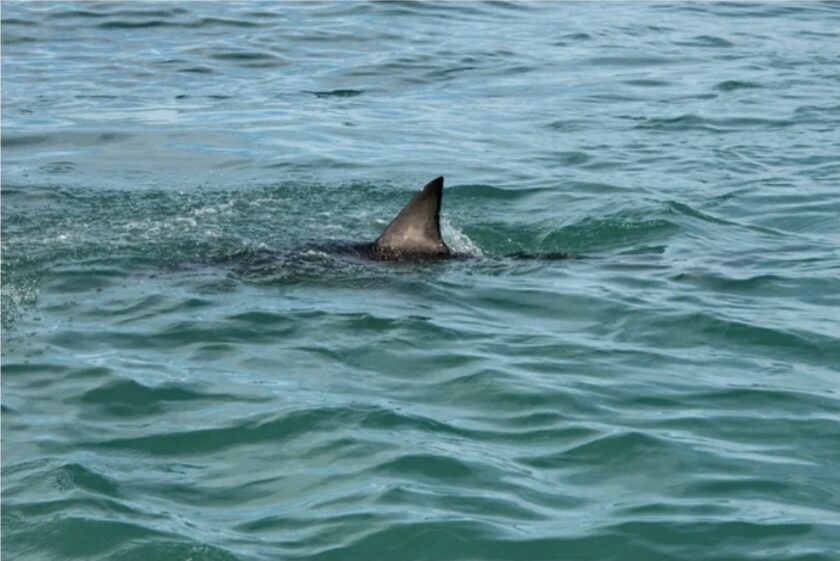
More than a century later, that history can make every dorsal fin feel ominous.
But modern statistics paint a much less dramatic picture.
Shark attacks remain exceedingly rare in New Jersey. One widely reported incident occurred in Stone Harbor in May 2023, when a 15-year-old surfer suffered injuries during an apparent shark encounter.
There were no reported unprovoked shark bites in New Jersey in 2025, according to data referenced by the International Shark Attack File. Globally, researchers recorded 65 unprovoked bites that year, despite billions of visits to oceans and beaches around the world.
In other words, sharks deserve respect — but not panic.
How to swim safely
For anyone who still feels a little uneasy wading past the breakers, shark-safety recommendations are fairly straightforward.
The International Shark Attack File recommends swimming with other people and staying relatively close to shore. Swimmers should avoid dawn and dusk, when many sharks are more actively feeding, and stay away from large schools of bait fish or areas where birds are repeatedly diving into the water.
It is also smart to avoid swimming near active fishing lines or chum, limit excessive splashing and follow any instructions from lifeguards.
If a shark is spotted nearby, swimmers should remain as calm as possible, maintain awareness of the animal and slowly make their way out of the water rather than thrashing or attempting to approach it.
And perhaps the most important rule is one that applies to every ocean hazard: swim at a guarded beach whenever possible and pay attention to lifeguards.
Sharks may command the headlines, but rip currents, waves and ordinary drowning remain much greater dangers to Jersey Shore swimmers.
For most beachgoers, the sight of a shark should be less a sign that something has gone wrong than a reminder of what lies beyond the sand.
The Atlantic Ocean is a thriving ecosystem, not a swimming pool. Sharks have been traveling the waters off New Jersey long before boardwalks, beach tags and umbrellas arrived, and sharing the Shore safely means understanding that we are visitors in their habitat, too.
Sarah Fertsch of Egg Harbor Township holds a Bachelors of Arts in Public Relations. She is a locally renowned poet, storyteller, and dog lover.