
In the back bays of Atlantic and Cape May counties, many boaters will be squeezing in their final fishing trips, sunset cruises and afternoons spent with family and friends.
However, a string of serious boating accidents along the Jersey Shore this summer offers a sobering reminder: A relaxing day on the water can turn dangerous in seconds.
Several high-profile incidents this year have involved collisions, passengers being thrown overboard and emergency airlifts. As boat traffic increases for the holiday weekend, officials are urging people to slow down, pay attention, wear life jackets and leave alcohol out of the captain’s seat.
Memorial Day crash turns fatal
On May 25, a boat carrying six people struck a channel marker in Barnegat Bay near Long Beach Island, according to New Jersey State Police. Two occupants were ejected from the boat and critically injured. The other four people aboard suffered minor injuries.
One of those thrown from the vessel, 28-year-old Gunnar Pearson of Barnegat, later died from his injuries.
At the time, investigators had not announced what caused the crash. Witnesses told news outlets that visibility on the bay had been poor and foggy around the time of the collision.
Nearly three months later, the case took another turn. State Police charged Pearson’s mother, 59-year-old Jennifer Pearson, in August, alleging that she was operating the boat while intoxicated when it struck the marker.
She has been charged with death by vessel, operating a vessel under the influence, reckless operation, operating without a Boating Safety Certificate and failure to maintain a proper lookout. She was released following a detention hearing Aug. 21 as the case proceeds through court.
The charges are allegations, and Pearson has not been convicted.
The case underscores a basic principle that applies just as much on the water as it does on the road: The person behind the wheel needs to remain sober, alert and focused.
Alcohol is the leading known contributing factor in fatal recreational boating accidents nationwide. In the Coast Guard’s 2024 statistics, it was the leading factor in 20% of boating deaths where a primary cause was known.
Collision offshore prompts Coast Guard rescue
Another serious accident occurred July 31.
Two boats carrying a total of four people collided roughly 10 miles offshore shortly before 11:30 a.m., prompting a mayday call and response from the U.S. Coast Guard.
One person suffered injuries to the head and arm and was airlifted to a hospital. Coast Guard crews deployed both a rescue boat and helicopter, while the damaged vessels were eventually towed to a marina.
New Jersey State Police later said the crash involved a group of divers whose vessel was anchored above a shipwreck and a 33-foot fishing boat traveling about 25 knots on autopilot. One injured diver was flown to a hospital after the collision.
The incident illustrates why a proper lookout remains essential even when a boat is equipped with modern navigation systems. Autopilot, GPS and other technology can assist an operator, but they do not eliminate the need for someone to actively watch the water ahead.
Safety starts before leaving the dock
Fortunately, most days on New Jersey’s waterways end exactly as they should — with everyone returning safely to shore. Preparation can help keep it that way.
Before heading out, the New Jersey State Police Marine Services Bureau recommends checking the weather, making sure necessary safety equipment is aboard, wearing life jackets while underway and abstaining from alcohol while boating.
Boaters should also make sure someone on land knows where they are going and approximately when they plan to return. A simple float plan can include the names of passengers, a description of the boat, the departure location, destination and expected return time. If the boat never returns, that information can give rescuers an important head start.
Weather deserves special attention at the Shore, where conditions can change quickly. Fog can dramatically reduce visibility, while summer thunderstorms can bring lightning, strong winds and rough water. If thunderstorms threaten while you’re on the water, emergency officials recommend getting to land as quickly as possible.
Put the life jacket on
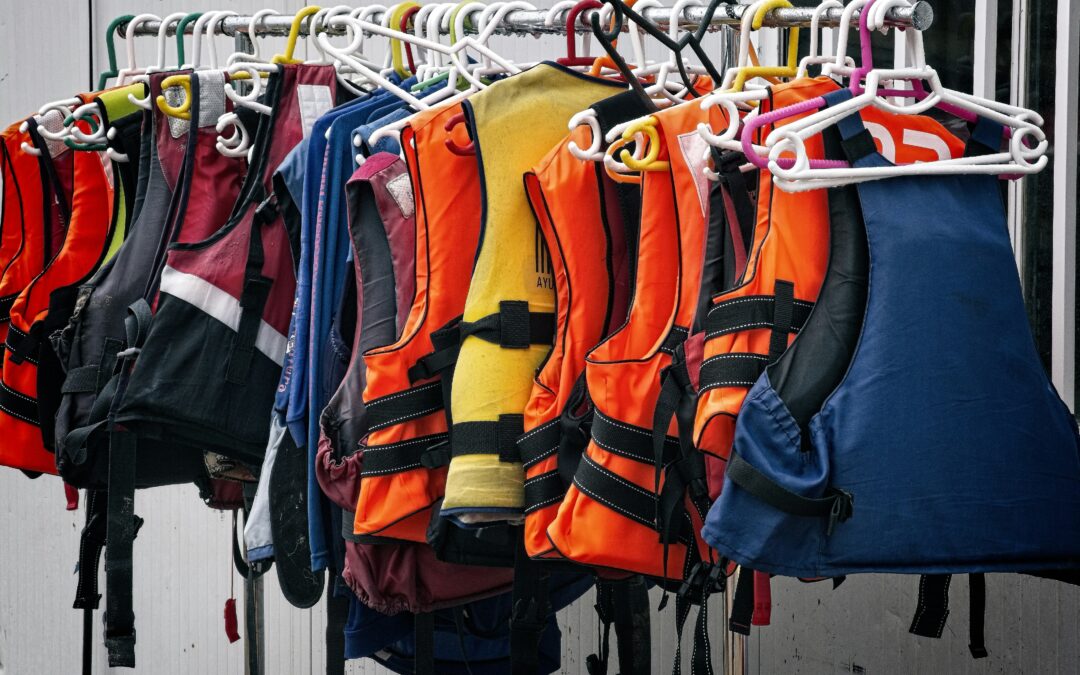
Having enough life jackets aboard the boat is important. Wearing them is even better.
The U.S. Coast Guard found that 76% of fatal recreational boating accident victims whose cause of death was known in 2024 drowned. Among drowning victims whose life-jacket use was known, 87% were not wearing one.
New Jersey requires boats to carry a properly sized, Coast Guard-approved wearable personal flotation device for everyone aboard. Requirements vary by vessel, but boats 16 feet or longer generally must also carry an immediately accessible throwable flotation device. Children age 12 and younger must wear an approved life jacket while the vessel is underway unless they are inside an enclosed cabin.
A life jacket should fit snugly and be appropriate for the wearer’s size. For children, State Police recommend testing the fit before leaving the dock rather than discovering a problem once an emergency is underway.
Slow down when the waterways get crowded
Labor Day weekend can bring significantly more traffic to bays, rivers and inlets. More boats mean less room for error.
Operators should maintain a safe speed for the conditions and keep a constant lookout for other boats, personal watercraft, paddlers, swimmers, channel markers and other hazards.
New Jersey law requires vessels to slow to “slow speed/no wake” in a number of circumstances, including when passing within 200 feet of marinas, docks and piers and while traveling through certain narrow lagoons, canals and bridge openings.
Even when a posted speed restriction isn’t present, operators are responsible for adjusting their speed when congestion, poor visibility, waves or other conditions make faster travel unsafe.
That becomes especially important around inlets and channels, where currents can be strong and boats of dramatically different sizes may be sharing a relatively small space.
Know the rules before taking the helm
New Jersey generally requires operators of power vessels to complete an approved boating safety course and possess a Boating Safety Certificate. Out-of-state visitors staying in New Jersey for less than 90 days may meet the requirement with an accepted safety certificate or proof of an approved course from their home state.
Operating a boat while impaired is also illegal. New Jersey considers a blood-alcohol concentration of .08% or greater legally intoxicated for operating a vessel, just as it does for driving.
For a holiday weekend barbecue on the water, the safest approach is simple: designate a sober operator from the beginning and keep that person sober for the entire trip.
A boating checklist Before leaving the dock:
- Check the marine forecast and continue monitoring changing conditions.
- Make sure every passenger has a properly fitted, Coast Guard-approved life jacket — and encourage everyone to wear it.
- Keep children 12 and younger in their life jackets while underway.
- Confirm that navigation lights, sound-producing devices, distress signals and other required equipment are working.
- Carry a charged phone or marine radio for emergencies.
- Tell someone on shore where you’re headed and when you expect to return.
- Assign a sober operator.
- Keep a dedicated lookout rather than relying solely on GPS, radar or autopilot.
- Slow down near docks, marinas, swimmers and congested waterways.
- Pay close attention to channel markers and navigational aids.
- Give other vessels plenty of room and avoid sudden course changes.
- If visibility deteriorates or storms approach, slow down or head for shore.
The Coast Guard recorded 3,887 recreational boating incidents nationwide, resulting in 556 deaths and 2,170 injuries.
Those numbers shouldn’t discourage people from enjoying the Shore’s waterways. They should reinforce how much responsibility comes with taking the helm.
The goal isn’t to squeeze every possible minute out of summer. It’s to make sure everyone aboard gets another summer on the water next year.