
Pass it Down: Family Favorites
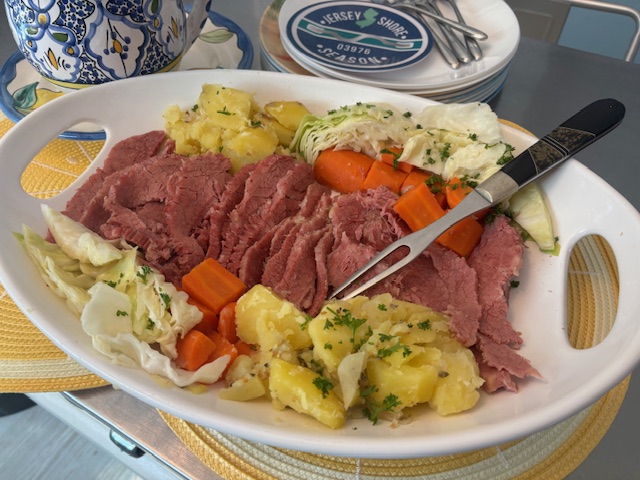
One of the great pleasures of living in the American melting pot is getting to share in each other’s traditions. St. Patrick’s Day is a perfect example. Across the country, people of many backgrounds sit down to a plate of corned beef and cabbage – the hearty Irish-American meal that has become the holiday’s signature dish.
For me, corned beef carries another meaning, too. As a Jewish American, it’s firmly rooted in my own food memories.
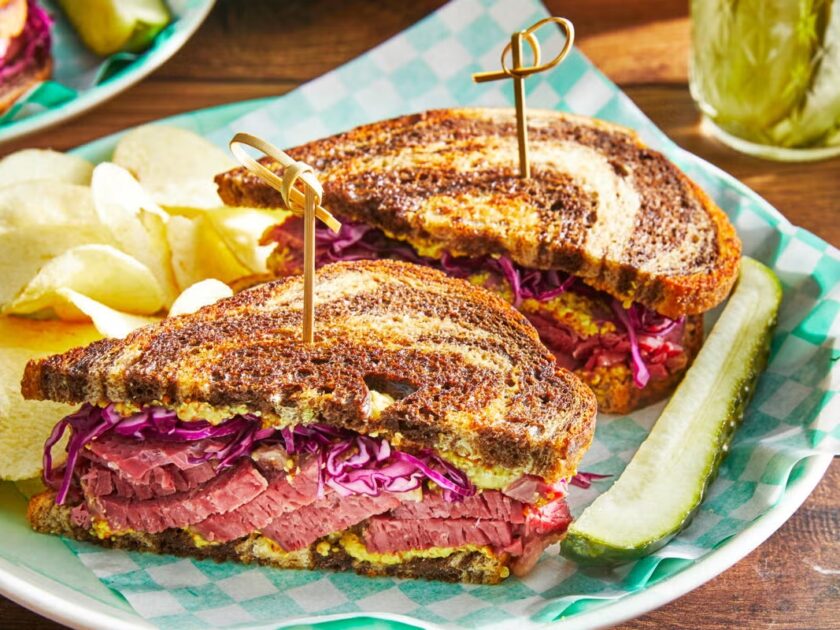
During my teenage years working four summers at Lou’s of Ventnor, I must have served thousands of deli classics – towering, corned beef sandwiches on rye, piled high with coleslaw and Russian dressing. We waitresses (no one was a server in the 1970s) wrote “CBR Slaw Russian” on our order pads. At the time I never thought much about how the same cured brisket that defined Jewish deli culture, also anchored the most Irish of American holiday meals.
Each year I take advantage of the corned beef that begins appearing at bargain prices in supermarkets toward the end of February. I make the traditional corned beef and cabbage in honor of our Irish-American neighbors and their history. Then the leftovers begin their second act – sliced thin and piled high on rye for lunches, or even dinner later in the week.
An Irish-American creation
While many people assume corned beef and cabbage comes straight from the Emerald Isle, the version we celebrate every March is an Irish-American creation.
In Ireland, the traditional pairing was bacon and cabbage. Pork was far more common and affordable than beef. Salted pork simmered with cabbage and potatoes was a familiar meal; beef, on the other hand, was expensive and often reserved for export.
A meeting of food traditions
When large waves of Irish immigrants arrived in American cities in the mid-1800s, many settled in neighborhoods alongside Eastern European Jewish immigrants. Jewish butchers and delicatessens specialized in cured brisket – corned beef. The name “corned” refers to the large grains, or “corns,” of salt used in the curing process.
For Irish immigrants looking to recreate the comforting boiled dinners they remembered, corned beef proved to be a flavorful and affordable substitute for the pork they had used back home. Slowly simmered with cabbage and potatoes, the result felt both familiar and new – an Irish-American dish inspired by the food traditions of their Jewish neighbors.
Over time, corned beef and cabbage became firmly associated with Irish-American celebrations, especially St. Patrick’s Day.
One brisket, two traditions
Corned beef lives comfortably in two culinary worlds. On March 17 it anchors the classic Irish-American dinner of corned beef and cabbage. The next day, those same leftovers may find their way onto rye bread – piled high with coleslaw and Russian dressing in the style of a Jewish deli sandwich.
For me, that second act is almost as good as the first.
In a country built by immigrants, perhaps that’s the best recipe of all: one brisket, two traditions, and a delicious reminder that some of America’s most beloved dishes are the result of cultures meeting at the table.
Jersey Shore Twist: Beer-Braised Corned Beef and Cabbage
Around the Jersey Shore, many home cooks add a bottle of beer to the pot when making corned beef and cabbage – often a dark Irish stout – giving the broth and vegetables a deeper, richer flavor.
Ingredients
- 3-4 lbs. corned beef brisket with spice packet
- 1 bottle beer (lager or stout)
- 4 cups water
- 1 onion, quartered
- 3-4 carrots, cut into chunks
- 1½ lbs. small red or Yukon gold potatoes
- 1 small head cabbage, cut into wedges
Directions
Place the corned beef in a large pot or Dutch oven. Add the spice packet, onion, beer and enough water to cover the meat.
Bring to a boil, then reduce the heat and simmer gently, covered, for about 2½ to 3 hours, until the beef is fork-tender.
Add the potatoes and carrots and cook for 15 minutes. Add the cabbage wedges and continue cooking another 10-15 minutes, until the vegetables are tender.
Remove the corned beef and let it rest for about 10 minutes before slicing. Cut the meat against the grain and serve with the cabbage, potatoes and carrots, spooning some of the flavorful broth over the top.
Leftover corned beef is perfect for sandwiches on rye with coleslaw and Russian dressing.
Prefer to celebrate at the pub?
If you’d rather leave the cooking to someone else, several Jersey Shore pubs and taverns will be serving corned beef and cabbage for St. Patrick’s Day.
Atlantic County
- Josie Kelly’s Public House – 908 Shore Road, Somers Point, 609-904-6485
- The Irish Pub – 164 St. James Place, Atlantic City, 609-344-9063
- Fitzpatrick’s Deli & Steakhouse – 650 New Road, Somers Point, 609-653-8155
- The Anchorage Tavern & Restaurant – 823 Bay Ave., Somers Point, 609-926-1776
Cape May County
- Delaney’s Irish Pub – 400 Washington St., Cape May, 609-884-1879
- O’Donnell’s Pour House – 3915 Landis Ave., Sea Isle City, 609-263-5600
- The Bellevue Tavern – 7 S. Main St., Cape May Court House, 609-463-1738
For each petal on the shamrock, this brings a wish your way: good health, good luck and happiness, for today and every day. May your table always be full – and the leftovers even better the next day.
Lisa is an advertising copywriter (think “Mad Men” without the men), journalist and columnist. Claim to fame: Lou’s waitress for four teenage summers – where corned beef on rye was practically a food group. For column comments, story ideas, or to get on her “quote list” for future columns: redshoeslzs@gmail.com.