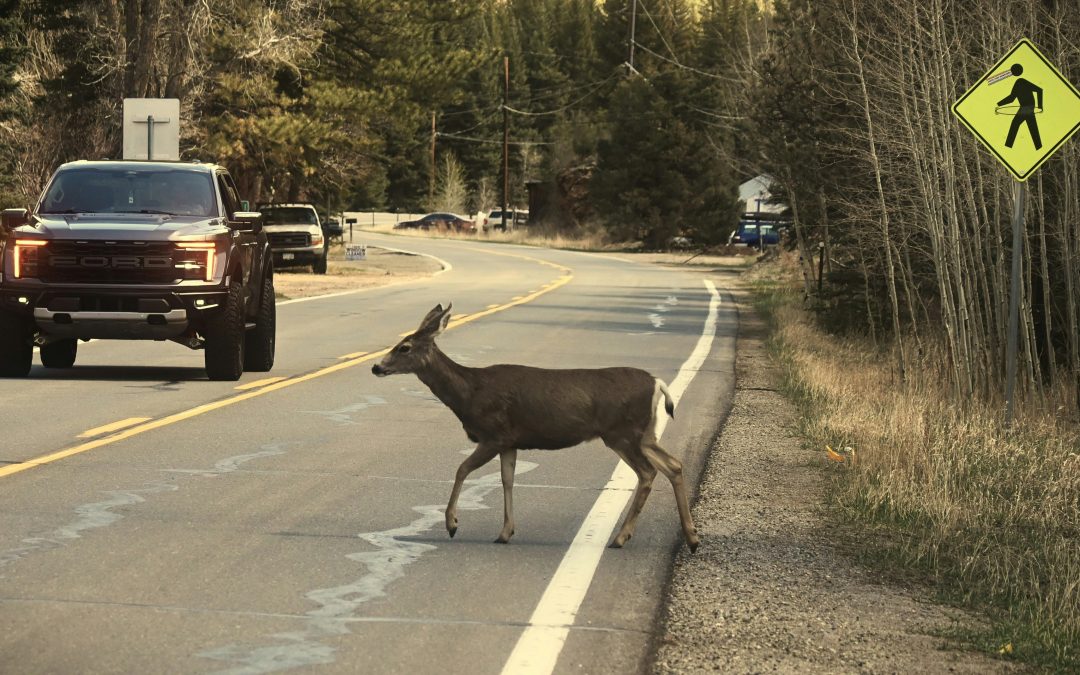
It’s mating season, and deer are on the move. For motorists, that means an increased risk of unexpected encounters on the road.
A recent analysis of New Jersey Department of Transportation crash records found that Galloway leads Atlantic County in police-reported animal-vehicle collisions, with 183 crashes recorded between 2023 and 2024. That’s nearly one-quarter of the county’s 767 reported incidents during the two-year period.
The findings, published by Injuries Cases Autos, highlight a seasonal hazard that becomes especially dangerous as daylight hours shorten and deer enter their annual mating season.
Galloway’s 183 crashes were followed by Egg Harbor Township with 143, Hamilton Township with 140, Mullica Township with 85 and Hammonton with 52.
In Galloway, animal-related collisions accounted for 11.4% of reported traffic crashes, compared with 4.8% countywide.
Although the records classify these incidents as animal-related rather than exclusively deer collisions, white-tailed deer are a major concern during fall.
Why Galloway?
Galloway’s geography may help explain why it tops the list.
As one of New Jersey’s largest municipalities by land area, Galloway encompasses residential neighborhoods, forests, wetlands and major highways. Its proximity to the Pine Barrens provides abundant wildlife habitat, while roads intersect areas where deer travel, feed and seek shelter.
Wooded roadways such as the White Horse Pike, Jimmie Leeds Road and Moss Mill Road create opportunities for deer to emerge suddenly from roadside vegetation.
The Garden State Parkway was identified as Atlantic County’s leading roadway for animal-related crashes, with 58 recorded during the study period.
Galloway’s size also matters. More roadway miles and significant traffic may naturally produce more collisions than in smaller communities. The figures represent total reported crashes, not the likelihood of encountering wildlife on any particular trip.
November is the most dangerous month
Autumn marks deer mating season, commonly called the rut. Bucks travel more frequently in pursuit of does, often crossing roads without warning.
According to the New Jersey Department of Environmental Protection, peak mating season typically extends from mid-October through mid-December.
Increased deer movement coincides with shorter days and the end of daylight saving time, placing more commuters on roads during limited visibility.
Atlantic County’s statistics reflect that pattern. Of 767 animal-related crashes recorded in 2023 and 2024, 285 occurred during October and November, approximately 37% of the total.
November led with 172 crashes, followed by October with 113.
The study identified 5 to 6 p.m. as the most dangerous hour during those months. Nearly 62% of October and November incidents occurred in darkness.
The consequences can be serious. According to the analysis, 39 animal-related crashes in Atlantic County involved injury or death.
Can collisions be prevented?
Transportation planning and wildlife management may help reduce collisions.
Identifying crash hotspots could allow officials to target dangerous roadways with warning signs, improved roadside visibility and other safety measures.
Federal Highway Administration research has found that properly installed wildlife fencing can significantly reduce animal-vehicle collisions, particularly when combined with wildlife underpasses or overpasses. However, such projects require substantial funding and planning.
For Galloway, immediate measures could include reviewing high-risk road segments, managing roadside vegetation and increasing awareness during peak deer activity.
New Jersey Fish & Wildlife also manages deer populations through regulated hunting and other measures, balancing ecological concerns and public safety.
Although collisions cannot be eliminated entirely, understanding where and when they occur can help officials prioritize improvements.
How drivers can protect themselves
The New Jersey Department of Environmental Protection and Department of Transportation recommend several precautions:
- Slow down at dawn and dusk. Deer are especially active during early morning and evening hours.
- Watch roadsides. Scan wooded shoulders, fields and vegetation for movement.
- Expect more deer. Deer frequently travel in groups. Others may follow the first across the road.
- Use high beams appropriately. Improve visibility on dark roads, but dim headlights for approaching traffic.
- Avoid swerving. Brake firmly while maintaining control. Swerving can cause more serious collisions.
- Heed warning signs. Deer-crossing signs identify areas where wildlife encounters are a concern.
- Report collisions. Move somewhere safe, contact law enforcement and never approach an injured deer.
Sharing roads with wildlife
For Galloway residents, deer encounters are a familiar part of life. The forests and natural spaces that make the region beautiful also provide important wildlife habitat.
But when development, traffic and animal movement intersect, those encounters can become dangerous.
The latest figures remind motorists that wildlife collisions aren’t limited to remote country roads. Even familiar neighborhood routes can become hazardous when deer unexpectedly enter traffic.
For South Jersey drivers, the message is simple: Stay alert, slow down near wooded areas and remember that the next deer may be just beyond your headlights.
Sarah Fertsch of Egg Harbor Township holds a Bachelors of Arts in Public Relations. She is a locally renowned poet, storyteller, and dog lover.