
By Meteorologist Joe Martucci
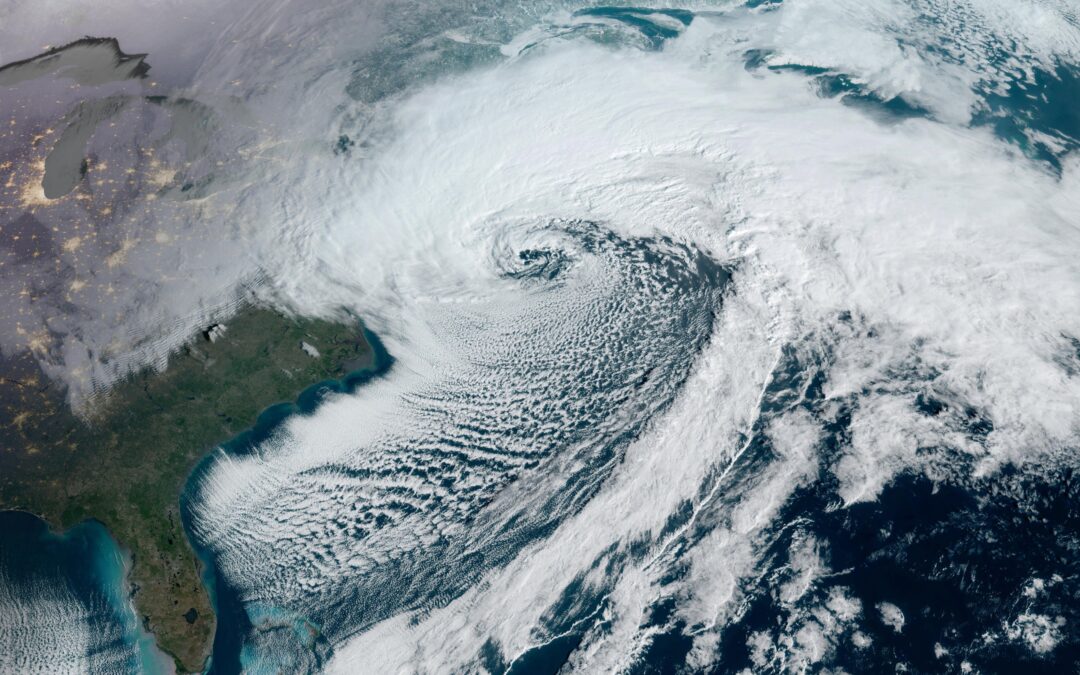
Just as a generational run of snowcover was starting to go away, a fresh nor’easter piled near historic snow amounts onto our lawns, beaches, cars and streets Feb. 22-23.
While nor’easters at the Jersey Shore are feared most for their tidal flooding, it was the snow that was most impactful this time.
Nearly everywhere at the Jersey Shore had double-digit snow reports. Atlantic City International Airport picked up 16.9 inches of snow over the two-day stretch, according to the National Oceanic and Atmospheric Administration (NOAA). It was the biggest snowstorm this late in the winter season since records began in 1943, and the sixth largest two-day snowfall. Other Jersey Shore totals, measured in inches, included:
Cape May County
- Ocean City: 16.0
- Lower Twp.: 12.5
- North Wildwood: 8.7
Atlantic County
- Mays Landing: 19.0
- Somers Point: 18.2
- Egg Harbor Twp.: 18.0
- Minotola: 17.0
- Buena Vista Twp.: 16.5
- Egg Harbor City: 15.3
- Hammonton: 10.7
Ocean County
- Jackson: 25.2
- Lakewood: 24.0
- Toms River: 22.0
- Lakehurst: 21.8
- Manahawkin: 19.0
- Brick: 18.5
- Ship Bottom: 18.0
- Lanoka Harbor: 17.0
- Tuckerton: 17.0
Monmouth County
- Marlboro: 26.5
- Middletown: 25.0
- Freehold Twp.: 25.0
Wind Speeds
- Atlantic City International Airport: 61 mph
- Cape May: 58 mph
- Tuckerton: 56 mph
- Harvey Cedars: 54 mph
- Pleasantville: 53 mph
Looking at statewide totals, this ranks as the third snowiest storm on record for New Jersey, according to Don Colgan, author of “Historic Winter Storm of New Jersey.” It wasn’t just a nor’easter; it was a bomb cyclone, as the National Weather Service confirmed after it rapidly intensified through a process known as bombogenesis.
While sources vary, this storm saw a roughly 40 millibar drop in air pressure between Sunday morning and Monday morning. You need at least a 24-millibar drop in air pressure within 24 hours to be a “bomb.” This is the hallmark of a strong nor’easter.
It achieved that and then some. It even generated its own cold air.
It was mild in the days leading up to the nor’easter. High temperatures on Feb. 20-21 – Friday into Saturday – were in the upper 40s to low 50s. Even Sunday morning, temperatures were 35 to 40 degrees, and it was raining.
Then, as the storm underwent bombogenesis, there was a large amount of upward motion and air expansion. As the air expands, fewer molecules bump into each other, and you get cooling. In other words, it cooled down and rain turned to snow.
Temperatures hung on above freezing, with snow late Sunday afternoon not sticking much to roads and sidewalks. That happened later than I expected.
But once the sun set, temperatures sank below 32 and snow accumulated rapidly.
Light rain fell along the South Jersey Shore on Sunday night and Monday, but that was not often and the northern part of the shore stayed locked in as snow.
A multi-state ‘mega band’ of snow
The 15-inch or greater totals in most of Atlantic County and points north at the coastal counties were helped by heavy snow that fell for hours Monday morning.
The nor’easter generated two large bands of snow. We had the western one, which extended from western Massachusetts to the Hudson Valley and down the Garden State Parkway to Atlantic County.
If you were in it, you had snowfall rates of 1 to 2 inches per hour. It was roughly from around 2 a.m. to 10 a.m. So, if you do the math, that adds up.
While the storm underperformed my forecast Sunday afternoon, it made up for it Monday morning.
For what it’s worth, the eastern band was responsible for bringing Rhode Island’s largest snowstorm on record – 37.9 inches of snow fell in Providence, according to WPRI-TV and other outlets.
The snow was very wet
The amount of precipitation that fell during this event ranged from 1.7 to 2.3 inches. We had a lot of snow, but a lot of liquid as well.
In New Jersey on average, 11 inches of snow falls for every inch of liquid. This was lower.
Woodbine likely had 18 inches of snow on 1.97 inches of liquid, according to the Community Collaborative Rain Hail and Snow Network (CoCoRaHS). That’s a snowfall ratio of roughly 9:1.
At Atlantic City International Airport, 16.9 inches of snow occurred with 1.97 inches of liquid. That’s a snow ratio of 8.6:1.
You noticed it. The snow was very hard to shovel or snowblow, and not just because of the amount. The snow stuck to my narrow windshield wipers. If the snow was fluffy, that wouldn’t happen.
Drought concerns ease with this storm
The 1.7 to 2.3 inches of liquid brought February’s precipitation back to average. That was much needed and reduced the risk of worsening drought going into wildfire season. New updates from the United States Drought Monitor come out on Thursdays.
Additional precipitation on Feb. 25 and Feb. 26 helped things further, too.
Probably the windiest snowstorm in decades
Atlantic City International Airport reported a 61 mph wind gusts at 3:13 a.m. Monday, Feb. 23. The National Weather Service said no major snowstorm or blizzard since 1978 had a gust as high as this one.
The most Sunday snow (almost)
It may have taken divine intervention, but with 6.9 inches of snow at ACY Airport on Feb. 22, this winter is now tied with 2005-2006 for the winter with most Sunday snow on record.
With a brutally cold shot of air expected to begin in March, it’s still possible that 2025-2026 could claim the top spot for itself. Who said Sunday was a day of rest?
Joe Martucci, a Certified Broadcast Meteorologist and Digital Meteorologist, is the President and Director of Meteorology for Cup A Joe Weather and Drone. You can connect with him at cupajoe.live.