
As one of North America’s most historic arenas, Boardwalk Hall has hosted countless concerts and sporting events, the 1964 Democratic National Convention and the Miss America pageant. The venue even marked the first indoor helicopter flight when a Bell Jet Ranger flew inside the 13-story auditorium with Miss America 1971 Phyllis George aboard. Before modern renovations, the arena could seat 41,000 people.
Guests arriving by escalator and walking along the concourse and arena floor get only a glimpse of the building’s architectural grandeur and magnificent ceiling, which is often illuminated with colorful lights. But there is much more to Boardwalk Hall than visitors may realize.
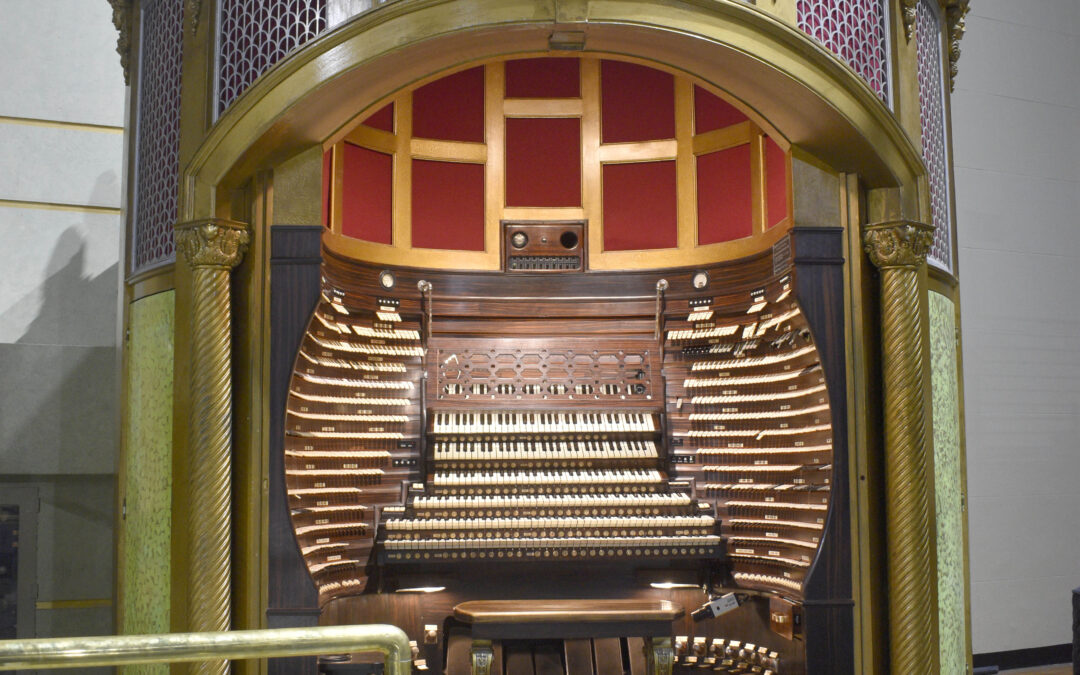
It is also home to the world’s largest pipe organ.
Construction began in 1929 on what would become the world’s largest musical instrument, designed by New Jersey state Sen. Emerson Lewis Richards. The organ was built by the former Midmer-Losh Organ Co., based in Merrick, New York. The company produced more than 40 theater organs during the 1920s, when organs commonly accompanied silent films and were standard features in many arenas. The instrument was completed in 1932.
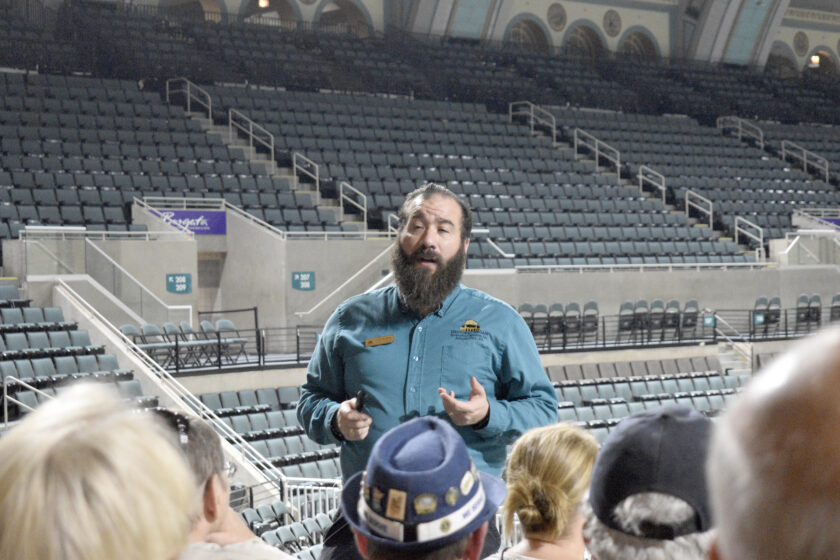
Scott Banks, membership and events coordinator for the Historic Organ Restoration Committee, said one of the initial challenges was filling the arena’s more than 5.5 million cubic feet with sound
“Human bodies absorb a lot of sound; the instrument was built in the size and scale to accommodate the original capacity,” Banks said.
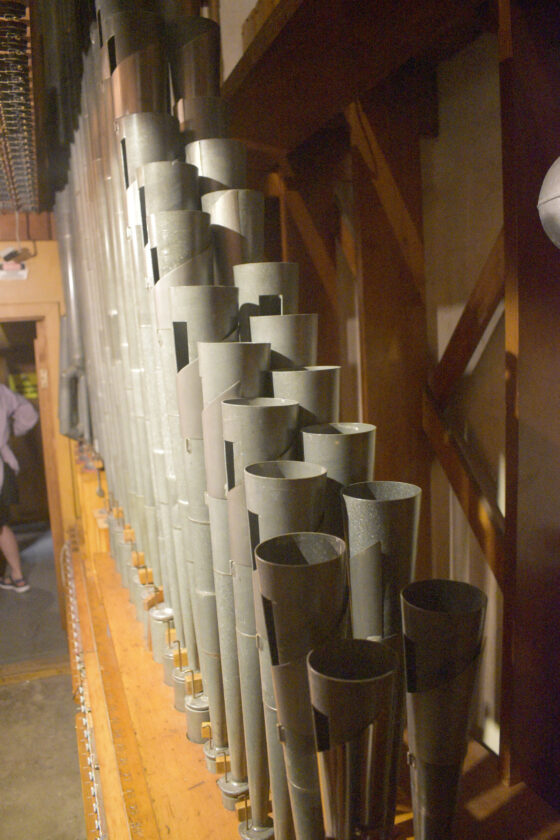
What makes the organ unique is its enormous size. It is housed in eight chambers, with two positioned on each side of the proscenium arch near the stage. About half of the organ’s pipes are located along each side of the arena. Two additional chambers sit along the first arch closest to the stage.
All 33,112 pipes are controlled by a seven-manual console on the right side of the stage. The console has 1,235 stop tabs that control the organ’s 449 ranks, or voices. Whether heard during a recital, concert or sporting event, the organ’s powerful sound is difficult to ignore.
Although sound takes about a quarter of a second to travel from one end of the arena to the other, Banks said the organist has the worst seat in the house.
“The sounds from the front right stage chamber are instantaneous, but it’s nearly a third of a second before you hear what the left chamber has voiced,” he said.
Throughout the instrument’s long history, many well-known musicians have toured or played it. Scott Price, Celine Dion’s musical director, performed Bach’s “Toccata and Fugue in D Minor” on the organ. Beyoncé was photographed sitting at the console before her sold-out Boardwalk Hall show in 2013.
Page McConnell, keyboardist for Phish, toured the instrument when the band performed at Boardwalk Hall in 2023. Phish is scheduled to return for a three-night run in October. Although there is no official word on whether the organ will be used during the shows, Banks is hopeful.
“If they’d like to just experience the instrument, of course we’ll be ready for that, or if they want to use it as part of their concert, they’re more than welcome to do that too,” he said.
Many people may not realize that Boardwalk Hall houses two pipe organs. The Adrian Phillips Theater is home to a magnificent W.W. Kimball organ. Completed in 1930, it was officially dedicated May 25 of that year and was originally designed to provide musical accompaniment for silent films. It has 55 ranks of pipes and is controlled from a four-manual console above the theater’s main entrance.
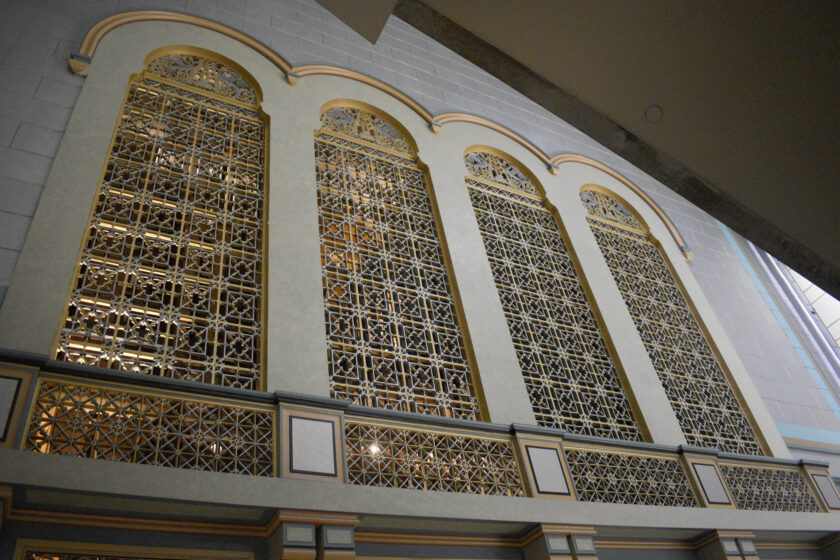
Those hearing the instruments for the first time may think they are listening to an entire symphony. Both organs can produce a wide range of musical styles and sounds, creating an immersive experience that can be described only as breathtaking. Hearing the instruments played live is a treat not only for organ enthusiasts but for anyone who appreciates the power and emotion of music.
The Historic Organ Restoration Committee has worked diligently to return the massive Midmer-Losh organ to its former glory. As of September 2026, the organ is nearly 50% restored and 64% playable. Banks said the next major step will come next year, when the two center galleries on the right side of the arena become operational.
“That’s going to bring us to about 70% operational,” he said.
Restoring the world’s largest pipe organ is no easy task. The project is being led by nearly a dozen volunteers who contribute their time, skills and expertise. From assistants to technicians, each volunteer is dedicated to bringing this remarkable instrument back to life.
The organ has grown in popularity in recent years, thanks in large part to social media. Anna Lapwood, official organist of London’s Royal Albert Hall, performed at Boardwalk Hall in May before a crowd of 6,000. Her appearance generated an estimated $2 million in local economic impact.
“Now that word is getting out to the public, it’s showing us that we’ve been on the right path the entire time, so that is a big benefit,” Banks said.
The Historic Organ Restoration Committee hosts its Curator’s Tour every Wednesday at 10 a.m., taking guests on a guided journey inside the massive instrument. Tours will continue through December, but preregistration is required.
To learn more about the committee’s initiatives, purchase tour tickets or make a donation, visit boardwalkorgans.org. Updates on the restoration are also available at facebook.com/BoardwalkOrgans.
Steffen Klenk is a photographer and multimedia journalist who enjoys capturing the eclectic moments of shore life. You may contact Steffen at shorelocalsteffen@gmail.com.