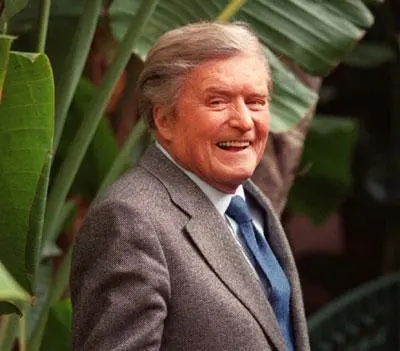
Merv Griffin was not the only famous, television talk show host to have an interest in Atlantic City. Though he didn’t own a Boardwalk hotel/casino ala Griffin, the popular, Philadelphia-based talk show host Mike Douglas spent a good deal of time in Atlantic City during the years 1965 to 1978 when his gabfest was broadcast from Philadelphia.
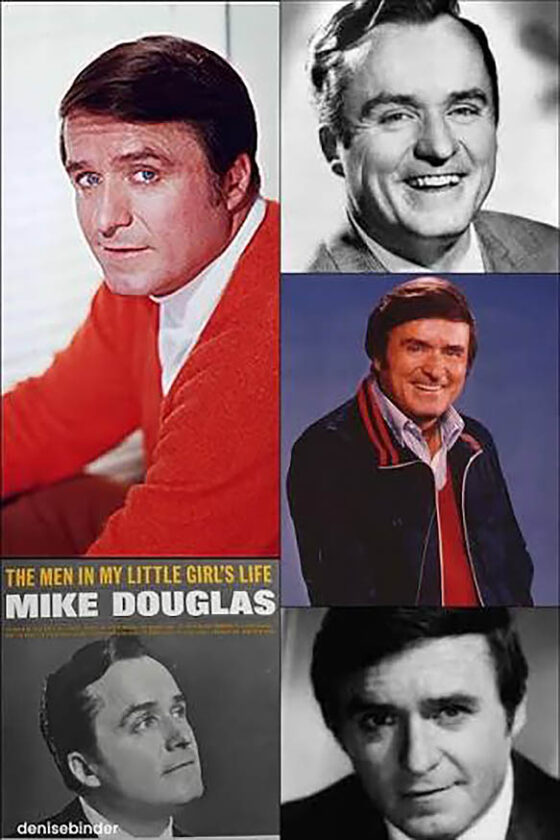
Douglas was a popular and frequent headliner at the Steel Pier and he always drew a large audience, helped in no small measure by a semi-hit record, “The Men in My Little Girl’s Life,” released in 1966. Though the Douglas program relocated to Hollywood in 1978, the show was broadcast live from Atlantic City at least once, shortly after gambling was legalized.
Given the time frame, the Douglas producers were unfortunately unable to draw on the immense, big-name talent pool that eventually performed on Atlantic City hotel/casino stages post-1978, so the show’s talent coordinators not only drew talent from neighboring New York City, but from the Steel Pier’s stable of visiting acts. In the first year that Douglas broadcast from Philadelphia, more than a dozen Pier headliners made the trip on the AC Expressway to the 1619 Walnut Street television studios in Philadelphia to guest on the Douglas show. Some of those names included Gene Krupa, Bobby Rydell, Sam the Sham and the Pharoahs, Peggy King, Billy Eckstine, the comedy team of Allen and Rossi, Frankie Avalon, The Four Preps, Jerry Vale, Al Martino, Eddie Fisher, and jazz organist Jimmy Smith, likely appearing at Club Harlem or Grace’s Little Belmont in Atlantic City at the time. Douglas’ association with the Steel Pier was so close, that he invited the Pier’s entire show band to be a guest on his talk show in 1973.
Douglas’ pre-talk show career was checkered. He stayed with popular swing bandleader Kay Kyser until 1951, long after the swing era days were over. From there, he hosted television shows based in Chicago, performed as a singer in various nightclubs on the West Coast, and even got a one-shot job with the Disney organization. In 1950, Douglas provided the singing voice for Prince Charming in the Disney picture, “Cinderella.” His first stint as a talk show host took place in Cleveland in 1961. The afternoon program became so popular locally, that it went into syndication in 1963 by way of Westinghouse Broadcasting.
Two years later, as a result of Westinghouse Broadcasting’s transfer of television operations from Cleveland to Philadelphia, the Mike Douglas Show debuted from the 1619 Walnut Street studios on August 30, 1965.
Douglas was perfect for afternoon talk television. He was a decent and attractive-looking singer and an affable host who, from time to time, did not shy away from booking controversial guests. Possibly the most surprising and controversial of all happened in 1972. That was the week that John Lennon and Yoko Ono were co-hosts for the entire week, and were given free reign by the Douglas producers to bring on any guests they chose. Some of John and Yoko’s guests that week included Chuck Berry, Ralph Nader, Jerry Rubin, Bobby Seale, and George Carlin.
The host was making more than $2 million per year at the program’s peak, and the show, in 1967, won the first Emmy Award given for “Individual Achievement in Daytime Television” in 1967. Despite the money and the award and the fact that the show was being telecast to more than six million viewers each day on 171 television stations, not everyone had a high opinion of Douglas’ talents.
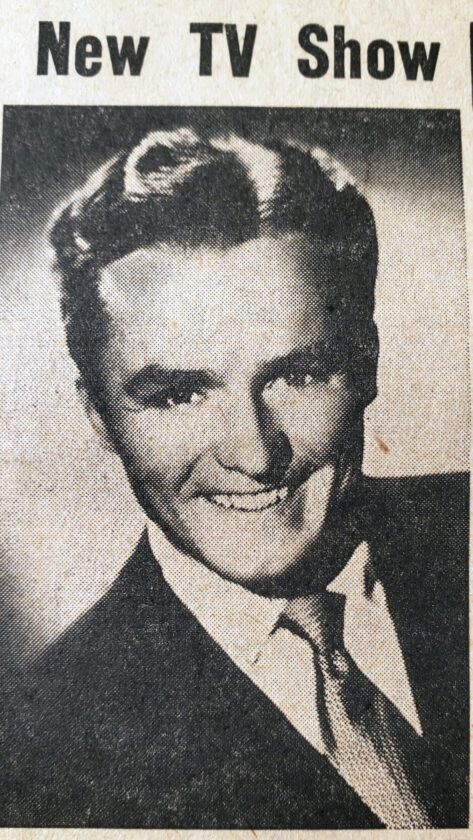
Other than singing the National Anthem at a Phillies baseball game and Flyers hockey game, he was often criticized for not being more a part of Philadelphia culture. Broadcaster Jerry Blavat, of “Memories in Margate” fame, was a frequent Douglas show guest, and was often called at the last moment to sub, on-air, for a guest who cancelled. But Blavat’s opinion of Douglas was blunt.
In his book, “You Only Rock Once,” written five years after Douglas’ passing in 2006, Blavat wrote, “Because he couldn’t ad-lib to save his ass, Douglas’s producers wrote the questions down for him on cue cards, and he was particularly helpless when he had a guest that he didn’t know. People from the world of rock and roll threw him for a loop, and he never varied from the questions that were written down. I used to sit there and think, ‘God bless him, if the public only knew what a dunce this guy is, he’d be dead in the water.’” The Geator also wrote that Douglas was miffed that Blavat was asked to sit next to Sammy Davis, Jr. at Davis’ wedding party. Douglas felt that he, rather than Blavat should have been seated next to Davis, as he was a bigger star than Blavat. Jerry never appeared again on the Douglas show after that incident.
It’s a shame the Douglas show didn’t stay in the Philadelphia to take advantage of the tremendous Atlantic City hotel/casino talent pool. Instead, the powers-that-be moved the program to Los Angeles in 1978. Ratings were dropping, but the show managed to stay on the air until 1981. Singer John Davidson replaced Douglas using the same format, but that didn’t last a year.
Mike Douglas passed on August 11, 2006. In that his nationally-broadcast television show had been off the air more than two decades at the time of his death, he was, sadly, pretty much forgotten by then. An essay written for The Chicago Tribune not long after his death wasn’t particularly kind, even though Douglas spent his early days in Chicago:
“Mike Douglas died last week,” said the Tribune. “As a second-tier, syndicated talk show host from an already distant past, his name will mean little or nothing to most anyone under age 45. And even as someone old enough to have watched him, my first thought on being told that he had passed away was of Michael Douglas, son of Kirk. I initially thought it was that Mike Douglas who died. Though by any reckoning an enormous success in his time — large audience, multiple Emmys, high pay — Douglas faded quickly from cultural memory.”
Sad. But true.
Bruce Klauber is the author of four books, an award-winning music journalist, concert and record producer and publicist, producer of the Warner Brothers and Hudson Music “Jazz Legends” film series, and performs both as a drummer and vocalist.