By Chuck Darrow
The advent of state-sanctioned casinos in Atlantic City in May 1978 was inarguably the launchpad of countless smart and beneficial ideas. Besides legal gambling itself, these include the construction of the Convention Center; the transformation of what is now called James Whelan Boardwalk Hall into a nationally recognized entertainment venue; the creation of The Walk retail district and The Quarter at Tropicana Atlantic City, Our Town’s only Las Vegas-style retail, dining and entertainment complex, and the opening of Borgata Hotel, Casino & Spa, which forever set the bar for the local gaming industry.
But this does not mean that every brainstorm has been a winner. As a matter of fact, some of the most mind-bendingly illogical concepts found anywhere can claim Atlantic City as their birthplace. What follows is a rundown of five of the most, shall we say, impractical and ludicrous ideas of the past 48-and-change years:
Diving animals
Donald Trump’s swap of Resorts International Hotel-Casino for what would open as Trump Taj Mahal Casino Resort included Steel Pier where, years before, animal activists succeeded in cancelling the entertainment complex’s world-famous diving horse.
But Trump thought he had the animal-rights crowd outsmarted when, in the summer of 1993, he introduced a program featuring a mule, a miniature horse and a dog plunging several stories into a pool.
Not surprisingly, protesters returned and by Labor Day of that year, all three four-legged performers were history.
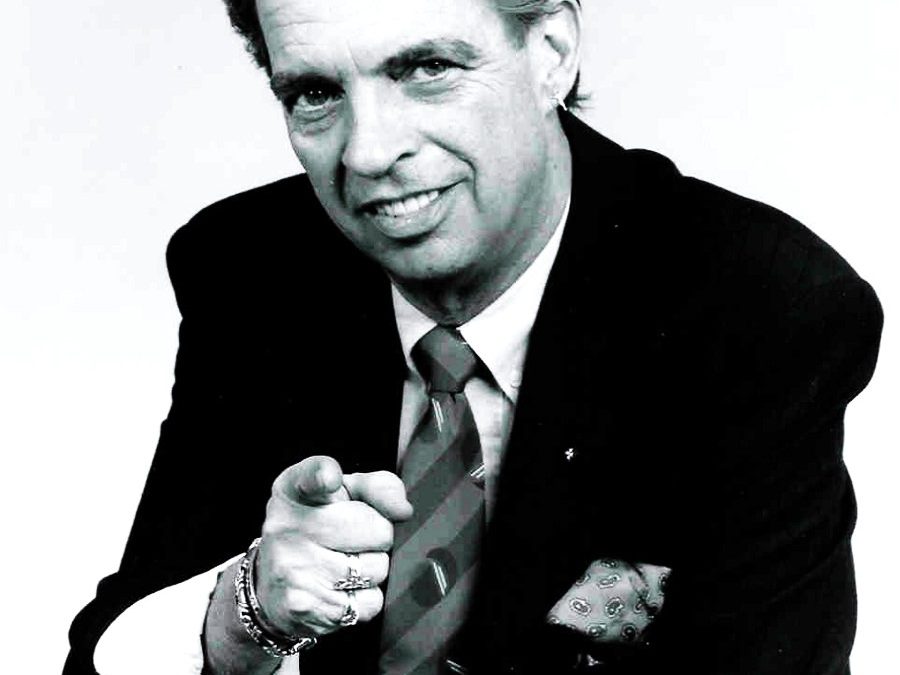
Morton Downey Jr.’s singing debut.
For a thankfully brief time at the turn of the 1990s, the most controversial figure in national media was Morton Downey Jr., whose bile-dripping syndicated talk show (produced out of WOR-TV, Ch. 9 in Secaucus) helped fuel America’s drift to the political hard right. Five nights a week, Downey would excoriate, in the most-demeaning and vulgar terms allowed by FCC rules, anything that, politically or culturally, was to the left of Genghis Khan as an audience of proto-MAGA types egged him on.
For AC entertainment-booking legend Tom Cantone, then running the show biz operations at the three properties owned by Trump, Downey was a perfect target as Cantone built his career on recruiting 15-minutes-of-fame types just as their popularity and notoriety were peaking.
That Downey — whose father, Morton Downey Sr., was a successful radio Irish tenor of the 1930s — had never sung in public before was hardly an impediment to having him vocalize at what was then Trump Castle Hotel & Casino. So, on the first weekend of August, 1990, Downey Jr. headlined the Castle’s King’s Court showroom.
Well, it turned out Downey did not inherit much of his dad’s talent. By the end of his three-night run, his opening act, comedian Freddie Roman, had claimed the majority of stage time.
Mini ice shows
Forty years later, this still makes me chuckle.
Back in the day, the main entertainment venue at the long-gone Bally’s Grand Hotel-Casino was the Opera House which, at about 400 capacity, was by far the city’s smallest showroom.
As a result of that intimacy, the stage was what could be considered “postage stamp” size. Nonetheless, the powers-that-be there obviously thought that ice pageants would be a good fit. So, they brought them in and each was pretty much identical to the other: For 75 or 90 minutes, be-glittered blade-borne performers would glide four or five steps, rotate, and take another four or five steps back to where they had been seconds before.
To say it was silly doesn’t begin to describe the absurdity on display.
Revel
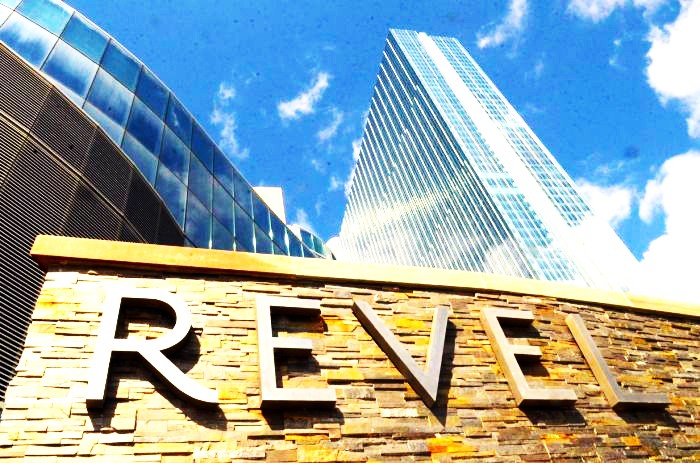
As epic fails go, there was nothing amusing about Revel, the $2 billion glass-wrapped pleasure dome that opened at Boardwalk and Connecticut Avenue in April 2012.
That Ocean Casino Resort—which rose from the closed-in-2014-Revel’s ashes in 2018—is today one of the city’s best-performing properties proves it wasn’t the building (which boasts over two million square feet of public space) that was the problem, but the management thereof.
Suffice it say it appeared the executive team that built and opened Revel (comprised mostly of people who’d been successful at other local gaming halls) used a manual that was titled, “How Not to Open A Atlantic City Casino.” Among the miscues:
- No private lounge for top-tier customers. When deciding where to gamble, premium players tend to look at the accommodations offered to patrons who gamble at higher levels. At Revel such a retreat was nowhere to be found.
- A player-card reward system that didn’t differentiate between levels of play (e.g. a $10 dollar-a-hand blackjack player received the same level of comps as a $500-per-hand player).
- No buffet. Post-pandemic, when casino buffets are getting harder to find here and elsewhere, this looks downright prescient. But in 2012, buffets were still an important marketing tool for luring people through casino doors.
- Ridiculously high prices. One morning, I joined three Revel staffers for coffee and Danish in the “casual” restaurant. The bill came to $62—before tip!
- A reliance on a market that simply didn’t exist. Pre-opening, much was made of Revel’s targeting affluent New Yorkers in their twenties and thirties who, it was believed, were just dying to spend their disposable income at an Atlantic City gaming hall. If they existed at all, those folks simply never showed up at Revel.
Covering the Boardwalk
This article doesn’t rank the misguided ideas, but if it did, this would absolutely be number one.
In November 1988, a North Jersey-based businessman proposed covering the Boardwalk from what was then Showboat Hotel, Casino & Bowling Center on the eastern end to Bally’s Grand Hotel-Casino on the western side. His grandiose, if unhinged, plan included enclosing the oceanside promenade in a clear plastic bubble, thus cutting off all access to the (pre-dunes) views, salt air and cooling breezes that has made the Great Wood Way an American icon for more than 150 years.
Obviously, the idea never gained traction and the ‘Walk remains topless (and side-less). But what’s really wild is that according to historical research, the idea of putting the Boardwalk indoors dates back to at least 1903!
Chuck Darrow has spent more than 40 years writing about Atlantic City casinos.