There are Grateful Dead tribute bands.
And there is Dark Star Orchestra.
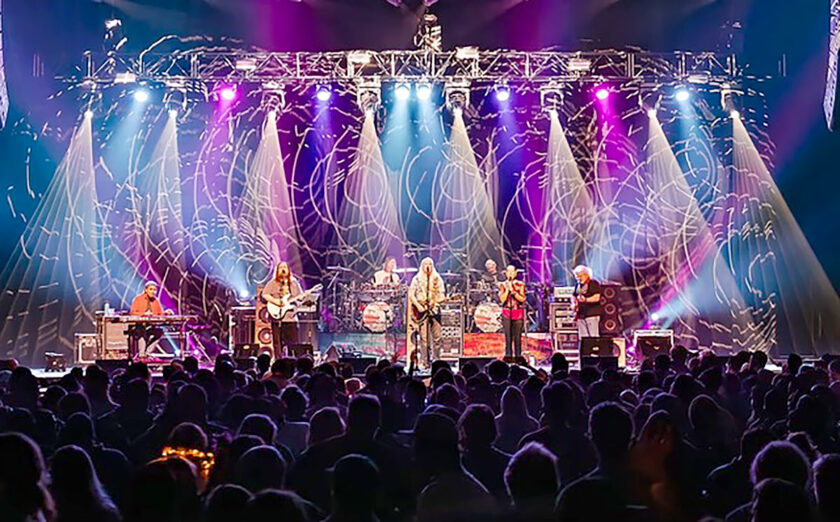
Inarguably the most popular and stellar Dead tribute band to ever exist, the Chicago-bred, seven-piece has been celebrating the greatest jam band of all time for 29 years, performing more than 3,000 shows to Deadheads worldwide.
DSO, which once again lands at Ocean Casino Resort’s Ovation Hall in Atlantic City 7 p.m. Saturday, Sept. 12, loves to keep fans guessing. As longtime keyboardist Rob Barraco says in this interview: “Expect the unexpected,” as DSO’s hook is to recreate specific Grateful Dead concerts’ setlists, stage configurations, instrumentation and era-specific details as a framework.
Part of the fun is to spend the first few songs guessing which year and venue this particular Dead show originally happened as DSO rips into their interpretations of each song.
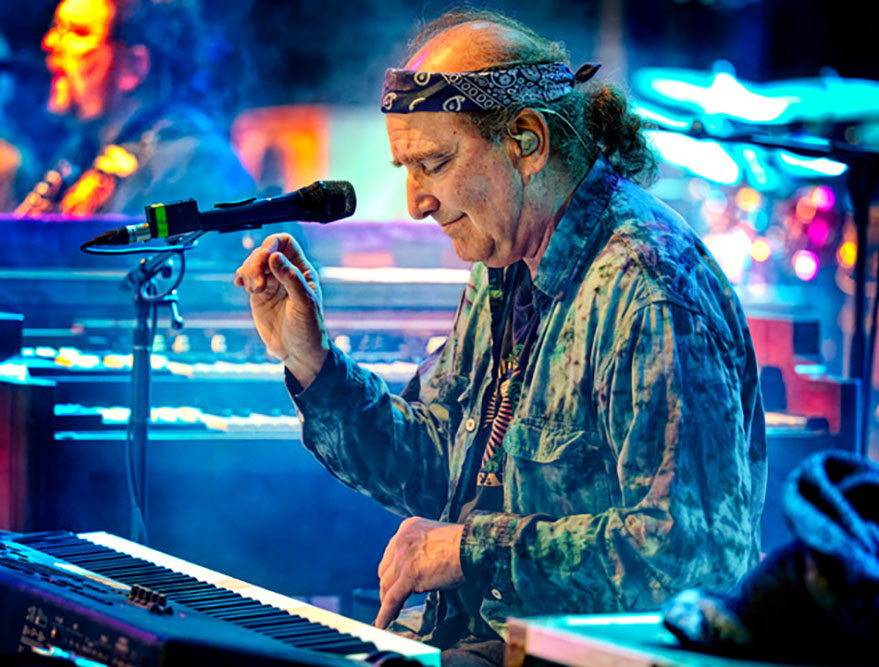
Barraco has a meaningful connection to the Grateful Dead world. Before joining DSO, he performed with Dead founder Phil Lesh beginning in 1999 and was part of one of the most celebrated Phil Lesh & Friends lineups from 2000 to 2003, and he also played keyboards alongside Jeff Chimenti when former Dead members reformed as The Other Ones in 2002 and The Dead a year later.
The amiable and super talented keyboardist talks about his musical journey, riding a bicycle on an acid trip, opening for Bob Dylan on tour and diving deep into the DSO world as they head to Atlantic City.
Scott Cronick: You’ve been coming to Atlantic City a long time, brother. Even before Dark Star was the Dark Star we all know, Atlantic City always welcomed DSO. It’s been a home for you.
Rob Barraco: Oh, yeah, absolutely. I used to play there with The Zen Tricksters. I played there with Phil Lesh. Yeah, a lot of history for sure.
SC: When you see the evolution of this genre and where it’s gone to, do you want to talk a little bit about where you began with DSO and where it is now and how smart the fan has become?
RB: I joined the band in 2005. The original keyboard player, Scott Larned, passed away, and I was asked by their management to come on board to do a month-long tour, and they were in no position to audition anybody. So, they figured if they could get me to come on board, they wouldn’t have to audition — they wouldn’t have to rehearse at all — because I’ve been doing this Grateful Dead thing for a long time.
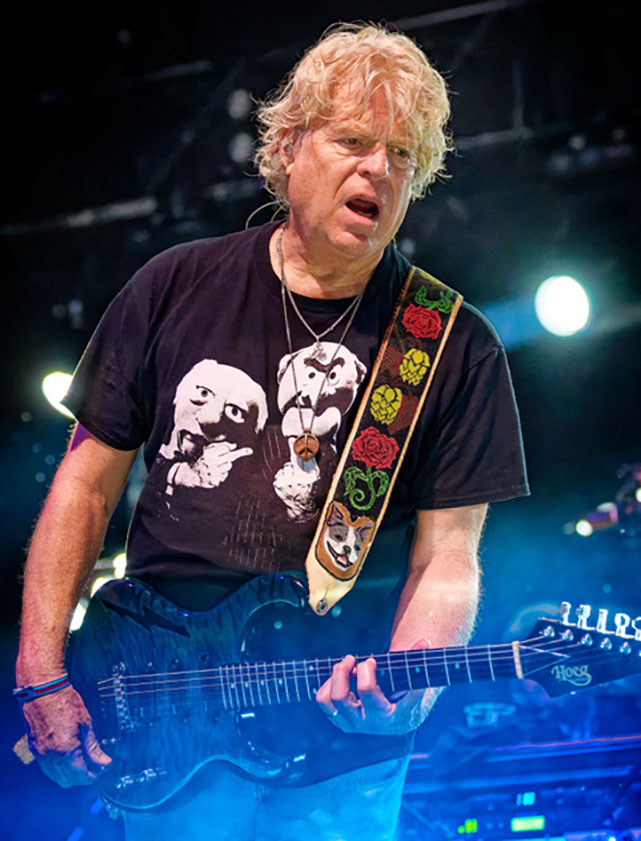
So, I joined the band and immediately got what they were doing, and I really dug it, and I asked to stick around, and I did.
SC: When you look at your personal history as the permanent keyboardist for Phil Lesh & Friends for about three years, The Other Ones, The Dead, how was that transition to DSO? When you have that guy — THE Phil Lesh — that anchors and all of the focus is on him, and then you join a band like DSO where there is less focus on one main guy, right?
RB: Especially from coming to play with Phil, where you were first among equals in that band, and even though it was his band, he wanted you to just be yourself and play. And he really didn’t care what you played, as long as you were in it and committed. When I joined Dark Star, I immediately saw that there was a certain amount of discipline that I had to get a hold of, and I kind of got myself in trouble a couple of times when I first started playing with them because I did a little bit of overplaying, and I got the evil eye.
So, I quickly realized that I have a role to play in this band, even though Dark Star, every night we go out to play, we’re completely improvising. Even though we might be doing a recreation of a Grateful Dead show from history, we’re still improvising the entire show. We just know the parameters we’re working around. That’s where the discipline came in.
SC: While DSO faithfully recreates historic Grateful Dead concert sets. there’s an asterisk there. You’re not trying to be a note for note recreation.
RB: Oh, no, you couldn’t do it. No one could, and what fun would that be?
SC: So, on this summer tour, was there a certain show that you guys pulled from the ashes that you got some personal enjoyment out of?
RB: Yeah, we did a show from early 1969, which is real primal Dead, you know? And that show was extremely enjoyable. But they’re all enjoyable. I mean, you know, all the different eras of Grateful Dead are big fun to play, but that primal stuff, you’ve got to really be committed.
SC: Absolutely. Even though you’re a jam band and people want to hear obscure stuff, do they still come alive for the “Truckins” and stuff that?
RB: They do. You know, it’s funny. We had a fan many, many years ago who complained to us that he came to the show and we didn’t play the main song. And we’re like, “What’s the main song?” He goes, “‘Truckin’, man, you didn’t play the main song.” Yes, people want to hear the main song. And then when you treat them to one of the more obscure tunes, you know, you’re always going to have some people who probably don’t even know what we’re playing, but then you get a whole cadre of people who are like, “Oh, I can’t believe they’re doing this,” you know?
SC: Were there any songs that surprised you? When you dig into a set, were there any songs that popped up that you haven’t played before yet?
RB: Nah, we’ve done them all.
SC: Is it fun when you do get a song that’s a little lesser played?
RB: Yes, so there’s one song in particular. There’s a song called “King Solomon’s Marbles,” which was written by Phil. It’s an instrumental tune, and we don’t do it very often, but we are planning on doing it on this tour coming up. I really look forward to that because it’s a pretty complex tune with a lot of improvisation, and I’m sure there’ll be some people out there that’ll know it. Some people will be scratching their head.
SC: I don’t get how you guys do it. I really don’t. To play those songs and weave in and out and not know where it’s going … and then these guys did it high most of the time. It’s insane to me. Is it just a natural feeling, like an extension of your body? Is it like me chewing gum?
RB: It’s exactly what it is. I don’t think it really matters what state you’re in. The term, “It’s like riding a bicycle.” If you’re riding a bicycle on acid, you’re still riding a bicycle.
SC: Have you ever done that?
RB: I have.
SC: What’s easier, riding a bicycle or playing keyboards when you’re on acid?
RB: Oh, riding a bicycle.
SC: Is there a particular Dead keyboardist that you are reverential toward?
RB: Yes, Keith Godchaux. When I heard him play, when I heard the Grateful Dead for the first time, they didn’t have a piano player on the records and stuff. Then all of a sudden, I go to see them play for the first time, they have a piano player. I’m listening to what he’s playing, and I’m like, “I’ve never heard anybody play like that.”
It was kind of a prelude to me getting into jazz improvisation. Even though he wasn’t a jazz player per se, he was great at improvisation. He came up with some really interesting things to play and really influenced me for a long time.
SC: Let’s talk a little bit about yourself. Where did you get the bug for that jazz and to play?
RB: My parents surrounded me with music from the time I was born. They were really into music, especially big band music, Frank Sinatra, all that kind of stuff. I heard The Beatles for the first time, and I knew instantly what I was going to do with my life. Even though my little brain didn’t understand that, I knew it.
I told my mother, “I want to do this.” She goes, “What?” I was like, “I want to play this music, and I want to be that guy.” I pointed to the TV on “The Ed Sullivan Show” at John Lennon, and I was like, I want to be him.
She went out and bought me a guitar and made me take lessons, and I really never looked back from then.
Hearing The Grateful Dead for the first time live made me realize the possibilities in improvisation, improvisational music. It started a lifelong journey of studying jazz improvisation to this day.
SC: Did you think that you were going to end up more in the jazz world than, say, the rock world?
RB: Oh, I did think that for quite a while. When I was in my teens, in my early 20s, I was playing in Dead bands, country rock bands, and even bluegrass bands. But then I got the bug for the jazz thing and really kind of left The Grateful Dead world for a long time.
But I kept getting sucked into all these Dead bands because they knew I knew the music, and they knew I knew how to improvise. Eventually, I met up with a guy named Jeff Mattson from Long Island. He’s one of my best friends. He was in the Zen Tricksters. So, I joined the Tricksters, and I was in that band for 11 years, and that’s the band that attracted Phil Lesh.
When Phil heard our second CD, he called and wanted to play with us. And then the rest is history.
SC: Yeah, and then you were in San Francisco, and then you double-billed with Dylan, right? A whole tour with Dylan. Is he as eccentric as we think he is?
RB: Oh, yeah. Yes, he is. We don’t talk about it. But that was a special time, no doubt about it.
SC: When you were with the Phil Lesh, did you have new music that you guys wrote together, or were you mostly playing Dead stuff?
RB: We had new music that Phil was writing with Robert Hunter, and we made a record for Columbia that’s called “There and Back Again.” Warren Haynes was writing music for the band. I started writing music for the band, and then the band broke up because they brought the Dead back.
SC: Do you miss that side, or do you have another outlet for that?
RB: Well, I do. I have a band called The Skeleton Crew, which is an almost all-original band, and I’m playing a lot of music I wrote with Robert Hunter. And we have a guy named Stephen Inglis from Hawaii, who also is a great writer and great, great musicians, including Jay Lane, who was the drummer of Dead & Company, Pete Sears, who’s a legendary bass player from the Bay Area, and Barry Sless, who was in the Wolf Bros with Bob Weir playing pedal steel. That was a special time, too.
SC: You also wrote music with Dead lyricist Robert Hunter. Was there a particular song with him that stands out?
RB: Yes, it’s called “Old Coast Highway.” Beautiful, beautiful lyrics, very special tune. We both thought it was the best one we wrote together.
SC: Finally, what’s a night with Dark Star this summer like at Ocean Casino?
RB: Well, we could be recreating a Grateful Dead show from their 30-year history, or we might come in and make up a setlist. So, it’s a mystery, even to me.
Scott Cronick is an award-winning journalist who has written about entertainment, food, news and more in South Jersey for nearly three decades. He hosts a daily radio show – “Off The Press with Scott Cronick” – 4 to 6 p.m. weekdays on Newstalk WOND 1400-AM, 92.3-FM, and WONDRadio.com. He can be reached at scronick@comcast.net.