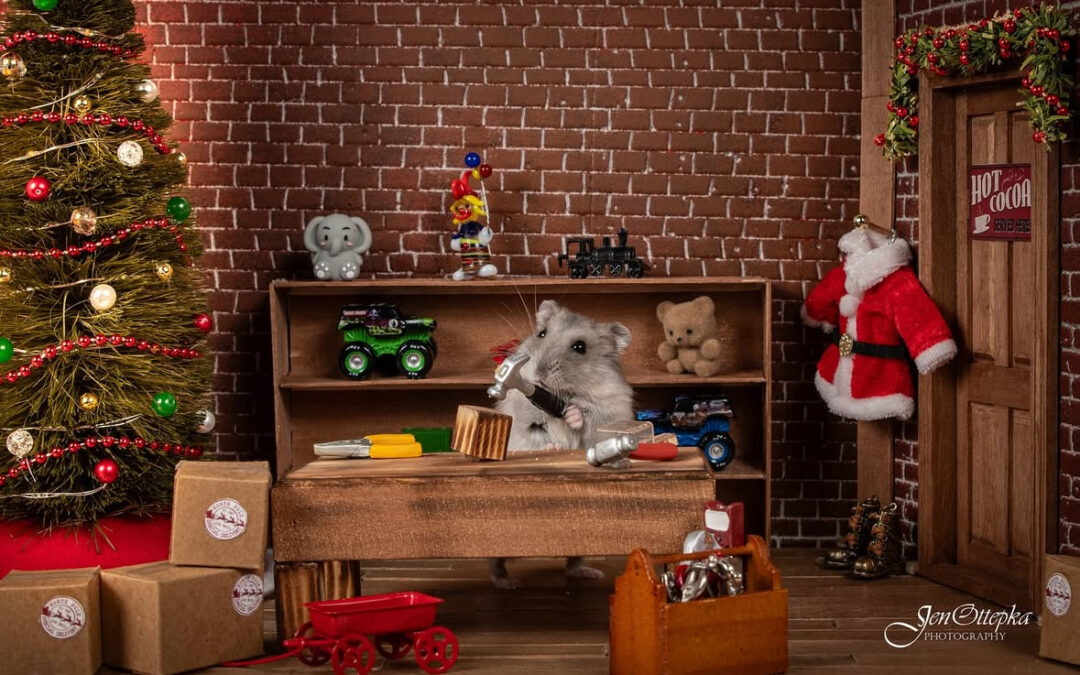
By all appearances, the mouse is hammering away in a Christmas workshop, hard at work among miniature tools and carefully crafted props. Has Santa’s workshop been shrunk? Elves disguised as rodents make whimsical toys in miniature in preparation for Christmas Day.
Look closer and you’ll realize you’re being invited into a world that is both playful and precise: where magic and animal science and art intersect.
This is the signature style of Jen Ottepka, a photographer from Mays Landing, whose small-animal photography has turned mice and hamsters into unlikely stars of meticulously built scenes.
Ottepka’s path to photography feels almost inevitable. “I’ve had a lifelong obsession with taking photos,” she said. For years, it remained a hobby she loved but never fully pursued. That changed around 2020, when pandemic shutdowns slowed daily life and opened up space for deeper focus. With more time to hone her technical skills and explore photography’s history, what once felt casual became a full-fledged passion.
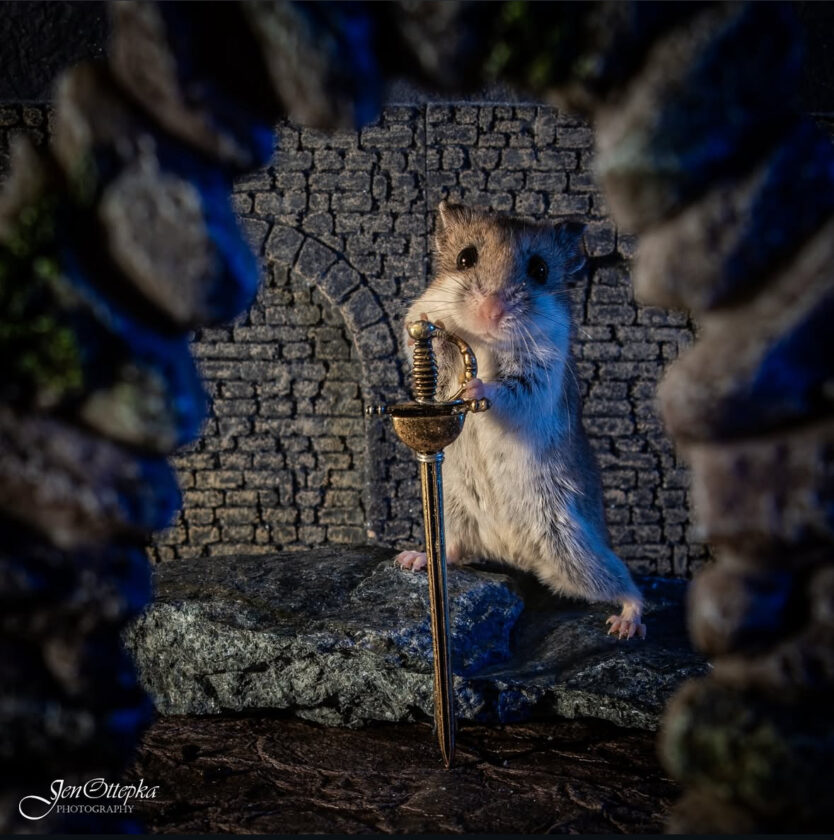
While Ottepka enjoys photographing wildlife and nature, her most distinctive work began with a single rescued field mouse named Squeaky. The idea, at first, was simple and whimsical: a bridal shower card inspired by Alice in Wonderland, featuring the tiny mouse perched inside a teacup. The reaction was immediate and enthusiastic. Friends and family were charmed—and curious.
“My friends started challenging me,” Ottepka said, laughing. “If you can get her in a teacup, can you get her to do this or that?”
Squeaky wasn’t trained, and that limitation became the catalyst for Ottepka’s creativity. Instead of forcing behavior, she began designing miniature environments that allowed animals to naturally interact with their surroundings—creating the illusion of action without digital manipulation.
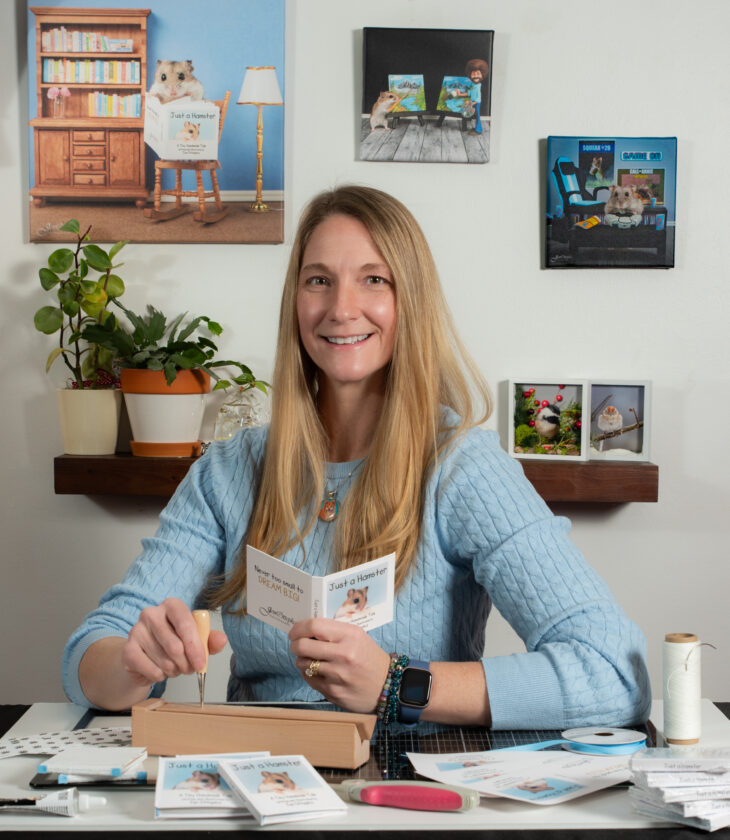
“I love technology and I see the uses of AI,” she said. “But I refuse to use it. Everything I do is genuine. I don’t alter the photos.”
That commitment defines her work. Ottepka builds each set by hand, engineering tiny scenes using found objects, scrapbook paper, craft foam, and increasingly complex miniature woodworking techniques. Over time, the sets have evolved into elaborate environments: Oktoberfest taverns, Christmas workshops, sports arenas, even scenes where animals appear to be driving cars or flying airplanes.
A crucial collaborator in this process is her son, Edward, 20, who helps manage the business side of her work while also serving as her biggest supporter. “He likes to say creativity is just problem-solving,” she said. “If I hit a roadblock, he won’t let me quit. He pushes me to figure it out.”
That problem-solving mindset shines in Ottepka’s use of visual illusion. Hidden wires, fishing lines, carefully chosen camera angles, and—most importantly—food motivation come together to create moments that feel almost magical. At craft fairs, she brings her physical sets to demonstrate how the illusions work.
“People will stand in front of a scene and ask, ‘How is that hammer floating?’” she said. “Then I have them take one step to the side, and suddenly they see the wire. The shock on their faces is priceless.”
In one Christmas scene, a tiny hammer appears to be held by a hamster mid-swing. The secret? A dab of peanut butter placed just right. As the hamster grips the hammer to lick the treat, Ottepka captures the moment from the exact angle needed to complete the illusion.
Her “actors” are a rotating cast of small animals, including mice and hamsters of various breeds and backgrounds—rescued field mice, Chinese dwarf hamsters, winter white hamsters, and fancy mice. Some, like Pip and Peck, were rescued from a high school and later rehomed to a science class. Others, like Annie the hamster, became the star of Ottepka’s self-published miniature book, Just a Hamster.
“The downside of working with small animals is their short lifespan,” she said. “But I give them the best lives I possibly can.”
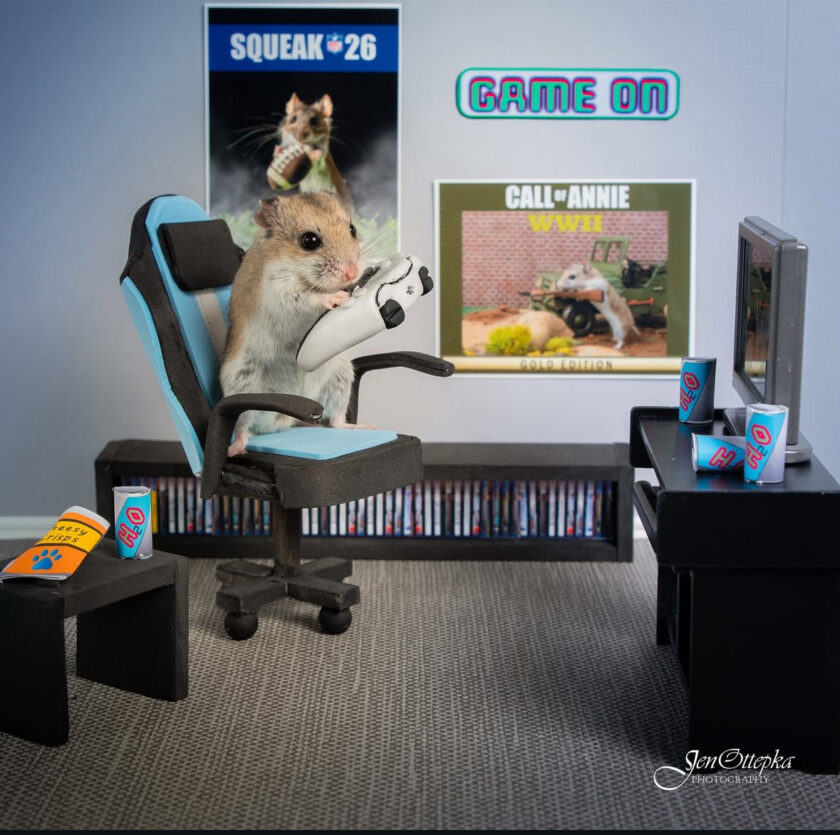
Ottepka’s work isn’t just about charm or novelty. At its core, it’s an invitation to slow down. She hopes viewers will look beyond the initial surprise and notice the details—not just in her photographs, but in the world around them.
“We’re always in such a hurry,” she said. “I want people to stop their busy routine and notice the small things in life.”
That philosophy extends to her focus on local wildlife. While exotic animals often dominate photography feeds, Ottepka believes beauty is already all around us—especially in South Jersey, a region she feels is often misunderstood.
“New Jersey gets a bad rap,” she said. “But it is gorgeous. We have open land, wildlife, and so much beauty that people overlook.”
She describes mornings spent with a cup of coffee, watching birds interact outside her home. “I call it nature therapy,” she said. “You don’t have to go anywhere special. You just have to look.”
Perhaps the most meaningful impact of her work comes through the people she inspires. At a recent fair, Ottepka met a shy teenage girl who loved photography and building miniatures but had stopped out of fear of being judged. After their conversation, the girl told her she didn’t want to quit.“That’s what it’s about,” Ottepka said. “Art is for you. Don’t stop doing what makes you happy because you’re worried about what others will think.”
That message—like her tiny sets—packs a powerful punch. Through small animals and carefully constructed worlds, Jen Ottepka is reminding people to look again, appreciate what’s near, and embrace creativity wherever it leads.
Her work can be found at jenottepkaphotography.com, and on Instagram and Facebook under Jen Ottepka Photography. Her handmade miniature book, Just a Hamster, is available through her website—proof that sometimes the smallest stories carry the biggest meaning.