More than 50 aviation and engineering students at Atlantic County Institute of Technology (ACIT) are gaining hands-on aerospace experience through a cutting-edge design challenge with Airbus, an international aircraft manufacturer. Students are tasked with creating advanced winglets—specialized extensions at the tips of airplane wings that improve aerodynamics, fuel efficiency, and overall performance. Working in teams, students are analyzing flight data, refining designs using 3D modeling software, and testing solutions with artificial intelligence tools. By using engineering standards identical to the aerospace industry, students are equipped to better tackle real-world opportunities.
“At ACIT, providing students with authentic industry experience is central to everything we do,” said Dr. Phil Guenther, Superintendent of ACIT. “By connecting students with leaders like Airbus and exposing them to professional engineering practices, we help them build the skills, confidence, and perspective needed to succeed in aerospace and other technical careers from day one.”
The Airbus challenge pushes students beyond the classroom as they justify every design decision using Fusion 360, a cloud-based platform for 3D design, simulation, and product development. Students explore, test, validate, and improve designs, mirroring professional aerospace engineering workflows.
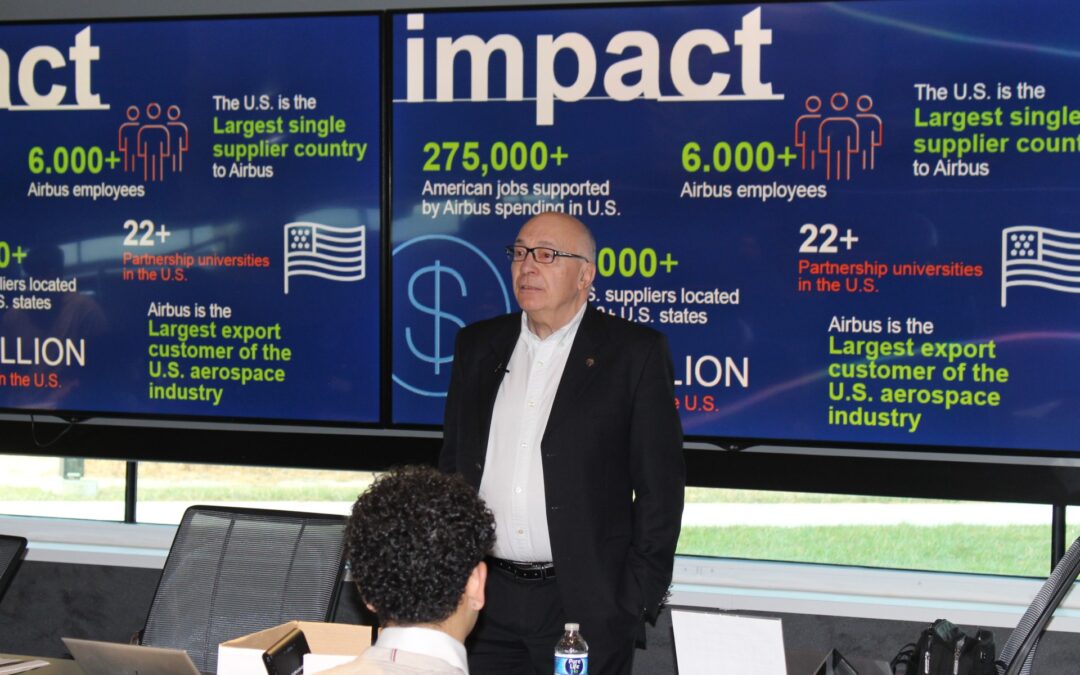
Airbus Senior Director of Engineering and Operations Pascal Joly introduced students to the professional aircraft design process at the National Aerospace Research and Technology Park in Egg Harbor Township, and continues to participate in evaluation, providing students with direct insight into how industry experts assess and refine engineering work.
The initiative complements ACIT’s partnership with Embry-Riddle Aeronautical University, the world’s largest accredited university specializing in aviation and aerospace, reinforcing clear pathways from high school to college and into high-demand aerospace careers.
Sam Harris, Embry-Riddle program liaison, oversees student submissions to ensure they gain authentic engineering experience. “Each submission goes through advanced simulations and professional review. This contest mirrors the engineering practices students encounter in college and professional settings,” Harris said.
“Working on a real Airbus-inspired challenge makes our learning feel authentic,” said senior Marco Merlino. “We are building skills that directly connect to future careers in aerospace.”