
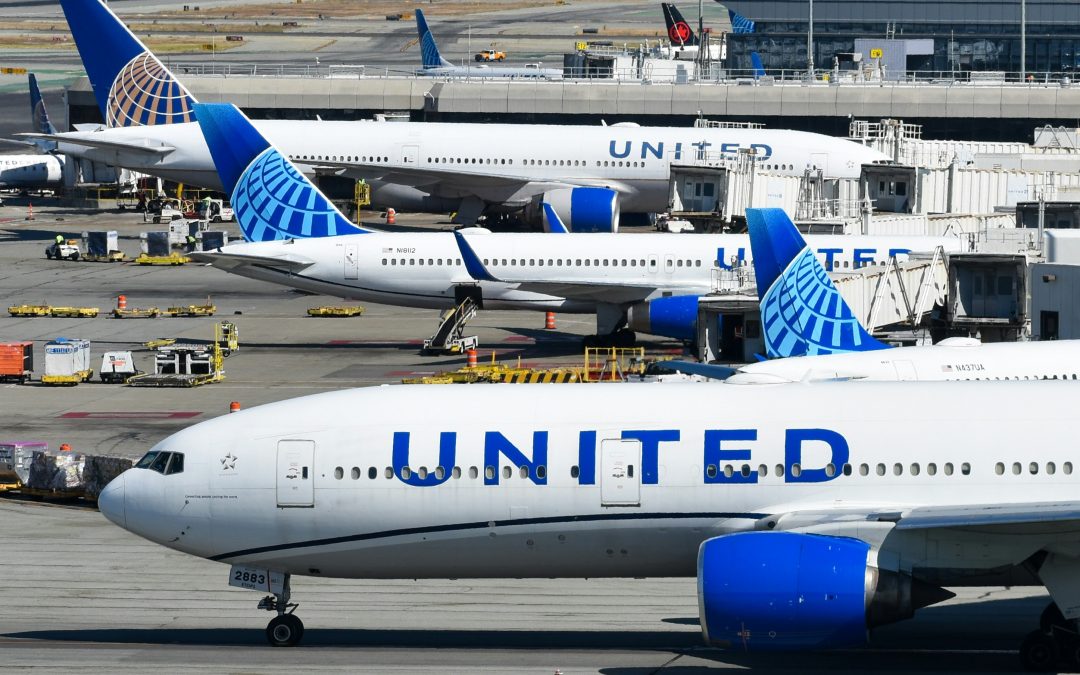
A technical failure within the Federal Aviation Administration’s (FAA) telecommunications network prompted a nationwide grounding of flights Friday, Nov. 13, disrupting thousands of trips and raising questions about the reliability of the country’s air traffic control infrastructure.
The FAA issued the ground stop at approximately 3:30 p.m. Eastern time after experiencing instability within its telecommunications network, which supports communications and radar systems used by air traffic controllers. The agency lifted the restriction at approximately 8:15 p.m., after determining the system was stable enough for flights to resume.
According to the FAA, the initial investigation identified excessive data traffic originating from two potential locations: a radar site in Amarillo, Texas, and a radio communications site in El Dorado, Arkansas. The agency said a contractor, L3Harris, had been performing routine maintenance at the Arkansas facility, including installing a new router as part of a transition from older copper wiring to fiber-optic technology.
The FAA reported that its legacy equipment became unstable when the network experienced more than 1,000 connection attempts every four to five seconds. The disruption affected 17 of the agency’s 22 Air Route Traffic Control Centers and several terminal radar approach control facilities.
The FAA also said it had found no indication that the disruption was caused by a cyberattack or an outside malicious actor. The agency clarified that its SMART data aggregation system was unrelated to the incident and does not feed information into the air traffic control system.
Clifford McWhorter, a retired FAA computer systems specialist who worked in En Route Field Support, said his experience maintaining the agency’s computer systems gives him insight into the complexity of the infrastructure involved.
McWhorter, who retired in 1995 after serving as a GS-14 federal employee and computer systems specialist, said his former team was responsible for responding to technical problems at air traffic control centers, analyzing system failures and developing software patches to address them.
He described a testing process that involved running proposed changes through simulations before introducing them into the operational system.
“We test it, push it through the extremes, run it through simulation tapes. We will build sim tapes that the computer doesn’t know whether it’s real or Memorex, and we just run it,” McWhorter said. “We do it in sections.”
He explained that his team would isolate the facility receiving an update, test the changes through simulations and take that facility offline while operating in a reduced-capability mode. Backup systems and redundancy allowed the facility to continue operating without all of its usual features, he said.
The FAA said maintenance at major air traffic control facilities is typically conducted overnight, when air traffic is lighter. McWhorter said his team generally began around 11 p.m. and worked until about 3 a.m., with systems restored by approximately 5 a.m.
However, the FAA said the disruption stemmed from a routine equipment replacement at a remote facility. Following the incident, the agency said it would reevaluate when it conducts equipment replacement and maintenance work.
The FAA said there was not a complete loss of radar or radio communications. Certain frequencies and radar feeds remained operational, allowing controllers and pilots to maintain contact and safely guide aircraft already in the air to their destinations. Approximately 3,500 aircraft were safely landed during the disruption, according to the agency.
The FAA reported approximately 12,462 flight cancellations on Nov. 13, including 9,082 cancellations by major airlines. It said that not all cancellations were directly attributable to the ground stop.
McWhorter questioned whether the current system is receiving sufficient technical oversight and whether changes are being adequately tested. He also warned that similar disruptions could happen again.
According to the FAA’s Nov. 15 update, the agency believes it addressed the initial cause of the disruption by disabling the functionality of the originating routers. As a precaution, it also disabled the same functionality on more than 60 similar routers throughout the network.
Transportation Secretary Sean Duffy said Nov. 14 that investigators were working to determine whether the failure resulted from an installation error or faulty equipment. L3Harris said in a Nov. 14 statement that it was supporting the FAA’s investigation.
The company also said it had completed more than 70% of its planned conversion of the nation’s airspace communications infrastructure from legacy copper wiring to fiber-optic technology.
The FAA and L3Harris continue investigating the incident, with the agency saying it will evaluate maintenance procedures to help prevent another disruption.