
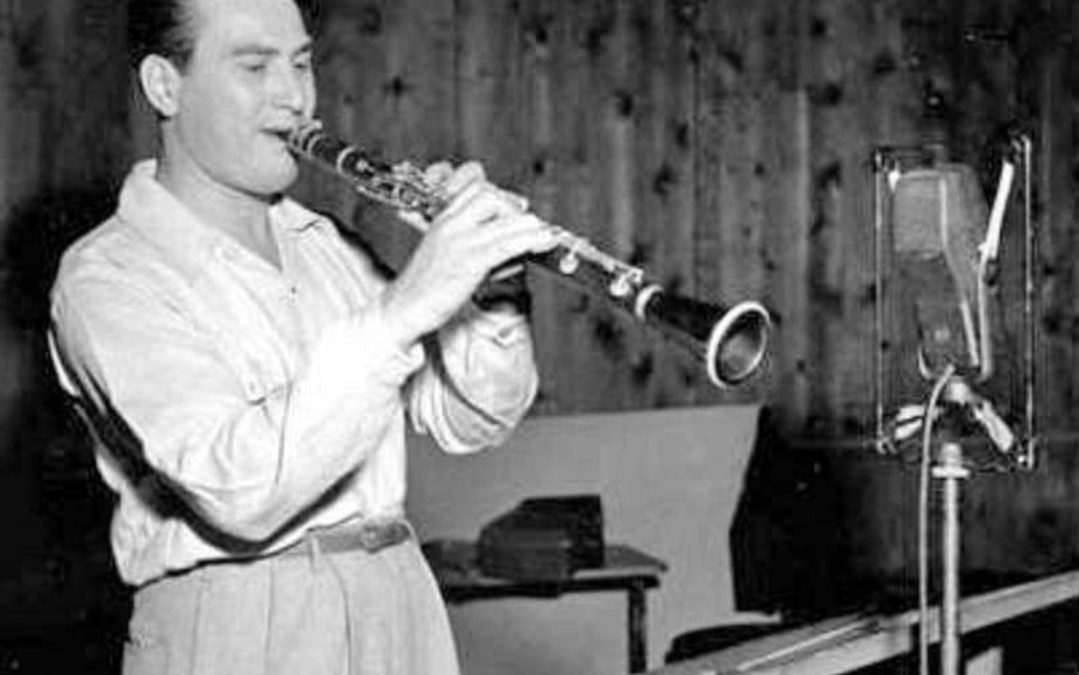
They were both swing-era titans who led two of the most famous bands in the history of jazz. They both played clarinet and they both disliked each other. They were each master instrumentalists and are still revered today. Both were somewhat odd and peculiar, and both performed in Atlantic City often. I speak of “The King of Swing,” Benny Goodman, and “The King of the Clarinet,” Artie Shaw; and I had rather strange run-ins with each of them.
Goodman, who played the Steel Pier often in the 1930s and 1940s with his own bands and as a sidemen in bands like those led by Russ Columbo, appeared in Atlantic City as late as 1960, when he performed in one of the last stage shows mounted by the Warner Theatre on the Boardwalk. Dubbed, inaccurately, as “The King of Swing” around 1936, Goodman’s incredibly popular band ushered in the Swing Era, which lasted roughly until 1945. Though history may have passed him by musically, he was a household name until his passing at the age of 77 in 1986. He was the first bandleader to perform in the Soviet Union, one of the first jazz musicians who also made a splash as a classical player, was only the second jazz musician to ever have a Hollywood motion picture made about his life, and his performances always sold out internationally.
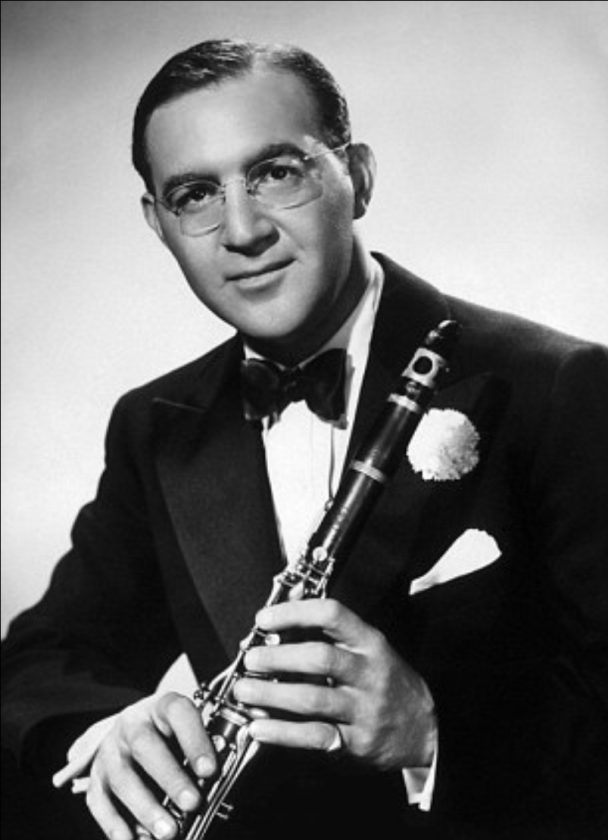
Stories about his forgetfulness, sometimes odd behavior, reluctance to share the spotlight, and tightness with a buck are legion. It’s been said that all he cared and thought about was the clarinet. In fact, supposedly because music was all that was on his mind, he called his wife, two children and three stepchildren “pops.”
In the early 1980s, I began work on “World of Gene Krupa,” the first book ever written about the man who made the drums a solo instrument. Given the importance of Krupa’s three-year stint with Goodman — they recorded the famed “Sing Sing Sing” together — an interview with Goodman for my book would certainly be in order.
Back then, Goodman’s number was listed in the phone book. I knew of his secretary, Muriel Zuckerman, who also ran interference with Goodman, and she was the one who answered the phone. I told her what I was doing and asked if we could possibly set up a future time for me to interview the legend himself. She told me she was going to put me on hold for a moment, and a few seconds later, I heard a click and then someone who said, “Hello.” It was Benny Goodman himself, one of my idols as a kid.
I told him about the book I wanted to write and asked about a future time for an interview. Out of the blue, he asked, “What kind of questions would you want to ask?” Though I was on the spot and had nothing prepared, I came up with the following: “Well, Mr. Goodman, you played with Krupa at the beginning of his career and at the end of his career. Did the way he accompanied you change over the years?”
This was his answer, verbatim: “He was rather consistent, you know. Of course, he was in my band and you have all my records, and then he had his own band which was rather successful. When did you say he died?” I mentioned that Gene Krupa died in 1973 at the age of 64. “That was rather young,” was Goodman’s reply. “My, what a shame.” Then he hung up. Benny Goodman. My idol. A real Mr. Warmth.
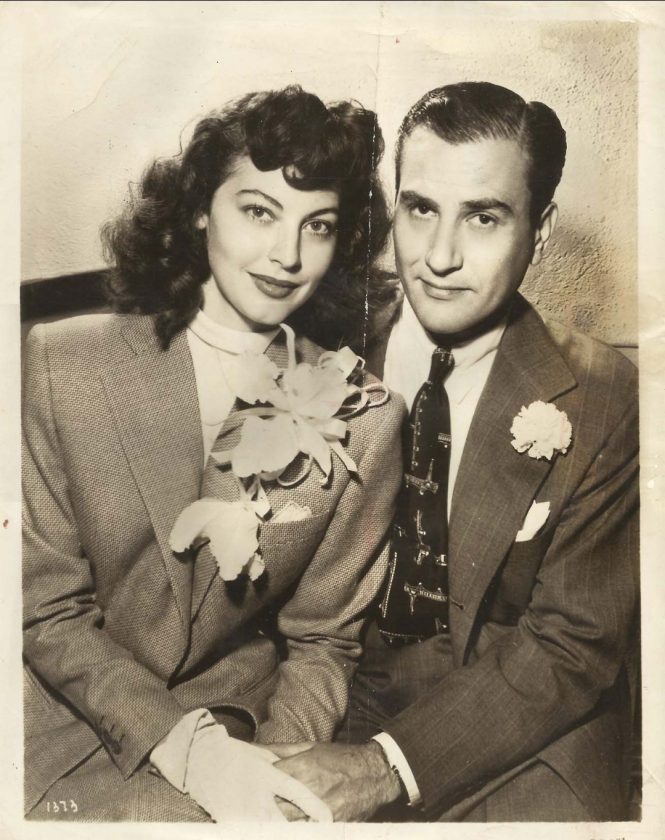
Artie Shaw’s first Boardwalk performance was in 1938 at the Million Dollar Pier with Billie Holiday handling the vocals. By the 1940s, he had “graduated” to appearing at the Steel Pier. Shaw was a certifiable intellectual — which he would have been happy to tell you — who later wrote several books after he put down the clarinet for good in 1954. Though he was one of the greatest clarinetists in the history of improvisational music, if he is known at all these days, it’s likely because of his marriages to Ava Gardner, Lana Turner, Evelyn Keyes, and five others. Quite a guy, this Artie Shaw.
In the mid-1990s, I wrote and co-produced a two-part film, “Buddy Rich: Jazz Legend,” for a division of Warner Bros. Publications. Part of the film focused on Rich’s 10-month, late 1930s tenure with the Shaw band, and to illustrate this, we used a 1939 film clip of Rich with the Shaw band. Note that the film clip, long in the public domain, had been used in at least a half-dozen documentary films over the years. Though not a “discovery” per se, historically, it was essential that we include it in our picture.
About six months after the films were released — to great reviews, by the way — my phone rang in my Philadelphia office. It was Artie Shaw. After telling him what an honor it was to hear from him, he got to the point. And he wasn’t happy. “By whose authority did you use footage of my band in your Buddy Rich film?” he asked. I told him that the film clip, produced by the ancient Vitaphone company and never copyrighted, was in the public domain, and had been used, without question, in other documentaries. Mr. Artie Shaw, sounding even more unhappy, repeated his question/accusation: “By whose authority did you use footage of my band in your Buddy Rich film?” I sensed that Shaw may have been down this road before and I was well aware that he enjoyed filing suit against those who he believed wronged him (indeed, in his later years, he filed suit against the producers of a documentary film about him which he actually commissioned). My split-second solution to this unpleasantness? I said, “Would 500 dollars do it?” Evidently, that did do it as he immediately gave me his mailing address without comment. Artie Shaw. What a swell guy.
Show business, like any other business, has always had its share of eccentrics. But in the cases of Shaw and Goodman and others with personality quirks, I’ve always maintained that their singular talents and contributions to culture outweigh any personality deficiencies. You want to call your wife and kids “pops?” You want to hold me up for 500 bucks? I’m fine with that, because in the end, Benny Goodman and Artie Shaw are jazz legends who could swing like hell. And to me, that’s what’s important.
Bruce Klauber is the author of four books, an award-winning music journalist, concert and record producer and publicist, producer of the Warner Brothers and Hudson Music “Jazz Legends” film series, and performs both as a drummer and vocalist.