
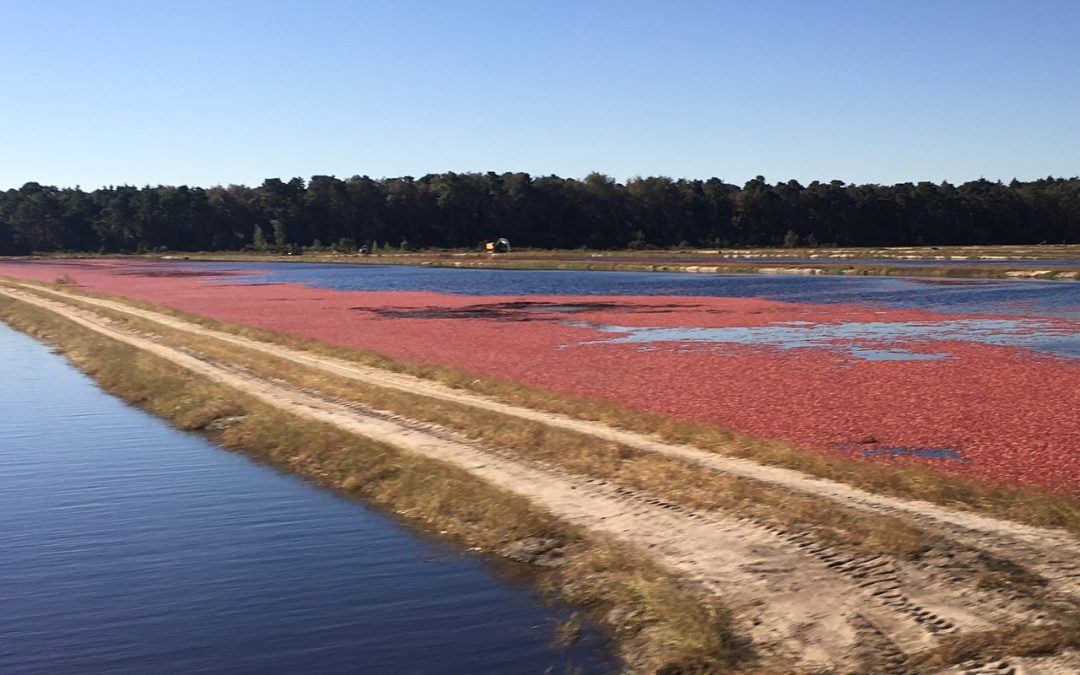
As autumn settles over South Jersey, the Pine Barrens begin to show off their colors. I’m not talking about the changing leaves. Another shade of red has been part of the autumn landscape for generations.
Cranberries — sometimes called the “rubies of the pines” — are native to New Jersey and have grown naturally in the Pine Barrens for centuries. Today, the tart little berries remain closely tied to the region’s history, agriculture and identity.
The Pinelands is one of the relatively few places where cranberries grow naturally. The low-growing vines thrive in the sandy, acidic soils and high water table of the region, conditions that can make farming other crops difficult. Cranberries also benefit from the area’s abundant water resources and cold winters, which help prepare the plants to produce flowers in spring.
Long before cranberries became associated with Thanksgiving tables and supermarket juice aisles, Native Americans used the fruit as food, medicine and dye.
According to the New Jersey Pinelands Commission, Indigenous people used names including “sasemineash” and “pakimintzen” for the berries. They could also combine crushed cranberries with dried meat and animal fat to make pemmican, a nutrient-dense preserved food that could last through the winter.
European settlers eventually adopted the fruit as well. The name “cranberry” is believed to have evolved from “crane berry,” a reference to the plant’s pink blossom, which settlers thought resembled the head of a crane.
From hand picking to floating berries
Harvesting cranberries was once grueling work.
Workers originally picked the berries by hand before farmers adopted large wooden cranberry scoops. Beginning around the 1960s, wet harvesting became the predominant method.
Contrary to a common misconception, cranberries do not spend their entire lives floating in water. They grow on low vines close to the ground. The dramatic flooded bogs most people associate with cranberry farming are largely part of the harvesting process.
During a wet harvest, growers flood the bog and use machinery to loosen the ripe berries from the vines. Because cranberries contain pockets of air, they float to the surface. Farmers then gather the bright red berries together before they are lifted from the water and transported for cleaning, sorting and processing.
It creates one of the most striking sights of a South Jersey autumn: brilliant pools of red tucked among the deep greens and sandy roads of the Pine Barrens.
Many wet-harvested cranberries eventually become familiar products including juice, dried cranberries, jellies and cranberry sauce.
And even cranberry sauce has a strong New Jersey connection.
In 1917, New Jersey cranberry grower Elizabeth Lee began selling canned cranberry sauce under the name “Bog Sweet.” She later joined forces with Massachusetts grower Marcus Urann, whose business eventually became part of what is now Ocean Spray.
A crop tied to the Pinelands
Cranberry farming is particularly intertwined with the environment around it.
Healthy wetlands, forests and watersheds are essential to cranberry production, and the Pine Barrens’ unusual combination of acidic soil and plentiful groundwater creates ideal conditions for the native fruit.
For generations, South Jersey farmers learned to work with a landscape that outsiders once considered too sandy, acidic and wet to be useful farmland. In doing so, they helped turn a wild native berry into one of the region’s most recognizable agricultural traditions.
So when cranberry sauce makes its annual appearance beside the turkey this fall, consider where those little red berries began.