A decade ago, the stretch of Atlantic City surrounding Tennessee Avenue was still struggling to escape an unflattering nickname: the “dead zone.”
Today, visitors can find live music spilling from the Anchor Rock Club, crowds gathering around the Tennessee Avenue Beer Hall and diners moving between restaurants, bars and entertainment venues.
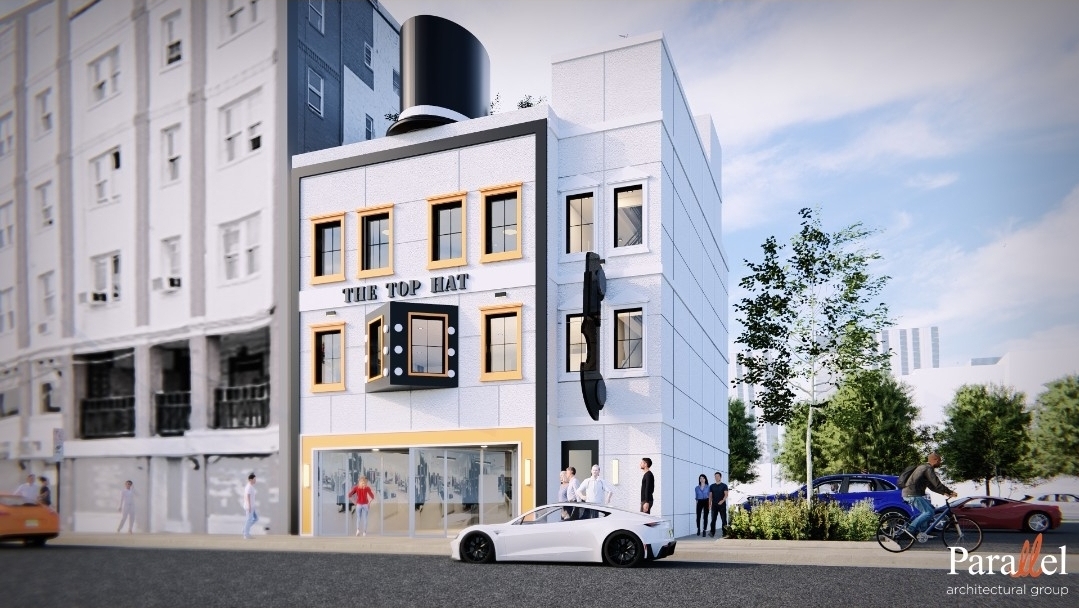
Soon, they may also be able to spend the night beneath a giant Monopoly top hat, shop inside repurposed shipping containers and wake up for coffee, yoga and another day in the Orange Loop.
Developer Mark Callazzo believes the neighborhood’s next wave of projects will turn that vision into reality.
The Top Hat, a six-room boutique hotel planned for 215 South Tennessee Avenue, and a nearby shipping container park are both expected to open toward the end of 2026. Callazzo said the projects could debut together with one large grand-opening celebration if their construction schedules align. Otherwise, each will receive its own opening event.
Although many of The Top Hat’s design surprises are being kept under wraps, the hotel will be crowned by an unmistakable feature: a giant top hat installed on the roof.
The name and design pay tribute to the classic Monopoly playing piece and Atlantic City’s well-known connection to the board game. The hotel will also feature a rooftop deck overlooking some of the city’s most recognizable attractions.
“One of the things I’m most looking forward to is the roof deck,” Callazzo said. “It has an amazing view of Resorts and Hard Rock and Steel Pier and the Wheel. It’s just going to be a great amenity to sit up there and enjoy the views.”
Callazzo said the current goal is to open The Top Hat in November or December. The approximately $2.5 million hotel project will include six guest rooms and ground-floor commercial space, bringing a small-scale lodging option to a district better known for its restaurants, bars and live entertainment.
The hotel is designed to complement rather than compete with Atlantic City’s casino resorts, giving visitors a place to stay directly within a walkable neighborhood of independently operated businesses.
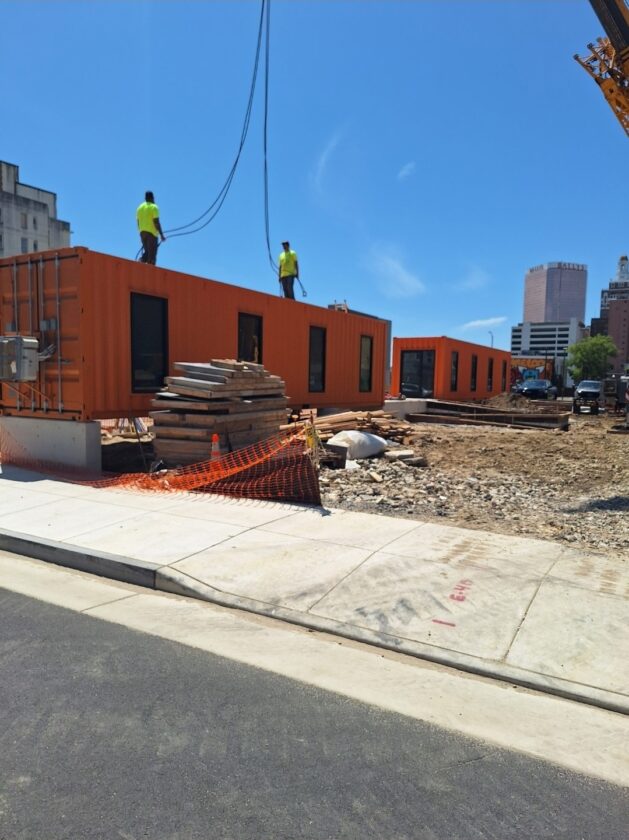
Nearby, an approximately $6 million container park will create space for 22 small businesses. Callazzo said 17 spaces have already been filled, with negotiations underway for the remaining units.
The concept was inspired in part by the Cargo District in Wilmington, North Carolina, where shipping containers and traditional buildings have been transformed into spaces for restaurants, shops and other businesses.
Callazzo saw similarities between Wilmington and Atlantic City, including their waterfront locations, changing neighborhoods and opportunities for new small businesses. When grant funding became available, he believed a shipping container park could fit naturally into the Orange Loop’s ongoing redevelopment.
The container park has been in development for approximately two years. The project received nearly $6 million through the New Jersey Economic Development Authority’s Activation, Revitalization and Transformation Program. Additional financing for the two projects has come from Fulton Bank and Callazzo’s company, Alpha Funding Capital.
Because the containers are constructed and completed off-site, the development presented unusual design, transportation and approval challenges. Callazzo said only a handful of shipping container parks of a comparable size exist around the country.
He praised the Atlantic City Building Department and the Casino Reinvestment Development Authority for working with the development team as it navigated the process.
Once completed, the park is intended to become more than a collection of shops. Callazzo sees its affordable spaces as a gateway for entrepreneurs who may not be ready to lease a larger traditional storefront.
“The container park is going to have 22 new small businesses, so that’s going to be a whole economic driver in itself,” he said.
The two projects are part of a much larger development picture emerging around the Orange Loop. Callazzo said he also plans to begin construction on a 12-unit, higher-end apartment building with another rooftop deck after work on the container park is finished.
Other developers are adding townhomes and apartments nearby, while additional restaurants and coffee shops are preparing to join the district. Callazzo said that collective investment is especially meaningful because the neighborhood’s revival has never depended on one business or developer.
“When I first saw the block, it was desolate and in pretty bad shape,” Callazzo said. “It just makes me happy to see all of the progress there. Certainly, it’s not just the things I’m doing, but what everybody else is bringing to the table. It’s just amazing to see. It’s like a dream come true.”
The Orange Loop covers three beach blocks associated with the orange properties on a Monopoly board: Tennessee Avenue, St. James Place and New York Avenue. Its growing collection of independent businesses offers an alternative to spending an entire Atlantic City visit inside a casino resort.
The neighborhood is also part of the broader North Beach district, a collaboration involving Orange Loop businesses, Resorts Casino Hotel, Hard Rock Hotel & Casino Atlantic City, Ocean Casino Resort and Steel Pier. Their marketing teams work together to promote the area’s restaurants, entertainment, beach and boardwalk attractions.
Callazzo said the casino resorts recognize the value of having an active neighborhood outside their doors. A visitor attending a concert at Anchor Rock Club, for example, might eat at Cardinal before the performance, then stop somewhere else for a drink or dessert afterward.
“It really brings the whole neighborhood together,” Callazzo said. “It’s a way to bring more people here and activate all of the things.”
He envisions the completed district offering visitors a full, walkable itinerary. Someone could attend a concert, visit several bars and restaurants, spend the night at The Top Hat and wake up the next morning to attend a yoga class, grab coffee and shop at the container park.
Callazzo believes that experience represents a new version of Atlantic City—one driven not only by casinos, but also by independent restaurants, arts organizations, music venues, housing and small-business ownership.
He also believes the Orange Loop could serve as a catalyst for Atlantic City’s wider resurgence.
“Sixty or 70 years ago, Atlantic City could have been in the discussion as one of the greatest cities in the world,” Callazzo said. “I think it can be a world-class city of its size again.”
The city already possesses many of the ingredients, he said: a beach, major hotels, restaurants, entertainment venues and a convenient location surrounded by affluent Shore communities. New residential and commercial projects demonstrate that more investors are beginning to recognize that potential.
“It’s going to happen sooner rather than later,” Callazzo said. “I think the Orange Loop is a big catalyst for this.”
His invitation to visitors is straightforward: set aside old perceptions of Atlantic City and see what is taking shape beyond the casino floor.
“This is the new main street of Atlantic City,” he added. “Come check it out.”
Sarah Fertsch of Egg Harbor Township holds a Bachelors of Arts in Public Relations. She is a locally renowned poet, storyteller, and dog lover.