

For three days in June, Atlantic City became a national gathering place for people who dedicate their lives to preventing violence—not after it happens, but before it begins.
More than 600 violence intervention professionals, faith leaders, educators, youth advocates, community organizers and survivors from across the country filled the Showboat Resort for the second annual Pull Up 4 Peace Conference, hosted by the City of Atlantic City’s O.N.E. Neighborhood Evolution Anti-Violence division in partnership with the Institute for Research for Social Justice in Action and other organizations.
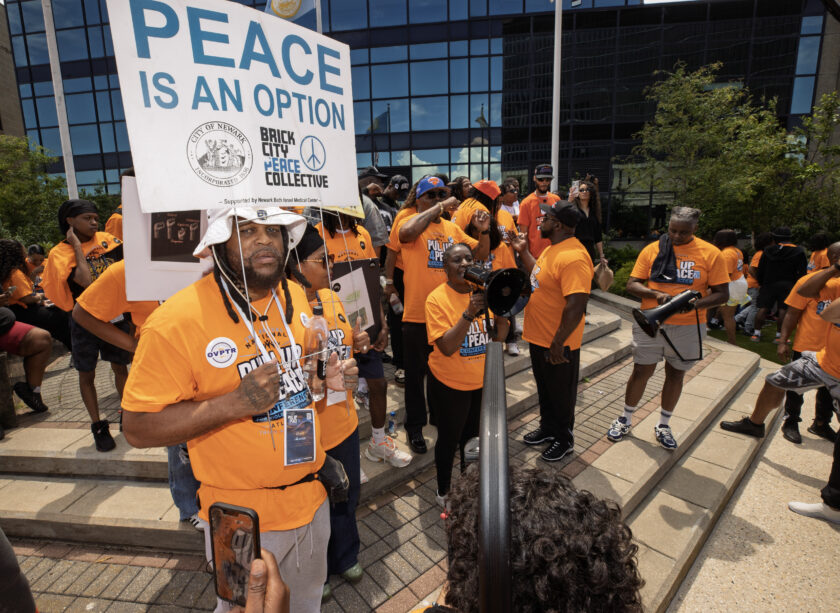
The conference featured nationally recognized speakers, hands-on workshops and panel discussions centered on violence intervention, healing, youth empowerment and community leadership. It concluded with a Peace Walk from Showboat Resort to Atlantic City Hall, where participants marched together carrying signs proclaiming “Peace is an Option.”
But for Dr. Jamila T. Davis, co-founder of Pull Up 4 Peace, the conference is about much more than three days of programming.
“This industry that we’re in, has a lot of burnout because you see so much tragedy,” Davis said. “What I saw before my eyes was like a revival. It gave people a new burst of energy, pride and endurance.”
Those “frontline soldiers,” Davis said, are often the first line of defense against violence.
“They’re the people who are directly touching people on the ground,” she said. “They’re mediating conflicts, encouraging people not to retaliate and helping connect individuals with resources before police ever have to get involved.”
Unlike traditional law enforcement, violence interrupters often work within neighborhoods where trust has already been established. Davis says that the key is preventing violence before it happens.
Davis knows firsthand the power of second chances. A New York City native, she served more than 12 years in federal prison for bank fraud. While incarcerated, she earned an associate degree, bachelor’s degree, master’s degree and eventually completed coursework toward her doctorate.
“My life changed because I addressed my trauma,” she said. “I realized people aren’t necessarily bad people. Many times they make poor decisions based on trauma.”
After returning home, Davis devoted herself to community work, eventually serving as a community practitioner-in-residence at Seton Hall University before co-founding the Institute for Research for Social Justice in Action with Angelo Pinto.
Their work focuses on equipping justice-impacted individuals with education, leadership training and professional opportunities that allow them to become community leaders.
“Our mission is to uplift the frontline,” Davis said. “Many of the people doing this work have been counted out. We help create real career paths while they’re helping save lives.”
While discussions around violence often focus on policing and prosecution, Davis believes lasting solutions begin much earlier.
“The biggest contributor is poverty,” she said. “People are imprisoned mentally before they ever get to prison physically.” When survival becomes someone’s daily reality, crime can become a desperate response rather than a calculated choice, she explained.
That reality is why Pull Up 4 Peace places such a strong emphasis on education, workforce development and changing mindsets alongside violence intervention.
“We have to show people opportunities,” Davis said. “When they change their mindset, they ultimately change their life. But that can’t happen without resources.”
Davis points to Atlantic City itself as evidence that investment in violence prevention can pay dividends.
She highlighted Floyd Talley, director of Atlantic City’s O.N.E. Neighborhood Evolution division, as someone whose leadership has flourished through continued professional development. Talley recently earned acceptance into a nationally recognized community violence intervention program at the University of Chicago.
“It’s one of countless stories,” Davis said. “People who’ve gone through our training are now running nonprofits, writing books, training others and doing things they never dreamed they could do.”
This year’s conference reflected that growing momentum. According to Davis, more than 669 attendees participated, representing well over 100 communities from around the country to exchange best practices and strengthen partnerships.
Attendees selected from 11 breakout tracks covering everything from street outreach and youth leadership to trauma recovery, policy advocacy, organizational development and public health approaches to violence prevention.
Mayor Marty Small Sr. also participated throughout the conference, joining a panel discussion about Atlantic City’s violence prevention ecosystem and reaffirming the city’s support for the initiative.
“The mayor believes we need a space to connect,” Davis said. She credits the mayor for investing in their dreams and applying nonviolence strategies in Atlantic City.
Perhaps no group embodied the conference’s mission more than 48 teenagers from Cleveland.
The students are members of a newly formed Junior Violence Interrupter program, many of whom have experienced the justice system firsthand.
Some had never traveled outside their city before boarding a charter bus bound for Atlantic City.
Rather than simply observing, they were invited onto the main stage to share their experiences—an opportunity Davis said helped many envision themselves as future community leaders rather than statistics.
“It was life-changing,” Davis said. “They saw people across the country doing this work, and many of them said it inspired them to stay out of trouble, go back home and become leaders in their own communities.”
Of course, the students also explored the Jersey Shore together, taking in the sights of the shore.
The conference featured keynote speakers including Wallo267, who spent 18 years in prison before becoming one of the nation’s top podcasters, and Dr. Sheena Meade, founder of the Clean Slate Initiative, which advocates for policies allowing eligible individuals to have criminal records cleared after meeting certain requirements.
Each speaker reinforced a common message: people’s pasts do not have to define their futures.
As attendees departed Atlantic City, Davis hopes they carried home more than notebooks full of ideas.
“Camaraderie,” she said when asked what she wanted attendees to remember. “Together we’re better.”
The work now shifts toward 2027, when organizers plan to return to Atlantic City with an even larger conference and an expanded network of violence prevention leaders. Until then, Davis says every community member can play a role in creating safer neighborhoods.
“Give people second chances,” she said. “Don’t just look at what someone has done and label them a bad person. Resources change lives. Opportunity changes lives.”
Sometimes, she said, peace begins with simply choosing to believe someone deserves another chance.