
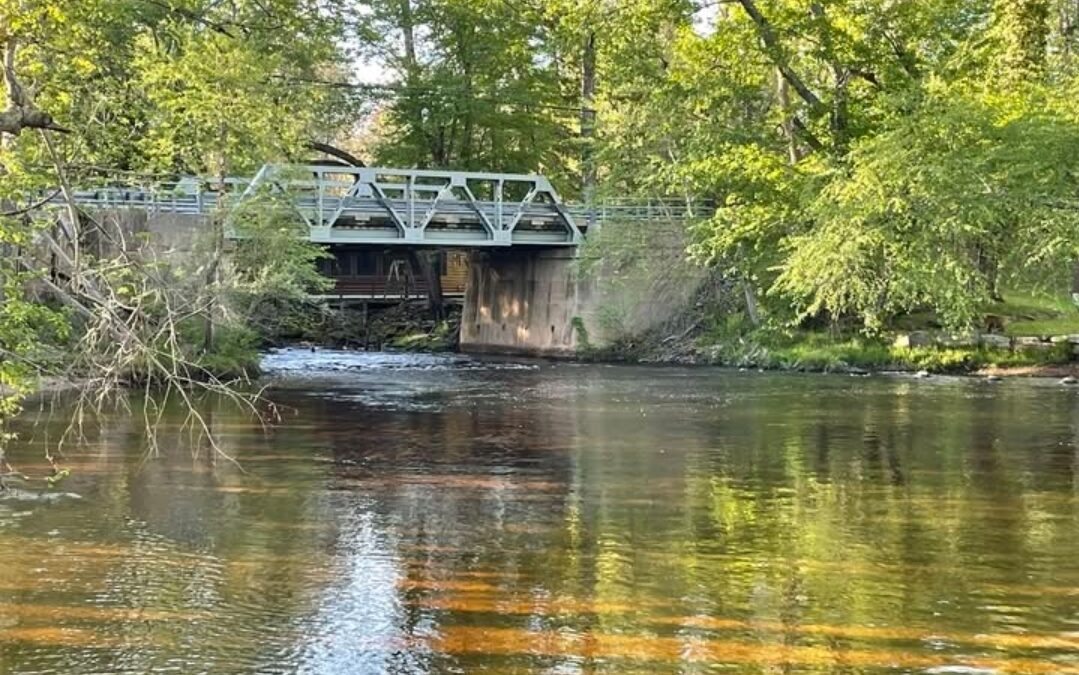
For generations, visitors have been drawn to the scenic beauty of Weymouth Furnace along the Great Egg Harbor River. But local rescue officials are warning that beneath the surface of this popular attraction lies a combination of hazards that can quickly become deadly.
The Hamilton Township Dive Team recently issued a public safety warning urging residents and visitors not to swim at Weymouth Furnace, citing dangerous currents, extreme temperature changes, underwater debris and limited visibility.
A historic landmark of the Pine Barrens
Long before it became a recreational destination, Weymouth Furnace was one of South Jersey’s most important industrial centers.
The Weymouth Forge and Furnace was established in the early 1800s after a group of investors purchased the property. Iron production began in 1802, using locally mined bog iron and charcoal from the surrounding Pine Barrens. At its peak in the mid-19th century, the site was a thriving industrial village with mills, workshops, a church, company housing and other facilities.
During the War of 1812, the furnace supplied shot and bombs to the United States government, helping support the nation’s military efforts. The ironworks also produced cast-iron water pipe, stoves, pots and other goods.
By the 1860s, however, the charcoal-fueled operation could no longer compete with larger ironworks in Pennsylvania powered by anthracite coal. The furnace reportedly burned in 1862 and ceased operation. Paper mills later occupied the site until the late 19th century before eventually closing and falling into ruin. Today, visitors can still see the remains of the industrial complex preserved within the Atlantic County Park System.
Popular swimming spot, serious risks
Despite its popularity as a swimming hole, dive team members say the river conditions at Weymouth Furnace can be deceptively dangerous.
According to the team, a deep hole located just beyond the bridge on the park side of the river has been measured at depths of up to 20 feet. While surface water may feel comfortable during summer months, temperatures drop dramatically with depth because sunlight cannot penetrate the dark cedar water.
A swimmer unexpectedly entering the deeper water can experience cold-water shock as temperatures plunge into the 50-degree range. The deep hole also contains submerged branches, fallen trees and other debris that can trap or entangle swimmers.
Compounding those dangers is the river’s current. Just downstream of the bridge, water can accelerate into fast-moving flows that resemble rapids. The dive team reports currents reaching speeds of up to 2.5 knots in some spots.
The area also contains multiple types of water movement, including eddies that create swirling reverse currents, turbulent water moving in multiple directions and fast-moving laminar, single-direction flows. Following heavy rainfall, conditions can become even more hazardous.
A tragedy that still resonates
The dangers of the Great Egg Harbor River at Weymouth Furnace are not merely theoretical.
In July 2024, a 49-year-old Mays Landing resident, Pablo Hernandez Cruz, died after rescuing two young boys who were struggling in the water at Weymouth Furnace. According to authorities, Cruz entered the river to help the boys, ages 8 and 12, who were experiencing distress in an area where swimming is prohibited. He successfully brought the children to safety, but was swept underwater himself. He was later recovered and transported to a hospital, where he died from his injuries.
The incident prompted renewed warnings from Atlantic County officials about the hazards of swimming in the river. County Executive Dennis Levinson noted that rescues and tragedies have occurred at the site repeatedly over the years, and emphasized that swimming is prohibited because of the river’s depth and dangerous conditions.
Enjoying the river safely
Despite the dangers associated with swimming at Weymouth Furnace, officials emphasize that the Great Egg Harbor River remains a treasured recreational resource. Kayaking and tubing excursions regularly travel through this stretch of the river, allowing visitors to experience the beauty of the Pine Barrens from the water in a safe and more controlled manner.
The Hamilton Township Dive Team’s warning is not intended to discourage people from visiting Weymouth Furnace or enjoying the river. Rather, officials hope visitors will appreciate the area’s history and natural beauty while understanding the risks associated with swimming in the water.
Whether exploring the historic ruins, launching a kayak, floating downstream, or simply enjoying a summer afternoon along the riverbank, visitors are encouraged to respect posted regulations and make safety a priority.
Sarah Fertsch of Egg Harbor Township holds a Bachelors of Arts in Public Relations. She is a locally renowned poet, storyteller, and dog lover.