
Coastal Conversations
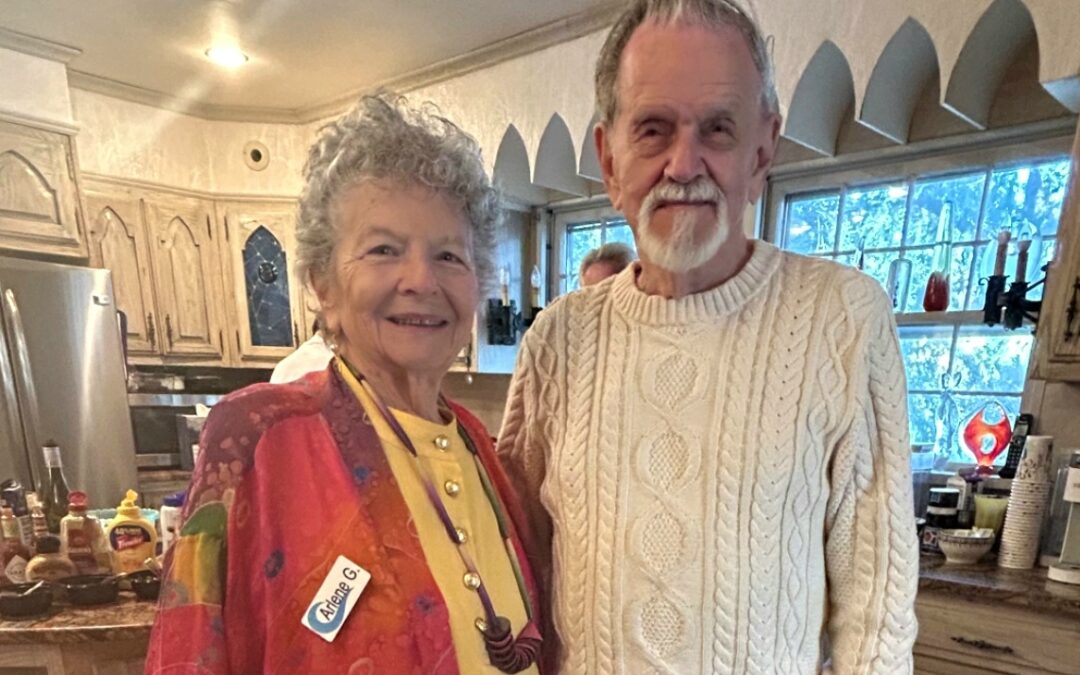
Longtime South Jersey attorney Arlene Groch built a career fighting for victims of domestic violence, women denied lifesaving health insurance coverage, and workers facing discrimination. Her advocacy took her to state and federal courts across the country, including the Supreme Court of the United States.
While attending Temple University School of Law, she chaired the 7th National Conference on Women and the Law and brought Ruth Bader Ginsburg in as keynote speaker years before she became a Supreme Court Justice. Now 87 and still deeply engaged in public life, the Northfield resident reflects on the cases that shaped her remarkable career and why she still believes in fighting for justice.
AS: You opened your own law office in 1976 while raising three young sons. What gave you the confidence to take that step?
AG: The unequivocal support of my husband, George Groch, MD.
AS: What inspired you to pursue a career in law and advocacy?
AG: I grew up as a young woman under the shadow of World War II and was raised by empathetic parents who led organizations fighting for survivors of the Holocaust.
AS: How did your domestic violence cases affect you personally?
AG: I was horrified by the devastating long-term impact of domestic abuse on all parties, but mostly on children raised in violent homes, and felt compelled to help them.
AS: Was there one case that especially stayed with you?
AG: In one case of horrific violence, the perpetrator had vowed to murder his wife and children upon release from prison. We were able to convince the judge to allow her and her children to change their identities and completely disappear. As far as we know, it was the first such decision nationwide.
AS: You argued cases in state and federal courts across the country, including one that reached the United States Supreme Court. What stands out most from those experiences?
AG: The landmark victories on behalf of the people I was fortunate enough to represent impacted the lives of women with breast cancer, casino employees throughout New Jersey, and countless victims of domestic violence.
AS: Your breast cancer insurance cases became landmark victories for women. What made those battles so significant?
AG: Insurance companies were denying coverage for bone marrow transplants for women with breast cancer by calling the treatment “experimental,” while covering the exact same procedure for men with testicular cancer. Because of the cases we handled across the country, insurers could no longer deny those women coverage. It was a landmark victory for women.
My clients were mostly mothers of young children facing enormous institutions with far greater legal resources, including Blue Cross Blue Shield Associations and the United States Government. It was a very stacked deck, but we ultimately prevailed.
AS: Your advocacy also extended to casino employees in New Jersey. What motivated you to take on those cases?
AG: The United States and New Jersey Constitutions. The courts have, or had, the power to deliver equal justice under the law.
AS: Even in retirement, you remain politically active and passionate about public service. Why is that still so important to you?
AG: I care deeply about protecting democracy and equal rights. I believe many of those protections are being threatened today, which is why I continue speaking out and supporting candidates I believe share those values.
AS: You are currently supporting Bayly Winder in New Jersey’s Second Congressional District race. What do you admire about him?
AG: Bayly dares to oppose governmental policies that are tearing this country apart with corrupt and highly partisan politics that violate the principles of democracy that I hold dear. I see in him the same values and commitment that led me to run for State Senate 43 years ago.
AS: Looking back on your remarkable legal career, what are you most proud of?
AG: Helping people who had little power fight systems that seemed impossible to overcome, and achieving legal protections that improved lives for others.
AS: What advice would you give young attorneys, especially those interested in advocacy and public interest law?
AG: Keep fighting. It’s the most honorable and effective way you can use your talents and training to achieve justice for all of us.
A big thank you to Arlene Groch. Her career is a reminder that one determined voice truly can make a difference.
Coastal Conversations highlights people in our community who are making a significant impact. If you know someone who would be a great fit for a future column, please contact me at ShoreCoastalConversations@gmail.com.
From the shore to your door, let’s keep the conversation going…