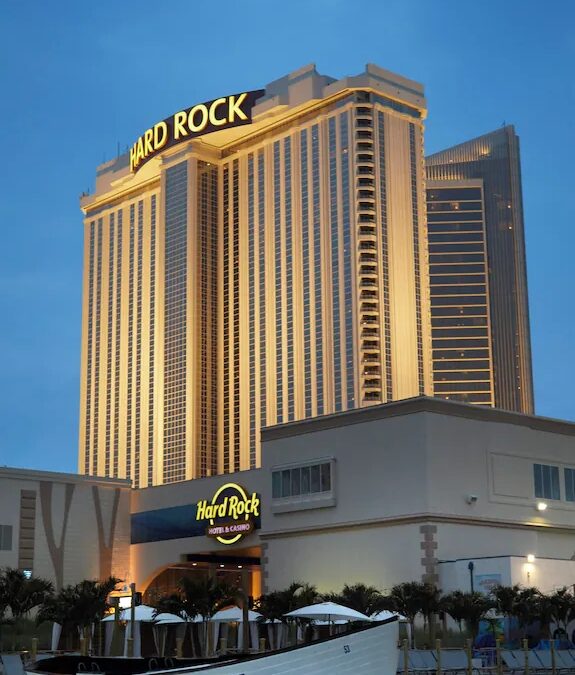
One of the highlights of my year is to take my radio show on the road for a few days and head south to Hollywood, Fla., where the majestic Seminole Hard Rock Florida’s giant guitar serves as a beacon for one of the most intriguing, stunning and inviting entertainment, dining and gambling destinations in the world.
And while I certainly enjoy the lush amenities, the incredible and immense pools to spend your day under the Florida sun at and the incredible restaurants that include the Japanese-inspired Kuro, the always impressive Council Oaks Steaks & Seafood and the new Fresh Harvest Buffet among others, the highlight of the trip is to spend an hour on air picking the brain of Jim Allen, a person who never forgot where he came from.
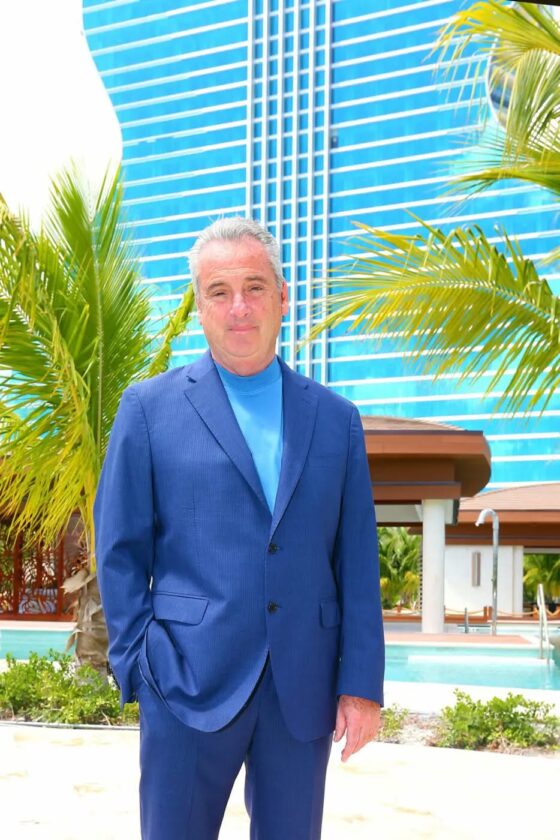
Allen’s storybook tale started with humble beginnings as a Mainland grad who went from serving as a food and beverage purchasing assistant in Atlantic City to Chairman of Hard Rock International and Hard Rock Digital and Chief Executive Officer of Seminole Gaming, arguably the most powerful casino executive in the world when you put together all of Hard Rock’s portfolio, which includes 318 locations including Hard Rock Cafes, casinos, hotels, Rock Shops and Hard Rock Live music venues.
Without Allen, there would be no Hard Rock in Atlantic City, and that’s likely the case for the one currently under construction that will change the Las Vegas Strip forever and another that will change the landscape of Queens and New York overall … something that should scare the lights out of Atlantic City operators.
This year’s interview with Allen was special as always, and these are the highlights of that hour conversation with the American Gaming Association Hall of Famer that demonstrates why Allen is the visionary he is.
SC: Jim, are there people in the gaming world — the Wynns of the world, the Sands of the world — do you think there’re other companies outside of Atlantic City that would like to be part of it?
JA: I think that most of the other companies — from what I hear — want to see the market settle. They want to see what happens in New York with the three properties now being announced.
And then obviously this new initiative that has just come up really in the last two, three months about gaming now in the center part of the state at Monmouth, and obviously at the Meadowlands … I think that most people would want to see where these things land before they would make a substantial investment, … billions of dollars or hundreds of millions of dollars into Atlantic City.
Yeah. I’m not aware of anything. They would need a ton of reinvestment.
There’s a rumor that one of the companies have been trying to sell off one of their assets for quite some time and they just haven’t had anybody interested.
SC: Let’s move on to New York. It’s obviously a huge market there that Hard Rock pursued aggressively and became one of the three to finally land it. Now that you did, that has got to feel great. It’s another victory, another place for Hard Rock to hang their hat. Is it as exciting as originally stated now that you have it?
JA: I have a fundamental philosophy, 10 degrees North, 10 degrees South, never get too excited when things are good and never get too depressed when things are bad. The other thing I think with New York is be careful what you wish for. It’s an $8.5 billion dollar project, so obviously that is some pretty substantial capital.
It’s a 50/50 partnership between Hard Rock International and Steve Cohen, who owns the Mets. Steve and Sully (Cohen’s Chief of Staff Michael Sullivan) have been great to work with. I definitely think this new scope of North Jersey and, taxes … it gives a room for pause when you’re committing that type of capital, but there’s no doubt the population is there.
Our site is tremendous: We have a new world-class soccer stadium being built in front of us; we have City Field; we have the United States Tennis Association Center there; Steve Ross is building some unbelievable housing and hotels; we have mass transit at our front door; the airport is literally seven minutes away … we can see the runway from our entrance; we’re literally steps from Flushing Bay, where there’s an amazing terminal Hurricane Sandy destroyed the port there for ferries to come in, and we’re working with the government on getting that back operating again; a lot of entertainment excitement in that particular area.
So yes, it is exciting to be a part of it, but we also want to be even keeled as to what’s involved over the next 52 months in order to build this 8 million sq. ft. building.
SC: Those watching all of the companies battle it out for the three licenses were certainly surprised when they all just started pulling out rapidly. They were just dropping literally by the day over a two-week stretch. Did you know those dominoes were eventually going to fall or was that a surprise to you, as well?
JA: Certainly, the Manhattan casinos falling out did not surprise me at all. I had the chance to do the Caesars site, and I had the chance to do the Wynn site with Steve Ross next to Hudson Yards. The reason why I didn’t pursue either one of those sites was because it seemed like there was such local opposition and the amount of work that you needed to do. And even if you did all that work like we did in Queens — we eventually got an 89 percent approval rate from the community — it was really difficult to change that mindset in midtown Manhattan.
We also had the opportunity to do the project that Las Vegas Sands had at the Nassau County Coliseum. I also walked away from that one for the same reason. We knew the university was dead set against it. We knew that’s a Republican part of New York and with a Democratic administration, that would have been an extremely heavy lift.
Steve ran his own process against all the gaming companies. We actually got selected in that first. And the second I knew I was in pretty good shape with Steve, then we obviously exited any of those other opportunities. But I very humbly know any one of the other companies would have loved to have been at City Field because of the population and the infrastructure there.
SC: You’re glad to be there over Manhattan?
JA: 100 percent. By far it’s the best side. The sites in Manhattan had projected revenue of say $1.7 to $1.8 billion or so in revenue on the individual property. Think of that as Atlantic City does $2.3-$2.4 B. in land base. But City Field has the potential to do $2.5 to $2.7 B. It’s because of the way the highways converge, the way the center of the artery, the way it’s in the largest Asian population outside of the Far East. It’s a wonderful culture.
SC: What will we see there? Another Guitar Tower?
JA: Definitely no Guitar Tower. It’s too big. We just didn’t feel that it would be the right thing to do. Steve Cohen and I sat countless times at banquet tables on Saturdays, Sundays, nighttime, letting the general public come up and just tell us what they wanted. We literally took that input and our teams knocked on over 30,000 doors in Queens. “We’re interested in being a guest in your neighborhood. We would like to build a destination resort. What would you like to see?”
They wouldn’t have wanted a Guitar Tower, but a lot of it is going back to the World’s Fair, a lot of a New York Gotham-type architecture, a little bit of Art Deco.
SC: When you see the tough times Vegas is having and Atlantic City’s struggles, are there any thoughts that New York won’t be the jackpot that you hope it will be?
JA: I think what happens is the facility will do the gross volume and we have to manage it properly. We have to have the right restaurants, the right entertainment and all of those things. The question is: What happens with tax rates? What happens with competition in regards to the bidders’ different tax rates. Will the state change that? We certainly don’t think legally they should do that.
What happens with Newark, Jersey? What happens with Monmouth? What happens with Atlantic City? We don’t know if there’s going to be a different philosophy for Mayor Mandani from what Mayor Adams had. Are they going to propose new taxes there?
But certainly the gross volume business will be there. The question is are there issues that may come up that erode the margins? You’ve got $8.6 billion in the ground, do you get the return on your capital?
SC: When will it open?
JA: We committed that we would be open toward the end of summer, early fall in 2030 (with plans for eventually up to 2,300 rooms).
SC: Let’s talk Vegas.
JA: I’d break my 10 degree rule on Vegas. It’s really doing great. We’ve got some technology that is nowhere in the world that deals with entertainment. We are ahead of schedule. We’re on budget. We bought the job out really well.
The Las Vegas market is a little bit wobbly right now. (Golden Nugget Owner) Tillman Fertitta canceled his project, some other expansions didn’t happen. Everything is kind of in neutral.
Vegas (with a Guitar Tower) will end up at 3,800-plus rooms. And the total rooms here in South Florida is basically 1,400.
We actually haven’t done any official announcements of all the amenities, but, but we will build roughly a 6,000-seat entertainment venue. Residencies are the huge thing in Vegas, and Hard Rock will be part of that game.
SC: And it looks like Florida is thriving for Hard Rock?
JA: We’re very fortunate. Florida is a state that people continue to move to. I think we continue to work our relationship with the state of Florida … there’s a lot of issues in the digital space.
The land-based gaming is great. It’s stable. It continues to grow, but a lot going on here in Florida with a lot of illegal gaming activity happening through the smartphone.
So, we’re certainly working with Governor DeSantis, and we’re in the legislative session now. We’re hopeful that some new laws get approved and we’ll see where it goes?
Frankly, so many of these offshore companies and some even in-state companies, they’re getting much more brazen. Florida has some very antiquated laws where a lot of things say in New Jersey that are definitely a felony related to gaming. Here in Florida, they’re misdemeanors, right? So these guys don’t care.
They open up, they put a hundred machines, 200 machines out. And then if you close them down, they get a ticket and they just move to the next location. So, a lot of that has been big here in the news in Florida the last year or so.
SC: Worldwide, any projects that are coming on board soon?
JA: Athens, I just was in Athens …we’re moving at lightning speed. It’s going to be a special property. It really is. We’re pretty excited.
Scott Cronick is an award-winning journalist who has written about entertainment, food, news and more in South Jersey for nearly three decades. He hosts a daily radio show – “Off The Press with Scott Cronick” – 4 to 6 p.m. weekdays on Newstalk WOND 1400-AM, 92.3-FM, and WONDRadio.com. He can be reached at scronick@comcast.net.