
If you read about Atlantic City’s early civic leaders, it’s clear that they prioritized education.
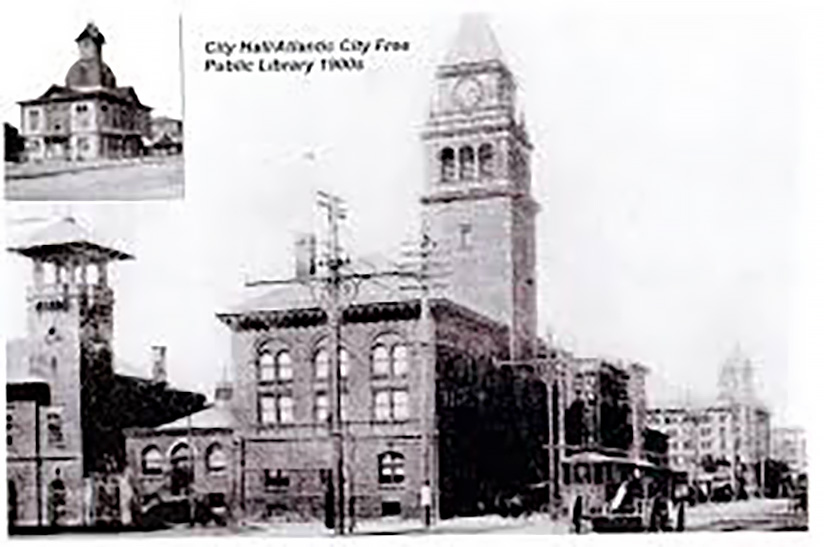
In 1901, almost 50 years after the city was incorporated, Atlantic City voters passed a referendum to establish the city’s first free library. No one knows exactly why this was considered a priority, but to put that reasoning into perspective, it’s important to consider what was going on in the city at that time.
Philadelphia-to-Atlantic City train service began in 1854, the same year the city was incorporated. By 1874, almost half a million tourists had visited Atlantic City. Because of the volume of visitors, a second rail line was added in 1878, and by that juncture, luxury hotels were springing up all over the place.
With the sun, the sand and the Boardwalk – the first version of which was built in 1870 – the real building boom began in earnest around 1900 as Atlantic City quickly became one of the country’s leading resort destinations. The purported health benefits of the salt air and a variety of other diversions – some barely legal – were drawing more and more visitors.
Though Atlantic City wasn’t the decadent place it would become a couple of decades down the line under Enoch “Nucky” Johnson and his cohorts, city residents must have seen that it was on its way to becoming a wide-open town. Perhaps the institution of a public library system would counter, or at least slow down, the decadence that was clearly on the way.
Or maybe it was much simpler than that: Maybe those who lived in the city year-round (the census indicated that in 1900, Atlantic City had a full-time population of 27,000) simply wanted a library. The vote was overwhelming, with 6,062 in favor of building a library, and only 30 opposed.
In April of 1902, the first library opened on the third floor of City Hall, but it was only a temporary location. On Jan. 1, 1903, the city’s first dedicated library opened in a wood-framed house at the intersection of Illinois and Pacific avenues. The initial collection of approximately 1,000 books was donated by the Women’s Research Club. The property was eventually purchased specifically to construct a permanent library building.
None other than steel-tycoon-turned-philanthropist Andrew Carnegie donated $71,000 – close to $3 million in 2026 dollars – for the construction of a new and permanent library, which opened on Jan. 2, 1905.
Carnegie believed in education and in libraries. The Atlantic City structure was one of 36 libraries Carnegie funded in New Jersey.
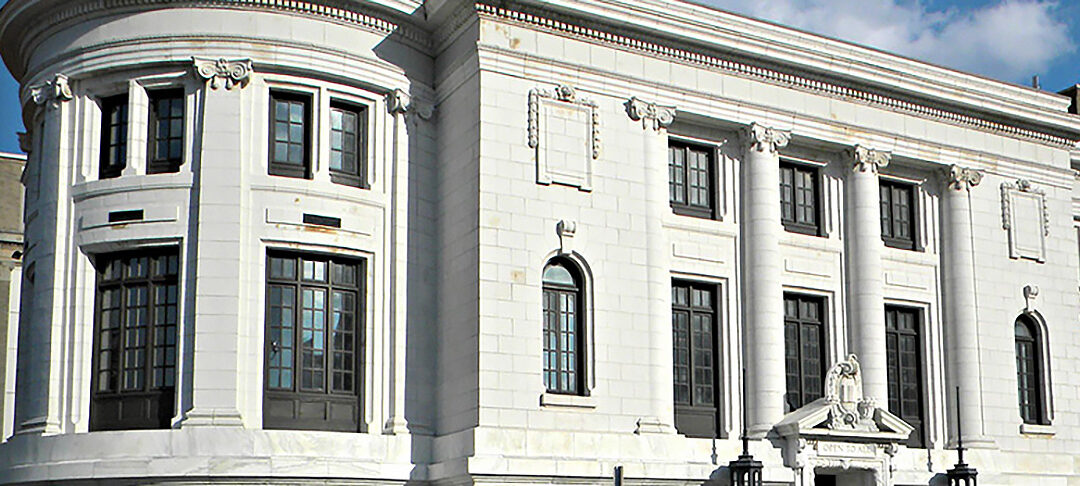
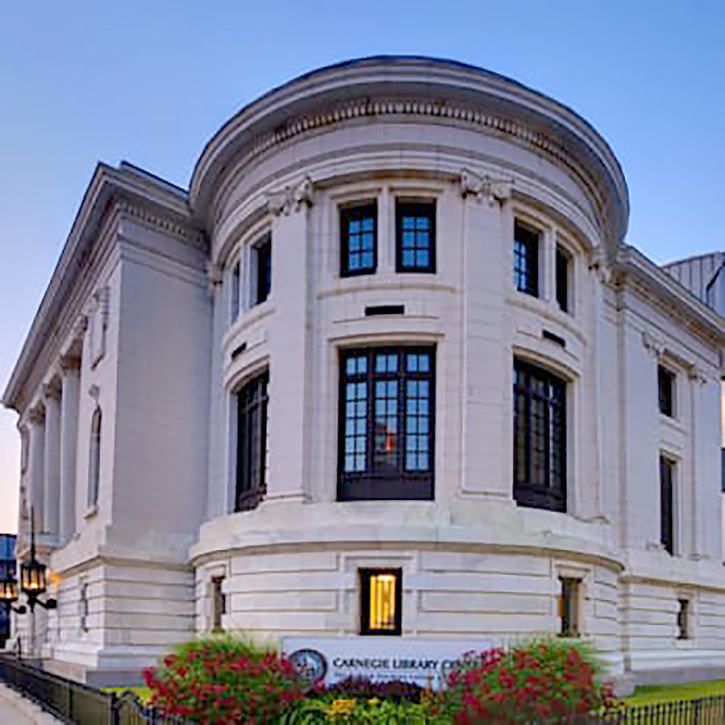
Carnegie’s people hired architect Albert Ross, designer of the library used for the Historical Society of Washington, D.C. He used what was described as “a symmetrical classical style design,” which included central book stacks open to the public, natural light in public areas and separate public spaces with specialized materials. The building also had an art gallery, museum and meeting rooms.
Upon the Atlantic City opening, Carnegie wrote, “I trust the library will fulfill its mission in the highest degree, and become the center of light to all people.” The words “Open to All” were engraved at the top of the building’s main entrance.
The building was used by the Atlantic City Public Library until 1985. It’s been reported that in the 80 years of its use as a library, only minor renovations were made. In 1985, the library moved to a larger building at Tennessee and Atlantic avenues, where it stands today.
The original 9,000-square-foot Carnegie Library Center, as it became known in later years, is still imposing and still beautiful, with its marble, granite, and terra cotta exterior; terrazzo floors; Scagliola-finished columns; and marble and iron staircases. It was still in relatively good shape and was used for various city offices until 1994. Sadly, by then it was no longer viable to use as an office building and it was empty until around 2001.
In that year, Stockton University, the City of Atlantic City and the Casino Reinvestment Development Authority teamed up to save, preserve and renovate the Carnegie Library building. The idea was to use it as a Stockton satellite campus for continuing and professional education. More than $5 million was invested to make renovations. The building was used by Stockton until 2018, when the university opened its Atlantic City campus.
In 2022, Atlantic City’s first library was returned to the city. At the time, Stockton President Harvey Kesselman said that reverting ownership back to the city would provide new opportunities for the city’s residents and ensure the historic building remains in active use for their benefit.
“Our understanding is that the Carnegie Center will be used to provide academic and other support services for at-risk teenagers and young adults in Atlantic City,” Kesselman said. “We applaud those efforts and look forward to those students becoming future Ospreys (Stockton’s mascot) here at Stockton.”
Today’s Carnegie Center includes a 75-seat lecture hall, a multipurpose room seating 40, a computer lab and executive conference and seminar rooms – all equipped with state-of-the-art communications technology. Right next to the center is the Civil Rights Garden – a tribute to the Civil Rights Movement used for public lectures, receptions and other events.
Andrew Carnegie would likely be happy to know that the structure he helped build 121 years ago is still standing, still very much in use and still, as he envisioned, one that is “Open to All.”
Bruce Klauber is the author of four books, an award-winning music journalist, concert and record producer and publicist, producer of the Warner Brothers and Hudson Music “Jazz Legends” film series, and performs both as a drummer and vocalist.