The Casino File
As a new year launches, it’s customary to make resolutions. But for the purposes of this particular column, “New Year’s suggestions” feels more appropriate, at least as it pertains to the local gambling industry.
To put it both succinctly and harshly, things are not so hot in our town’s gaming realm. The reasons why are, at this point, familiar to any and all who are interested in the subject. As such, they need not be rehashed here.
But instead of handwringing and pearl clutching, I thought it would be useful to offer some ideas that might actually help the city’s nine gaming halls. Do I expect any to be adopted? Not really; I’m pretty sure Nevada-based suits don’t, as a rule, look in this direction for insight, wisdom and guidance (nor, I assume, do those headquartered in New Jersey, Rhode Island, Michigan, Texas or Florida).
But maybe what follows will at least trigger discussions — and soul searching — in various C-suites about ways to fix what’s clearly broken. That’s something that has become more of an imperative since three gaming licenses were recently awarded in New York City. At the very least, it would be nice for those in charge of the city’s literal lifeblood to admit that it makes absolutely no sense to keep things as they are given that the Sword of Damocles that is legal gambling in New York City dangles ever nearer to Atlantic City.
So, without further ado, my New Year’s suggestions:
Always remember, greed kills
“Greed kills” should be seared into the flesh of every local casino executive. In Las Vegas, prices got so insane this year (can you say $30 for four hours of parking and $21 bottles of water?) that industry revenue losses were in the double digits. As such, there’s definitely a lesson to be learned.
Kill excessive hotel charges
As a rule, local posted hotel room rates aren’t high to the point of absurdity, especially during the offseason. But they can easily get out of hand when the demonic “resort fees” are added to the tab. What these extra charges cover seems kind of vague. Sure, guests can use things like pools and gyms, but weren’t those things always included in the basic room cost? And why should people who don’t avail themselves of such amenities be forced to pay for them?
Look to the past
Once upon a time, the gaming industry business model was built on a rather straightforward concept: Get people onto the casino floor by offering incentives (room, food, beverage and entertainment comps) whose cost to the property will, according to the laws of mathematics, be covered — and then some — by guests’ gambling losses.
But that began to change in 1989, when Steve Wynn opened the now shuttered Mirage in Las Vegas and discovered people were willing to pay for things, like show tickets, that once were loss leaders.
In the post-pandemic era, gambling dens have doubled down on Wynn’s blueprint; I regularly hear complaints from casino regulars that comps are being distributed with eye droppers rather than fire hoses. In what universe (other than the one inhabited by accountants and Wall Street investment bankers) does that make sense?
Return sanity to parking fees
Given that the overwhelming majority of AC visitors arrive by car, why in the world do parking fees even exist?
A couple of Thursdays ago, as I drove down Pacific Avenue, I saw a Boardwalk gambling den’s sign that said it cost $15 to self-park there. At 1 p.m.! During what is historically among the slowest weeks of the entire year! The odds are overwhelming that said casino would have gotten that $15 on the floor anyway, so, where’s the logic?
Bring back buffets
No CFO worth his calculator is going to countenance lowering restaurant prices, but an emphasis on value (with some tradition tossed in) can be part of the equation. And that’s where buffets enter the picture.
Up until Ol’ Mr. COVID reared his spike-filled head in 2020, smorgasbords were as much a part of the casino-going experience as slot machines and gaming tables, and true industry icons. But now, there are exactly two remaining, full-time buffets in town (thank you Borgata and Hard Rock!). That similar operations proliferate throughout the southern part of the state (and elsewhere) is testament to the enduring appeal of the “all-you-can-eat” concept and, at least in theory, a compelling argument for their return.
More production shows
And staying in “back-to-the-future” mode, how about recognizing the value of musical revues and variety shows?
While it’s easy to dismiss these (relatively) inexpensive-to-produce programs as outdated, that assessment makes no sense in light of recent history here.
If such presentations have lost favor with the public, why has Borgata — the local industry’s revenue champ for a generation — presented “The Burlesque Show” annually since Barack Obama lived in the White House? And how do you explain the sold-out performance of “Motown Forever” I attended there on an early-November Sunday afternoon?
These types of shows are a no-brainer way of attracting customers, especially during off-peak times. And they make a lot more sense than letting some of the finest performance spaces on the east coast sit empty for most of the year.
A personal note
From me and mine to you and yours, here’s wishing all of you a healthy, peaceful and joyous 2026.
See you at the casinos!
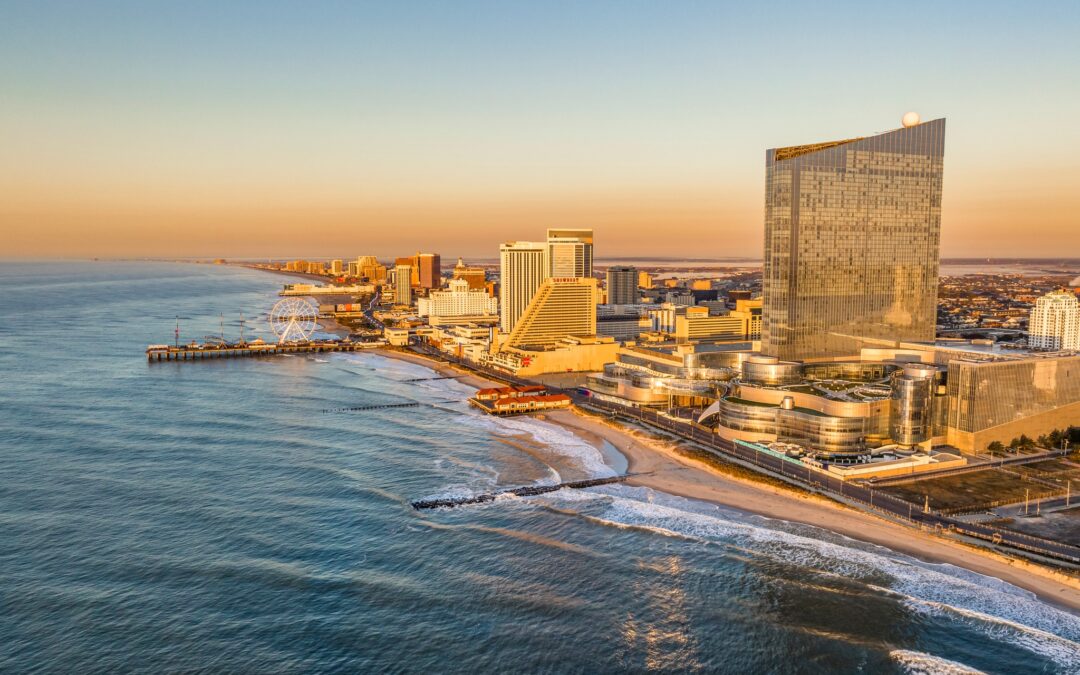
Photo credit: Visit Atlantic City