
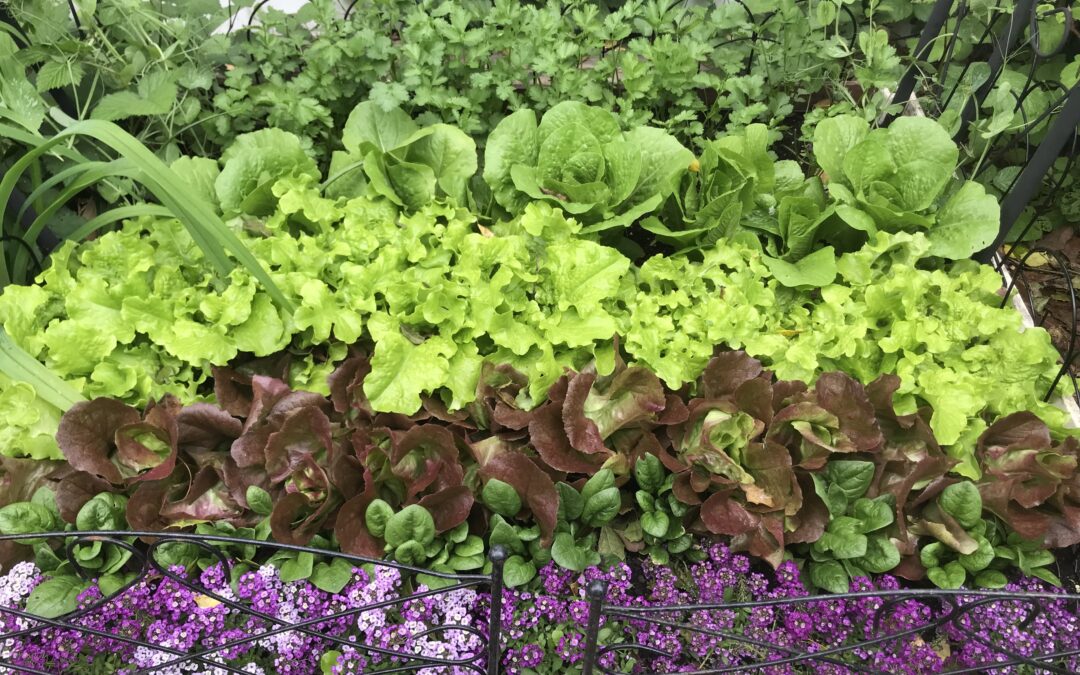
Winter gardening may sound like an oxymoron, but did you know that you don’t need to wait until spring to begin your garden anew? Perhaps in this month of resolutions, you have decided to eat healthier and thought about dabbling in growing your own food. Fortunately, you can start right away before your excitement and resolve wear off.
Some gardeners follow the rule of thumb of waiting until Mother’s Day to begin planting. At that point in the year, the soil begins to warm, and we are typically safe from the last spring frosts. But winter sowing refers to a specific method of planting seeds. Instead of waiting for warm weather or starting seeds indoors, you intentionally expose seeds to the fluctuation of freezing and melting temperatures of winter. Certain seeds, especially those of native and perennial plants, need this period of cold to help them germinate. This process, called cold stratification, will break down the outer shell of the seed and help it break its dormancy. When the weather begins to warm, your seeds will sprout at just the right time and will grow into tough little seedlings that do not need to be hardened off in the same way as plants that have been sown indoors and coddled. Winter-sown seeds have a very successful germination rate, and you may find that you are able to grow plants that you have struggled to grow in the past.
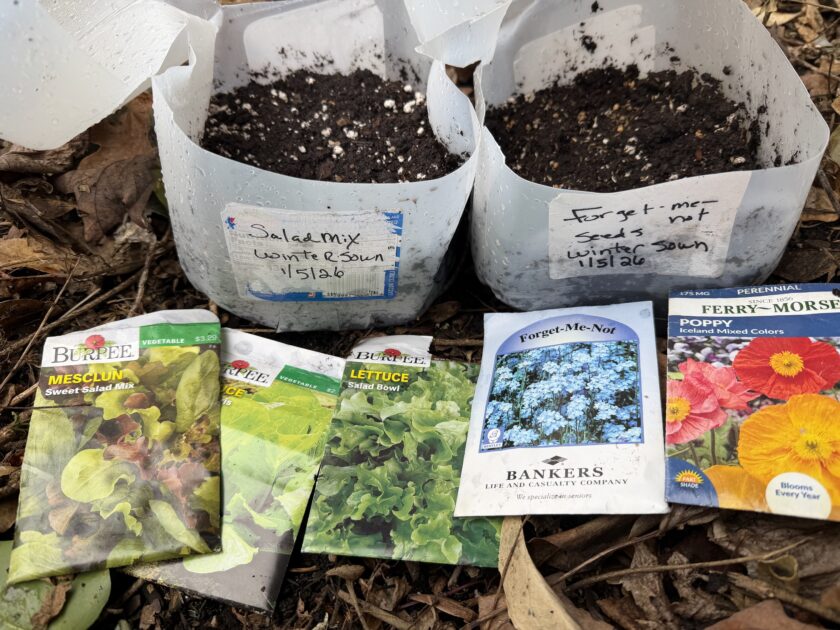
Though there are a variety of containers you can use for winter sowing, the classic vessel of choice is the lowly gallon milk jug. You will want to poke holes for drainage in the bottom of the jug, then cut the container in half, horizontally, leaving the area around the handle intact, like a hinge. The milk jug will serve as a miniature greenhouse and help protect your seeds and seedlings from critters. Once you have prepared your milk jug with holes in the bottom and the horizontal cut, you can fill it with potting soil. Water the potting soil well and allow the excess water to drain. Now for the fun part — planting everything from vegetables and herbs to flowers. You will want to leave the cap off of your milk jug to allow rain and snow to water your seeds. In most cases, this will provide your seeds with sufficient moisture. In the event of a deluge or a rare dry spell, you may want to check on your seeds and pour off water that is not draining or add a little water if the soil is dry. This is not normally an issue, though, until it gets closer to spring. Once your seeds are planted, you will want to seal up your little greenhouse by using duct tape around the horizontal cut you made. Then place your containers where they will receive lots of sunlight, at least as much as can be expected in winter. No need to panic if snow is in the forecast. This is all part of the process. Your seeds will rest happily under a blanket of snow and build character while waiting for spring.
One important part of winter sowing is labeling your containers. Trust me, if you plant a few different types of seeds, you will not remember which ones are which. You can use a waterproof marker on the outside of your container, and you may want to place a popsicle stick label on the inside as well, since the weather will wear away at your label. I like to include the date that I sowed my seeds. Though milk jugs are commonly used for winter sowing, you can experiment with other types of clear or translucent containers.
As the weather starts to warm up, you can take a little peek through the top of the milk jug for signs of life. Some seeds will germinate sooner than others, and this is perfectly normal, as they will be following their own natural timeline. Cool-season herbs and vegetables will sprout first. Lettuces are among the easiest plants to winter sow, and you can grow your own salad for a healthy start to the year. When warmer weather arrives, you may want to remove the tape to allow more venting for your seedlings. This is the time to make sure that they have enough water, because you do not want to let your seedlings dry out.
We would love to hear about winter sowing from our readers. Send your comments and questions to shorelocalgardenener@gmail.com, and we can all learn together for a happy, healthy new year.
Tammy Thornton lives with her husband, children, and crazy pets while enjoying a life of gardening, cooking, and going to the beach.