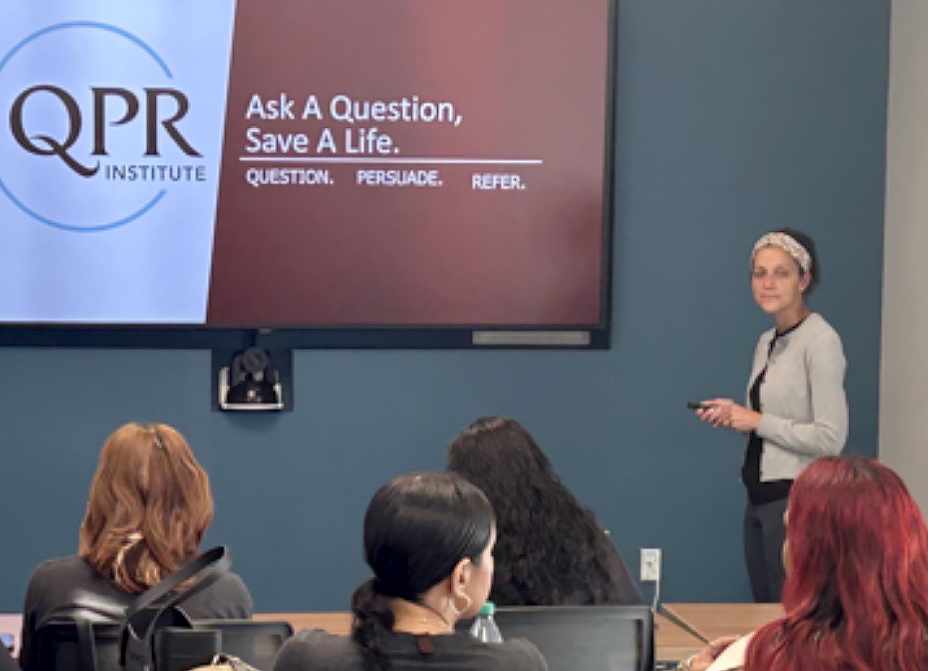
Jaime Angelini, Suicide Prevention and Crisis Response
Coastal Conversations
As we welcome the new year, we often focus on fitness and nutrition, but our mental well-being is just as important. For more than two decades, Jaime Angelini has been helping New Jersey communities address mental health challenges when it matters most. As the Statewide Director of Disaster Services, Suicide Prevention, Crisis Response, and Special Projects at the Mental Health Association in New Jersey (MHANJ), her work focuses on preparedness, education, and compassionate response during times of crisis.
A key part of Angelini’s mission is empowering everyday people with the knowledge to recognize when someone may be struggling. As a certified instructor in Mental Health First Aid, QPR Suicide Prevention, Stress First Aid, and other evidence-based programs, she brings practical, accessible training to teachers, parents, first responders, employers, and community leaders across New Jersey.
AS: What does QPR stand for, and why is this, along with Mental Health First Aid training, so important for everyday community members, not just professionals?
JA: QPR stands for Question, Persuade, Refer. It’s a suicide-prevention gatekeeper training designed to help everyday people recognize warning signs and respond in a supportive, safe way. Mental Health First Aid (MHFA) is a training that teaches people how to recognize signs of mental health challenges, respond supportively, and guide someone toward appropriate help before a crisis escalates. Training like this is crucial for community members because, often, people experiencing a mental health challenge or crisis initially turn to friends, family, teachers, coaches, and coworkers for support. They may show warning signs in everyday settings (school, work, home). Gatekeepers are often the first, and sometimes only chance for intervention.
AS: What are some common warning signs people often overlook when someone is struggling with their mental health?
JA: Commonly overlooked signs include sudden changes in behavior, withdrawal from friends or activities, increased irritability, changes in sleep or appetite, declining school or work performance, and expressions of feeling like a burden. Statements that sound casual, such as “I’m just so tired of everything” or “It wouldn’t matter if I wasn’t here,” are also easy to dismiss, even though they can signal a deeper struggle.
AS: What misconceptions about suicide prevention or mental health do you encounter most often?
JA: One of the most common misconceptions about suicide prevention is the belief that asking someone directly about suicidal thoughts will “put the idea in their head.” Research consistently shows this is false; asking can actually reduce isolation and open the door to help. It is important for people to know that mental health challenges can impact any one of us, and that experiencing a mental health challenge is not a sign of weakness.
AS: How has your experience responding to disasters shaped your perspective on emotional resilience and recovery?
JA: My experience responding to disasters has taught me that oftentimes, resilience comes from connection, routine, and having support systems in place before and after a disaster or crisis. Recovery is rarely linear; people heal best when their emotional reactions are normalized, and they are given time, compassion, and practical support.
AS: What advice would you give to someone who wants to help a loved one but is afraid of saying the wrong thing?
JA: For someone who wants to help a loved one but is afraid of saying the wrong thing, the most important advice is to focus on listening rather than fixing. You don’t need perfect words. Simple statements like “Thank you for sharing how you are feeling,” and “I care about you and want to help,” can make all the difference. Stay calm and help them get connected with a caring professional.
AS: How can schools, workplaces, and community organizations better support mental wellness?
JA: Schools, workplaces, and community organizations can better support mental wellness by normalizing mental health conversations, offering and encouraging education like Mental Health First Aid or QPR, and creating environments where asking for help is encouraged rather than stigmatized.
AS: What is one thing you wish everyone understood about mental health before a crisis occurs?
JA: One thing I wish everyone understood before a crisis occurs is that mental health challenges are not signs of weakness. Early support, empathy, and connection can make a life-saving difference long before things reach a point of crisis.
As the new year begins, let’s pause to remember our local neighbors in need and look for ways to support them. Together, we truly can make a difference.
Coastal Conversations highlights people in our community who are making a meaningful impact. If you know someone who would be a great fit for a future column, please contact me at ShoreCoastalConversations@gmail.com.
From the shore to your door, let’s keep the conversation going.