Drink Up!
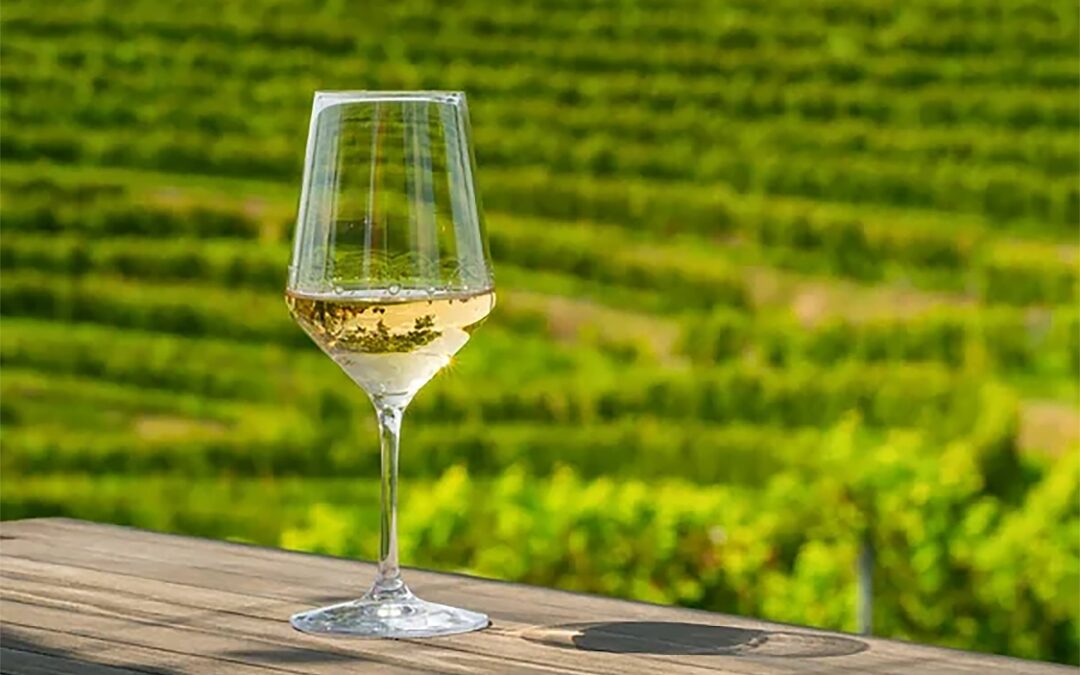
“If it doesn’t happen in the vineyard, it can’t happen in the winery.” This expression, often heard at wineries around the world, summarizes the importance of terroir in the winemaking process. Let’s discuss this frequently used wine term. Then, I’ll offer recommendations of one wine varietal, Sauvignon Blanc, made in numerous distinct wine regions throughout the world, so you may experience it for yourself: terroir is everything!
There isn’t a single term in the English language that encapsulates everything the word “terroir” has come to mean. It was first used in France in the 13th century to refer to a territory or village, but by the 17th century, it meant land or soil. By the mid-20th century, the meaning of “terroir” evolved further to what is currently used in viticulture: a description of the total environment that impacts the quality and characteristics associated with the crops grown in that particular area. This includes the soil, climate, elevation, rainfall, temperatures, ambient flora and fauna, microbial life living in the soil, prevailing wind patterns, proximity to bodies of water, and anything else that could affect what grows there. Think of it this way: New Jersey is famous for many crops, including blueberries. Did you know that Maine is also famous for blueberries? I’ve enjoyed my share of Maine’s wild blueberries over my years of owning a home there. They are delicious, but completely different from what we have here. Why? Terroir!
The concept of terroir as it relates to wine can be attributed to the Benedictine and Cistercian Monks of France, who, as far back as the first century A.D., recognized that different parcels of land had characteristics that allowed certain varietals of grapes to fare better than others. They were observant enough to notice that terroir could even be distinct between adjacent rows of vines. This became the basis for the appellation system, which identifies specific subregions that have been proven to produce particularly good wine of specific varietals within larger wine regions. Each country has its own designations. In the U.S., we call them AVA (American Viticulture Areas); in France, it is AOP (Appellation d’Origine Protégée); in Italy, it is DOC (Denominazione di Origine Controllata); and in Spain, it is DOP (Denominación de Origen Protegida). Each appellation has specific regulations for wine making, including which grapes can be grown, growing seasons, harvest dates, fermentation, aging requirements, and more. Most Old-World wine countries place more emphasis on the appellation from which the wine came, rather than on the varietal itself.
To bring these concepts into your own glass, let’s look at how terroir affects just one varietal: Sauvignon Blanc. Although western France, the Loire Valley and Bordeaux specifically, are considered to be the birthplaces of Sauvignon Blanc, it is grown in at least 38 countries globally, including New Zealand and the United States. Whether you conduct a side-by-side with the recommendations I am about to give, or select your own, you will undoubtedly note the differences that terroir can bring to the same grape.
Let’s begin in France, the origins of the grape. Sancerre is a region that has become so famous that the wine produced there is better known by the name of the region rather than the grape varietal. Customers looking for a Sancerre may not realize they are actually requesting a Sauvignon Blanc. Sauvignon Blanc accounts for approximately 81% of all the grapes grown there. As famous as the wines are, however, this region is a bit off the beaten path. When my wife and I visited last year, we were surprised when the train doors opened onto grass. The Tracey-Sancerre stop is quite literally a stop, not a station! Sancerre is the epitome of pastoral beauty as a small medieval hilltop town overlooking the Loire River with a population of just over 1300 people. Sancerre AOC (Appellation d’origine contrôlée) is comprised of the area immediately surrounding the town, plus 14 nearby villages. It is the terroir, specifically the soil, of this region that makes the Sauvignon Blanc of Sancerre so outstanding. The calcareous (calcium carbonate and chalk) and siliceous (silica limestone) soils are what give the region’s wines such wonderful minerality. The resulting wine is a perfect balance of fruit and minerality with a crisp, clean, fresh taste. Sancerre Sauvignon Blanc wines are very dry and typically extremely low in sugar. Many wine enthusiasts consider Sancerre the world’s most perfect demonstration of Sauvignon Blanc wine, but I leave that for you to decide.
Many Sancerre wines are wonderful examples, but two of my favorites are family names that are extremely well-known in this region. The Mellot family name is present throughout the region. La Moussiere Sancerre by Alphonse Mellot is an outstanding wine that demonstrates the effects of the terroir of this region on this grape. Equally as renowned is the Henri Bourgeois Sancerre. Both wines feature expressive notes of tropical fruit, pineapple with hints of eucalyptus, followed by a fresh, mineral finish that makes the Sauvignon Blanc from this appellation famous.
Immediately to the east of Sancerre is the appellation of Pouilly-Fume, also famous for Sauvignon Blanc. Why is this designated as a distinct wine region? You got it: Terroir! While the basic composition of the soil in these two regions is similar, Pouilly-Fume’s soil is more dominated by silex, which is known in the U.S. as flint rock. The result is a wine that has notes of smoke, flint and stone fruit such as peach, apple, and pear. An excellent example of the Sauvignon Blanc from this region is Michel Redde et Fils La Moynerie Pouilly-Fume.
California has become very popular for its expression of Sauvignon Blanc, accounting for nearly 44% of all sales of this varietal globally. The two aspects of terroir that distinctly impact the flavor and aroma of wine are weather and soil. California is quite a bit warmer and, as a result, has a longer growing season. Also, the soil is composed of marine sedimentary and volcanic rocks. The resulting wines in California are more fruit-forward and tend to have notably less minerality. Two of my favorite Sauvignon Blancs from California are the Daou Sauvignon Blanc from Paso Robles and the Joel Gott Sauvignon Blanc. The aromas and flavor profiles are white peach, honeydew melon, guava and passionfruit with notes of tangerine and grapefruit on the finish.
New Zealand has become as popular for Sauvignon Blanc as California and now accounts for a little more than 44% of global sales. Again, the terroir makes the difference. The climate is maritime influenced with very warm days and much cooler nights. The soil is largely sand and clay. The result is the very fragrant wines that are dominated by the bright aroma and taste of grapefruit with notes of passionfruit that have made New Zealand’s expression of this varietal very popular, especially in the summer season. There are many great examples, but my favorites are Cloudy Bay, Whitehaven and The Infamous Goose. Each has its own subtle differences, but all demonstrate what makes New Zealand popular.
So there you have it – one varietal, four distinct wines. Terroir is everything! I hope you enjoyed learning about one of the more complex concepts in winemaking. A fun way to experience the effect of terroir is to get a bottle from each region and have your own personal wine tasting with friends. As always, contact me with any questions at dsetley@passionvines.com or stop by the store. Until next time, Happy Wining!
David Setley is enjoying his retirement from higher education as a wine educator and certified sommelier at Passion Vines in Somers Point, New Jersey.