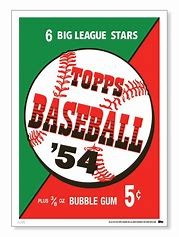
Card collectors know the thrill and anticipation of going to their favorite store to make their weekly purchase of the pack of cards for the current sport (baseball, football, basketball or hockey), or in the case of non-sports, whatever is current, be it a recent movie having cards associated with it or a game such as Pokemon or Magic the Gathering. Opening the pack to see if you got a hot rookie card or star player or a card that would help you win a game represented the fun of card collecting. Then, if you were a set builder, you would arrange the cards numerically with the ones you already had hoping to finish the set without too many duplicates. But what happens to the wrapper that contained the cards? Likely it got thrown away. If you were financially secure enough to buy an entire box of cards, it too went into the trash unless you used it to store the cards.
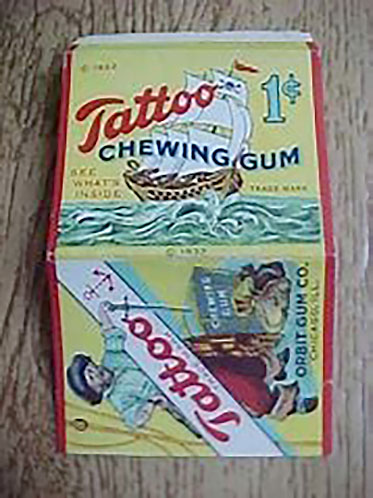
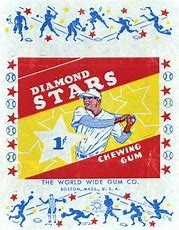
Early packs of cards that contain a stick of bubble gum had a wrapper with a waxy finish to keep the gum fresh, and hence were called wax packs by collectors. These packs usually had some graphics depicting a generic player of the sport of the cards within. These wrappers could easily be opened without ripping the wrapper. Later packaging involved wrapping the pack of cards in a clear “cello” wrap where the front of the top card and the reverse of the bottom card was visible. Then the rack pack was developed were three packs of cards were packaged together and three fronts and three reverses were visible. Cello packs could be opened without ripping the cello, but the rack packs had to be ripped to get the cards.
Years ago, kids could care less about the wrappers, they wanted to get to the cards. But today with more adults taking part, they are aware that not many of the old wax pack wrappers and boxes survived, and the ones that did survive can bring big bucks.
Some collectors who collect the older sets like to have an example of the wrappers that contained the cards in the set (some even go so far as to seek out a box). Topps Card Company had a monopoly since their start in the early fifties. They released cards over the season in series to keep the demand going with new player cards. That was meant to keep those kids spending their allowance or paper route money all season long. Since each series had a different wrapper, it became necessary to get a wrapper for each series. The final series released late in the season typically had the lowest production and was therefore the rarest.
So those things we threw away as kids are now valuable. Collectors display these wrappers in different ways; one being totally unfolded and the other placing cards inside and rewrapping the pack.
About 40 years ago, I purchased a group of 1961 Fleer basketball cards. This was a one-year test by Fleer to see if there was a market for basketball cards, which evidently, they decided there was not. The person I purchased the cards from had found unopened boxes of these cards in his grandfather’s attic. Granddad had a store in the 1960s, which, among other items, sold sports cards. Evidently the Fleer cards didn’t sell. Grandson proceeded to open all of the packs and throw away almost all of the wrappers and all but one empty box. I bought those along with the rest of the cards and then sold the empty box for $200 and the wrappers for $50 each. The sad thing is if he had not opened the wrappers, they would have brought considerably more money for complete boxes of the cards.
Douglas Keefe and his wife Linda are owners of Beachcomber Coins and Collectibles in Egg Harbor Township. It is their only location.