

Residents across South Jersey say their electric bills have surged in recent months, while utility officials point to colder weather, rising demand and national energy market pressures as the driving forces behind higher costs.
Earlier this month, Atlantic City Electric (ACE) announced it is reinforcing its commitment to address rising energy prices through its parent company Exelon and a new initiative called the “Exelon Promise.”
The program is described as “a comprehensive, customer-first strategy focused on delivering immediate customer relief, strong protections amid growing demand, and long-term solutions to address the root causes driving higher costs.”
Energy supply prices are rising nationwide due to a combination of growing electricity demand, limited supply and broader market dynamics, the company said. Utilities do not set supply prices, which are determined in regional energy markets.
Atlantic City Electric Region President Andrew Hendry said about half of a typical residential electric bill reflects the cost of generating power at plants, with those prices set through the regional PJM Interconnection electricity market, which serves 13 states.
“We — Atlantic City Electric — don’t set those prices. We don’t control them. We don’t make a profit off them. We don’t own generation. So we don’t make a profit off higher generation prices,” Hendry said. “But unfortunately, we have to pass those through to our customers.”
Hendry said rising electricity demand combined with limited generation supply has pushed prices higher in recent years, resulting in an average 20% increase in customer bills last year.
He said growing demand from sources such as data centers has contributed to the imbalance, while the portion of the bill ACE directly manages — known as the distribution or delivery charge — makes up about one-third of the typical bill and covers infrastructure such as poles, wires, transformers and line crews needed to deliver electricity to homes and businesses.
Among the measures included in the Exelon Promise initiative is a $4.5 million Customer Relief Fund along with flexible payment options, energy efficiency programs and connections to assistance programs such as the Universal Service Fund and the Low Income Home Energy Assistance Program (LIHEAP).
The company said that in 2025 it helped more than 35,000 customers secure over $54.4 million in energy assistance, including more than $6.2 million in LIHEAP funding. More than $2.7 million from the Customer Relief Fund has already been pledged to assist nearly 6,000 South Jersey customers, with just over $1 million still available.
Hendry also cited unusually cold temperatures as a key factor behind higher bills as colder temperatures force heating systems to run longer and more frequently, which directly increases electricity usage.
“Customers are effectively dealing with a double whammy. They’ve got the supply costs that have increased significantly…Then we just had this major cold snap in January and February,” Hendry said. “January 2026, for example, was 21% colder than that 10-year average,” he said.
However, some residents say their bills have risen far beyond what they expected based on their household usage.
Natalie W., a resident of Egg Harbor Township, said her monthly electric bill has nearly tripled in the past year. She lives in a home just under 1,000 square feet.
“It’s like you get away with under $100,” she said of her previous bills. “Where are we at now? We’re probably at almost $300 a month.”
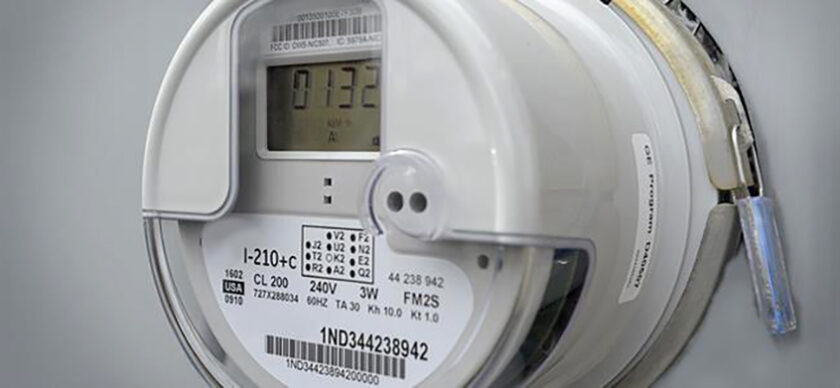
The ACE customer said she has been on disability since suffering an injury, and the rising costs have forced difficult financial decisions. She added that her income has remained unchanged since 2005, and noted her bill increased significantly after her meter was replaced with a Smart Meter.
“They told me, if you replace the meter, supposedly your bill will go down. Well, that didn’t happen. If anything, they replaced my meter and it doubled,” she said. “I’m like, ‘Go back and put my old meter back on. Please. Whatever you’re doing is costing me too much money.’”
Stephaney Snyder of Galloway Township said she has experienced even larger spikes.
Snyder lives in a roughly 1,175-square-foot home with two bedrooms and one bathroom. She said winter electric bills that once ranged from the low $200s to $300s have climbed dramatically, ranging from $500s to $700s.
Snyder keeps her heat set at 66 degrees and says her household uses minimal electricity.
“I don’t have light features all over the place,” she said. “It’s extremely weird. It doesn’t make any sense.”
She also believes the increases began after the installation of a Smart Meter.
Despite contacting the utility, she said she has received few answers.
“They just say, ‘that’s the rates,’” she said.
For Snyder, the rising costs have become overwhelming.
“I’m paying almost a second mortgage just for electricity, it’s disgusting,” she said.
Hendry said customers who believe their meter is inaccurate can request a test.
“If a customer doesn’t feel they’re reading accurately, they have a right…to reach out to us and have us test the meter for free,” he said.
He also encouraged residents struggling with higher bills to explore available assistance programs, noting that an estimated 20% of eligible customers take advantage of the programs.
“We’re genuinely really concerned around affordability issues that customers are facing right now,” Hendry said. “I just encourage customers to reach out to us if they’re having trouble paying their bills.”
ACE encourages customers experiencing high bills to review their energy usage through online account tools, consider budget billing and explore assistance programs designed to help offset costs. More information is available at atlanticcityelectric.com/WaysToSave.
Julia graduated from Rider University in 2024 with a BA in multiplatform journalism and minor in social media strategies. In addition to reporting on local news for Shore Local, she is a social media strategist for small businesses. Connect with her: shorelocaljulia@gmail.com or @juliatrain on Instagram.