
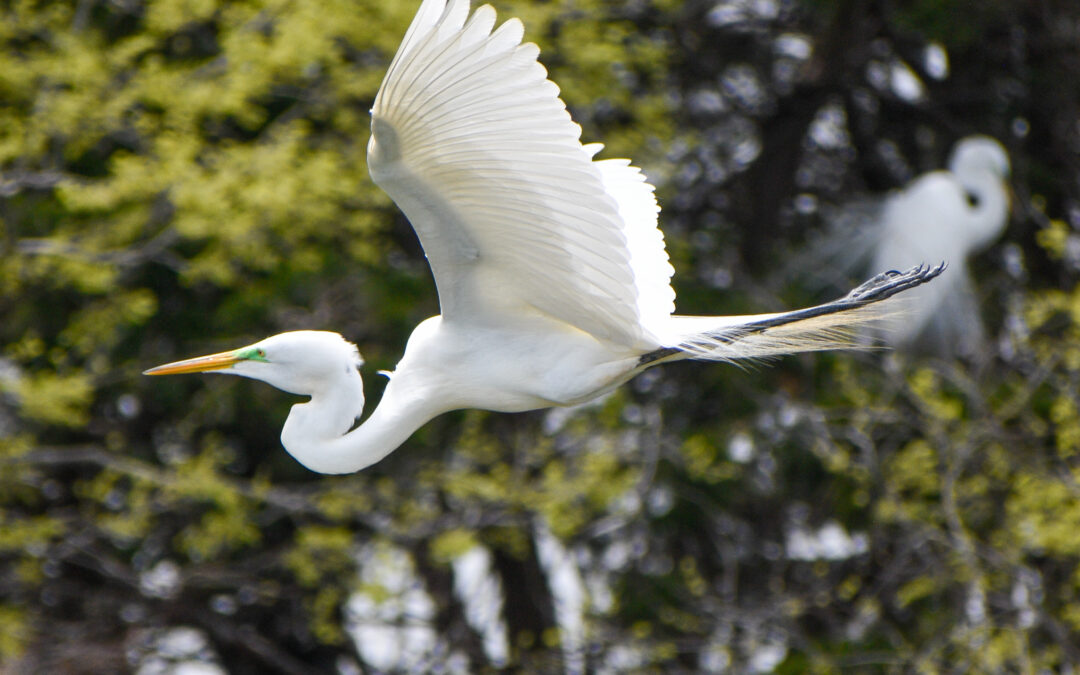
At the Roy Gillian Welcome Center, visitors and nature enthusiasts gather with eyes closely peeled to enjoy the various landscapes and beauty that our region has to offer. Photographers and bird watchers have begun to gather, ready to capture the rarest of feathered friends making their arrival as warm weather returns to our region.
Over the past few weeks, native and migratory birds have begun settling along the marsh and coastlines of South Jersey. Many of these feathered friends will nest along the back bays from Cape May to Sandy Hook, including a popular destination close to home. Those arriving in Ocean City will find the rookery, a lush plot of greenery that has grown in popularity with nature lovers, located at the Roy Gillian Welcome Center on the Ninth Street Bridge. This small stretch of land provides visitors with a unique opportunity to witness breeding wetland and coastal birds.
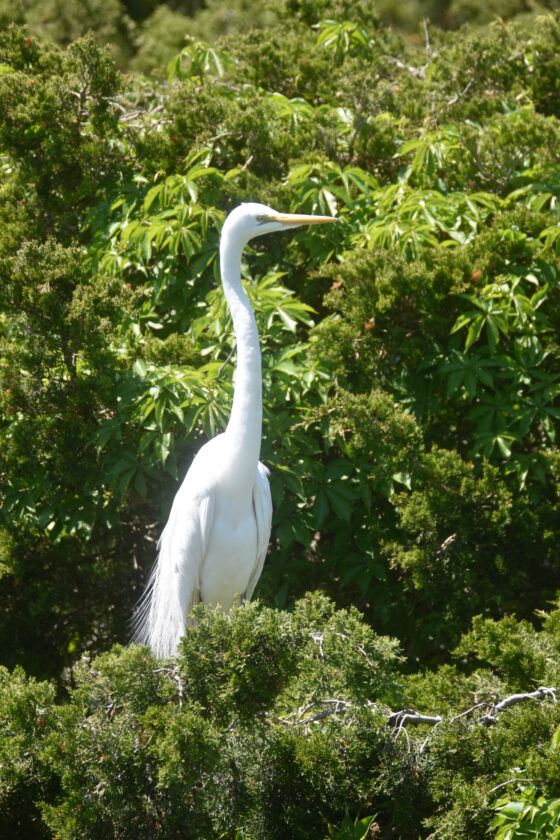
Dozens of birds have begun flocking to this location ahead of mating season, with one particular species that has drawn a lot of attention: the Great Egret. During the breeding season, passersby will notice their long white plumes that grow from their backs. At three feet tall, their long S-curved neck, black legs, and large yellow bill make them hard to miss. Witnessing them take off in flight is a true spectacle, especially to see up close. Even our cameras have spotted multiple egrets building nests along the rookery.
The White Ibis has been spotted multiple times at the rookery. These birds are commonly found nesting along shallow wetlands. They are almost entirely white, with black wing tips and long red legs, along with a red face and beak. This fascinating breed was once a rare fixture in our region but has become an increasingly common visitor.
The Snowy Egret will soon be making its return to our coastal wetlands for the season. These birds are smaller than the Great Egret, only two feet tall. They are particularly distinguished by their black legs and yellow feet, with a patch of yellow skin at the base of a narrow black bill. They are common summer residents, found primarily in coastal wetlands.
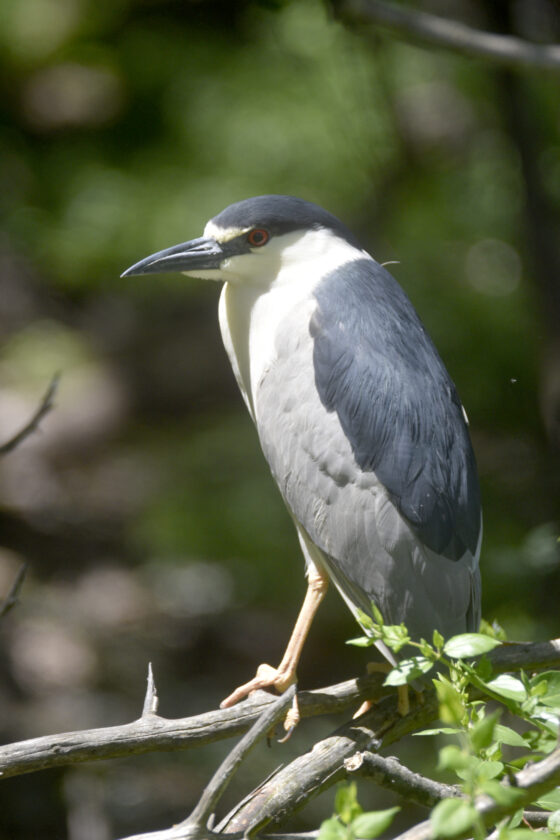
In recent years, our cameras have also spotted the Black-crowned Night-Heron, a common summer visitor. Guests will often find them perched during the day, but they will forage the wetlands during the evening and at night. These birds are smaller than herons, standing at two feet tall. Their light grey feathers and distinctive black back and crown make them stand out among other species.
Another abundant resident at the rookery is the Red-winged Blackbird. From wet roadsides to salt marshes, the male creatures have a stripe of red and yellow along their shoulder stripes, while the females appear inconspicuously brown and sit along low vegetation. Red-winged Blackbirds will often sit atop high perches, singing their notable songs for all to hear.
It is hard to mention birds in our region without bringing up the Laughing Gull. These notorious summertime residents can be found along shorelines and open fields. The medium-sized gulls are hard to miss thanks to their distinctive laughing call. Their diet primarily consists of fish, insects, and mollusks, and while it is not part of their diet, some will opportunistically forage on boardwalk staples such as pizza, French fries, and funnel cake. With warmer weather on the horizon, the Laughing Gull is expected to return to our region in the weeks ahead.
Throughout the season, you are bound to find these magnificent birds, and many more, along our bayside wetlands and at the Ocean City Rookery. If you are planning to experience nature up close this spring, be sure to have your camera battery fully charged, put on your sturdiest pair of shoes, and explore our region’s wondrous bounty of nature.