The year 1968 will be forever remembered as one of the most tumultuous in American history. It was a year defined by the assassinations of the Rev. Martin Luther King Jr. and Robert F. Kennedy, the Tet Offensive in Vietnam and civil unrest in the streets of many American cities. It was also the year Atlantic City became a new front in the culture war.
The story goes back to 1964, when the city’s reputation took a hit at the conclusion of the Democratic National Convention. The national news media focused on the “Queen of Resorts” being tawdry, rundown and generally on its last legs.
Four years later, the city was getting bad press again. This time, it was a protest against a long-beloved local, regional and national institution: The Miss America Pageant.
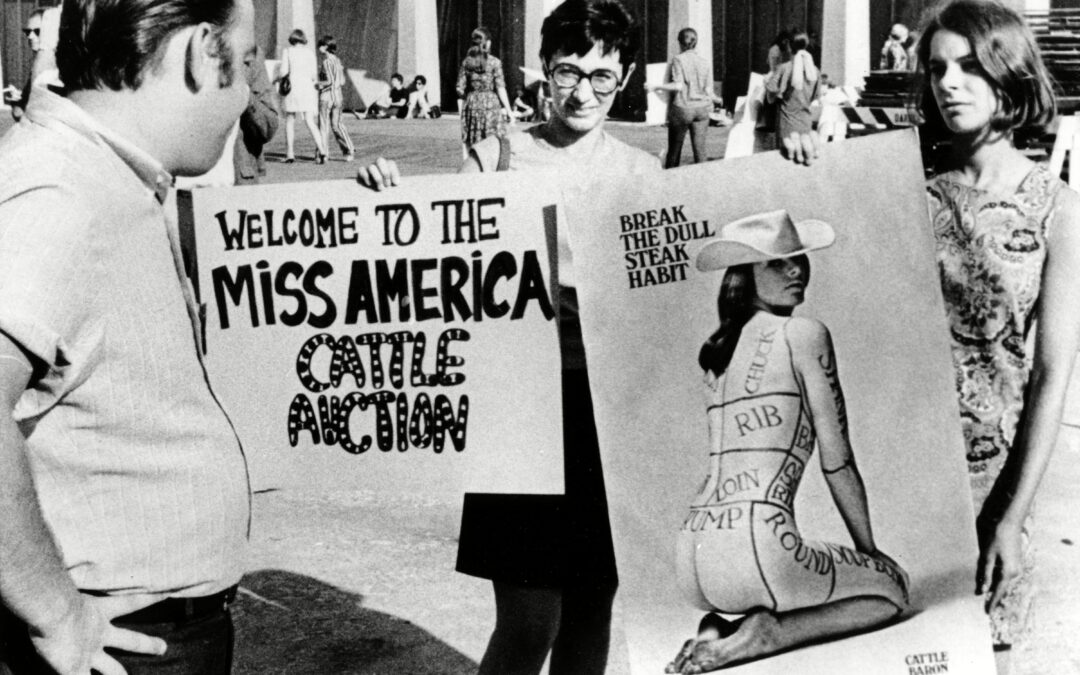
Though the protest itself involved only about 400 feminists, the cause and the manner in which the protesters brought attention to it caused a Boardwalk and media frenzy on Sept. 7, 1968 – the same day as the pageant finals.
According to Robin Morgan, a one-time actress and one of the organizers of the rally, the purpose of the protest was “to demonstrate their objections to the pageant’s focus on women’s bodies over their brains, on youth rather than maturity and on commercialism rather than humanity.”
New York Radical Women, the organizing group, had the protesters travel to Atlantic City by car and chartered buses to, as they said at the time, “protest the degrading mindless-boob-girlie symbol.” They marched, passed out pamphlets and crowned a live sheep to equate the beauty pageant to a state fair livestock competition.
News media fixated on one portion of the protest where the group threw what they described as “instruments of female torture” into a “Freedom Trash Can.” In a matter of hours, the bin was filled with mops, pots and pans, copies of Cosmopolitan and Playboy magazines, false eyelashes, high-heeled shoes, curlers, hairspray, makeup, girdles, corsets and bras.
Four protesters managed to enter Convention Hall during the pageant, unfurling a large bed sheet that read, “Women’s Liberation.” Police quickly ushered them out.
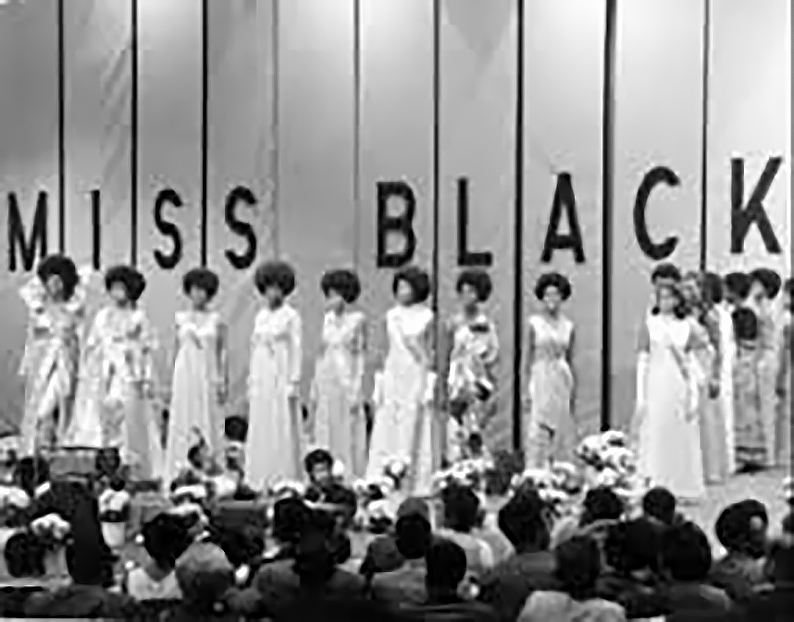
Nearby at the Ritz-Carlton Hotel, another challenge to pageant tradition took place. Black civil rights advocates held the first Miss Black America Pageant, organized by activist J. Morris Anderson.
News reports at the time pointed out that those behind Miss Black America did not necessarily object to the idea of beauty standards, but rather the fact that the Miss America Pageant strongly favored white women. While the New York Radical Women wanted to dismantle the pageant system entirely, the Miss Black America protesters sought to expand notions of beauty to include all races.
Strategically timed to mirror the Miss America finals occurring simultaneously at Convention Hall, the event served as a direct challenge to the racial exclusion of the “official” pageant.
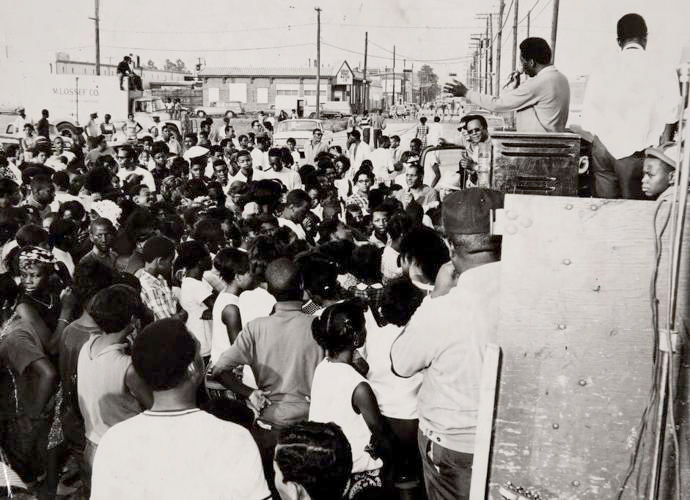
“They decided to hold it the same night, and in the same city, as the Miss America pageant,” according to history.com. “They chose to start their so-called ‘positive protest’ at midnight, in hopes that newsmen would drop by when they left Convention Hall after the conclusion of the other pageant.”
By the early hours of Sept. 8, Saundra Williams was crowned the winner.
While feminists were discarding symbols of traditional beauty on the Boardwalk, Black activists successfully expanded the definition of beauty to include those long ignored by the mainstream. It wasn’t until 1984 that Vanessa Williams became the first Black Miss America.
As for the Miss America Pageant itself, it no longer holds its former cultural cachet and is held in Atlantic City only sporadically. More significantly, it no longer bills itself as a beauty pageant. Today, the organization describes itself as “more than a competition – it’s the nation’s most iconic platform for women to rise, lead and inspire.”
There’s little doubt that Bert Parks would be pleased.
Bruce Klauber is the author of four books, an award-winning music journalist, concert and record producer and publicist, producer of the Warner Brothers and Hudson Music “Jazz Legends” film series, and performs both as a drummer and vocalist.