One of the staples of early television programming was professional wrestling. The fledgling and short-lived DuMont Television Network first presented pro wrestling on the national airwaves in 1948, with the initial matches taking place at New York City’s St. Nicholas Arena.
It was a gamble for the low-budget network, as pro wrestling up until that time was presented only regionally. But DuMont needed cheap programming, so the network took a chance.
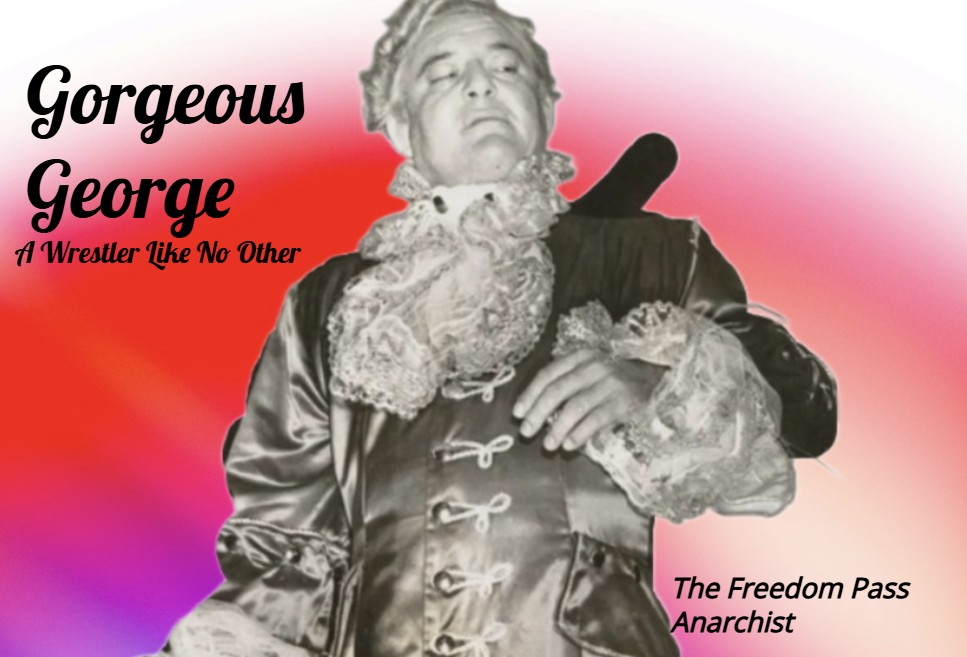
It worked beyond anyone’s dreams, helped by pro wrestling’s first outrageous television star, a veteran wrestler named George Raymond Wagner, better known as Gorgeous George. Already in his late 30s when he hit the airwaves, Wagner seemed to know instinctively just what television audiences wanted.
“It was with the advent of television that Wagner’s in-ring character became the biggest drawing card the industry had ever known,” wrote John F. Molinaro in his book, “Top 100 Pro Wrestlers of All Time.”
“With the networks looking for cheap, effective programming to fill its time slots, pro wrestling’s glorified action became a genuine hit with the viewing public, as it was the first program of any kind to draw a real profit. The first televised wrestling match in 1948 was more than just a one-time event. It was a milestone that set the stage for the future of professional wrestling as an entertainment form.”
What Molinaro did not say is that television helped create a national audience for wrestling, and that the audience ultimately wanted to see the stars of wrestling in person.
Given that Atlantic City was a resort destination with lots of entertainment – and pro wrestling, at its core, is entertainment – it’s no surprise that the Boardwalk was no stranger to the sport, even before the advent of television broadcasts. Pro wrestling was promoted in these parts, courtesy of a veteran promoter named Myer Saul, as early as 1935 at what was then called Convention Hall.
Promoter Al Soifer replaced Saul upon Saul’s retirement, and promoted shows at Convention Hall from 1947 through 1969. In 1967, Soifer hooked up with another promoter, this one with a television presence and an affiliation with the World Wide Wrestling Federation: Ray Fabiani who hosted a Philadelphia-based TV show called “Ray Fabiani’s Mat Time.”
With the advent of legalized gambling in 1978, it would seem that Atlantic City casinos would be the perfect spot to present live wrestling shows. Still, promoters at the time were relatively unsure whether the shows would be a draw or not.
A dry run for wrestling in Atlantic City casinos took place on Oct. 11, 1981 at the now-defunct Playboy Hotel and Casino when comic Andy Kaufman, self-styled “Women’s Wrestling Champion,” brought his show to the shore. Not surprisingly, the event did very well.
The oddity of Kaufman aside, what made professional wrestling such a hit on television, and in person, was World Wide Wrestling Federation’s Vince McMahon, who envisioned a wider audience for wrestling beyond old-time heroes like Bruno Sammartino, Killer Kowalski, George “The Animal” Steele and Gorilla Monsoon.
In the early 1980s McMahon introduced music to professional wrestling by way of pop star Cyndi Lauper, who appeared at many events and even became a part of the storylines.
As a result of the wrestling/pop music tie-in, audiences all over the country flocked to see the outlandishly outfitted villains and heroes, the spectacular sets, manufactured rivalries and other trappings of pure showbiz. And Atlantic City was primed and ready for it.
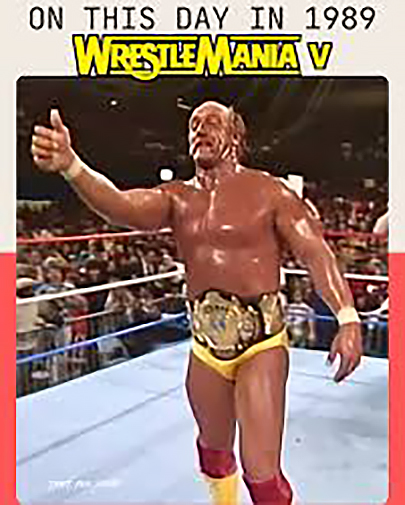
What really put the town on the map as a wrestling center was WrestleMania IV, which took place in 1988 at Trump Plaza Hotel and Casino. Diehard fans may recall that Randy Savage won the WWF championship match that evening. Wrestlemania V took place the following year at the same location; Hulk Hogan defeated Savage on that memorable evening.
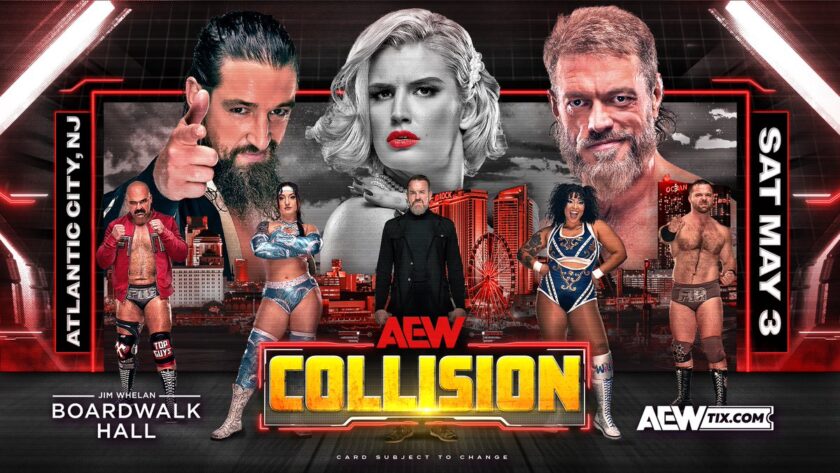
Since then, there have been dozens of pro wrestling events in the city sponsored by various wrestling organizations, at a number of venues, notably the Showboat, which often presented shows under the aegis of Game Changer Wrestling, aka GCW. Other venues that have hosted pro wrestling events include the Hard Rock, Anchor Rock Club, and even the ACX1 Studios. Some of the bigger events were also televised.
The wrestling juggernaut shows no signs of slowing down in Atlantic City with the Boardwalk Brawlers scheduled for Jan. 24 at ACX1 Studios.
Professional wrestling has become big business despite the fact that almost everyone knows it’s fake. That, however, has never seemed to matter to the fans. Joseph Bentz, a college professor and sometimes wrestling fan, has tried to explain the decades-long phenomena.
“WWE is not only about wrestling matches,” Bentz wrote. “It’s about stories. Characters are created, and storylines are constructed that can be carried out for months or years. The major wrestlers have their own theme songs to which they strut out from backstage to the ring, wearing familiar costumes and sometimes accompanied by loud fireworks and gigantic video images. Rivalries are stoked for months leading up to big events such as the annual WrestleMania.
“The most common criticism of wrestling is that it’s fake. The athleticism is certainly not fake. I have watched wrestlers climb high up on enormous ladders and then dive into the air, doing several flips on their way down to the mat to pin an opponent. I have watched them lift 300-pound wrestlers off the mat and toss them out of the ring,” Bentz added. “There are some fake elements to what they do. The seemingly brutal punches they land on their foes, for instance, are not as violent as they are meant to look. But these are truly gifted athletes who have not only wrestling skills, but also tremendous strength and impressive gymnastic abilities.”
So maybe it is a real sport after all. But whatever it is or isn’t, rest assured that Gorgeous George would have been proud.
Bruce Klauber is the author of four books, an award-winning music journalist, concert and record producer and publicist, producer of the Warner Brothers and Hudson Music “Jazz Legends” film series, and performs both as a drummer and vocalist.