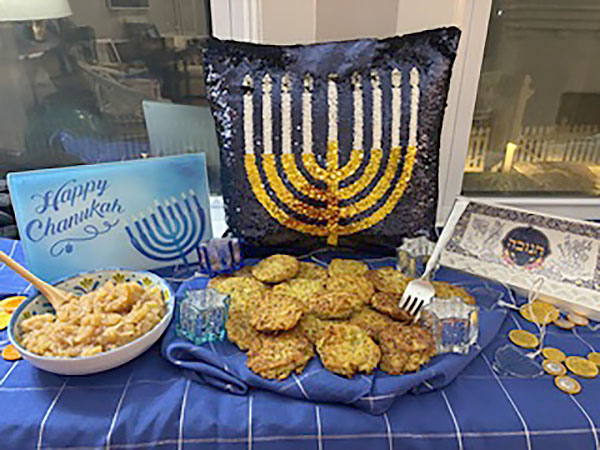
Hanukkah arrives in our house through the kitchen.
Days before the menorah is lit, and before candles appear in the window, our kitchen counters fill with potatoes, a sack of flour, onions, carrots and a big bottle of canola oil – all the essentials for making potato latkes from scratch.
Making latkes is no small endeavor. My mother and grandmother called it a patske – pronounced pot-ski-a, favorite Yiddish word for a big, messy, time-consuming production you regret starting halfway through. They weren’t wrong, but they made them anyway.
I’m happy to report that I’ve carried on the tradition, if not for every night of Hanukkah, then at least for the first night, or for our annual party with two other families. Store-bought latkes just aren’t the same. Mass-produced supermarket versions are only a reasonable option if you’re pressed for time. Yes, you can occasionally find a deli that does a decent job, but it’s a rare establishment that beats homemade.
Latkes aren’t just delicious; they honor the miracle of the oil at the heart of the Hanukkah story.
The holiday commemorates the victory of the Maccabees in 164 B.C., when Jewish freedom fighters reclaimed the Second Temple in Jerusalem. When they rededicated it, they found only a small jar of consecrated oil – enough to light the temple menorah for just one day. Miraculously, that oil burned for eight days, allowing time for more oil to be consecrated. That’s why foods prepared in oil are the mainstays of Hanukkah.
For the ultimate latke, potatoes should be grated by hand. But when you’re doubling or tripling a recipe, that kind of labor can make you feel like you’ve been drafted into KP duty. For small batches I’ll hand grate; otherwise, I haul out the food processor and use the shredding disc. There will, of course, be tears from the onions. Once everything is chopped, the mixture must be squeezed dry, or the latkes won’t crisp.
Most latke recipes include onion, but adding scallions, shallots, or even zucchini takes them to another level.
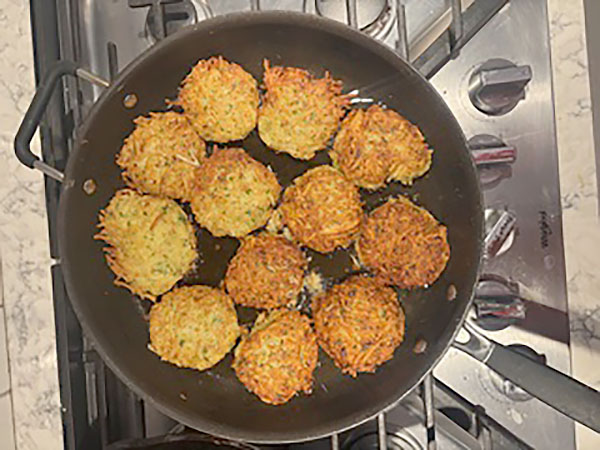
Frying is its own ritual. Latkes go into the pan carefully, one by one. They need space, they need medium heat and they need attention to develop a crisp exterior while cooking through.
Latkes rarely travel far once they’re done. They’re eaten hot or gently reheated if made the day before or schlepped to a Hanukkah party.
While elbow-deep in potatoes last week, my daughter observed, “Mom, I feel like they’re not as into latkes in Israel.” She’s right. In Israel, Hanukkah belongs to sufganiyot – jelly-filled doughnuts stacked high in bakery windows – while latkes remain a beloved Ashkenazi inheritance.
That’s because Israel’s Jewish population comes from many backgrounds and you see it all. Ashkenazi Jews, whose roots are in Eastern and Central Europe, brought foods like potato latkes, brisket and kugel. Sephardi Jews, from Spain, Portugal, North Africa and the Middle East, cook with spices, chickpeas, rice and olive oil. Mizrahi Jews, from countries such as Iraq, Iran, Yemen and Syria, share elements with Sephardi cuisine, while drawing on local ingredients and flavors.
As for me, my Ashkenazi roots are solidly potato. One of my grandfathers even showed me how to plant potatoes in our suburban backyard. So I come by the patske of peeling, grating and frying honestly.
Some traditions are worth the effort, the mess and the time spent in the kitchen – especially when the result is a plate of golden latkes, crisp at the edges, steaming and fragrant, disappearing bite by bite as everyone gathers around the table. And don’t forget the applesauce and sour cream. Latkes are lost without them.
Parsley, Scallion and Shallot Latkes
Makes: About 12 medium latkes
Ingredients:
- 4 large potatoes (Yukon Gold or Russet), peeled
- 1 small shallot, finely minced
- 3 scallions, thinly sliced (green and white parts)
- 1 medium onion chopped with water squeezed out
- ¼ cup fresh parsley, chopped
- 2 large eggs
- 3 tbsp all-purpose flour (or matzo meal for Passover-friendly)
- 1 tsp salt
- ½ tsp black pepper
- Vegetable oil or canola oil, for frying
INSTRUCTIONS:
Grate Potatoes: Use a box grater or food processor. Place grated potatoes in a colander and press down with a spoon or potato masher to get rid of as much water as possible. Then transfer potatoes to a clean kitchen towel and squeeze out as much liquid as possible.
Mix Ingredients: In a large bowl, combine potatoes, shallot, scallions, parsley, eggs, flour, salt and pepper. Mix until well combined.
Heat Oil: In a large skillet, heat ¼ inch of oil over medium-high heat until shimmering.
Form Latkes: Scoop about ¼ cup of the potato mixture and flatten into a patty.
Fry: Fry latkes 3-4 minutes per side, until golden brown and crispy. Don’t overcrowd the pan.
Drain: Place cooked latkes on a paper towel-lined plate to remove excess oil.
Serve: Warm, with applesauce, sour cream, or your favorite topping.
IMPORTANT FRYING TIPS:
Use Medium-High Heat: Oil should shimmer but not smoke. Too low and they’ll absorb oil; too high and they’ll burn before cooking through.
Don’t Overcrowd Pan: Fry in batches so the latkes have room to crisp on all sides.
Drain, But Not Completely: After frying, place on a wire rack over a baking sheet (instead of just paper towels) to keep the bottom crisp while excess oil drips away for 5-10 minutes. Place cooked latkes on a paper towel-lined plate to remove excess oil.
Oven Finish (Optional): For extra crispness, after frying, place latkes in a 200°F oven on a wire rack for 5-10 minutes. This keeps them warm and crispy without softening.
Serve: Warm, with applesauce, sour cream, or your preferred topping.
FREEZING LATKES
Latkes freeze well, and because they’re time consuming, you can make them the day before or even make and freeze:
Flash Freeze First: Arrange cooked and cooled latkes on a baking sheet in a single layer and freeze for 1-2 hours.
Store: Transfer frozen latkes to a freezer-safe bag or airtight container. Place parchment paper between layers so they don’t stick.
REHEATING:
Oven: Preheat to 400°F (200°C). Place frozen latkes on a baking sheet and bake 10–15 minutes until hot and crispy.
Skillet: Heat a little oil in a pan and fry frozen latkes 2–3 minutes per side.
Microwave: Avoid microwaving if you want them crispy – they’ll get soggy.
Lisa is an advertising copywriter (think ‘Madmen’ without the men), journalist and columnist. Claim to fame: Lou’s waitress for four teenage summers. For column comments, story ideas, or to get on her “quote” list for future columns: redshoeslzs@gmail.com
David is a nationally recognized sports columnist who has covered Philadelphia and local sports for over 40 years. After 35 years with The Press, he has served as a columnist for 973ESPN.com and created his own Facebook page, Dave Weinberg Extra Points. Send comments to weinbergd419@comcast.net.