
This is the first of a two-part series detailing a little-known Revolutionary War episode in South Jersey.
In the fall of 1779, Lieutenant Colonel Alexander Hamilton accompanied Brigadier General Louis Lebègue Duportail – the first commandant of the Continental Corps of Engineers – on a mission assigned directly by General George Washington. Landing at Cape May’s southern tip, they moved north through Cape May County and into what is now Atlantic County, ultimately positioning themselves near the “Great Egg Harbor Landing.”
Though their stay lasted for a few weeks, their journey and story are a little-known chapter in South Jersey’s Revolutionary War history, and help illustrate how the coast fit into Washington’s 1779 planning to retake New York City.
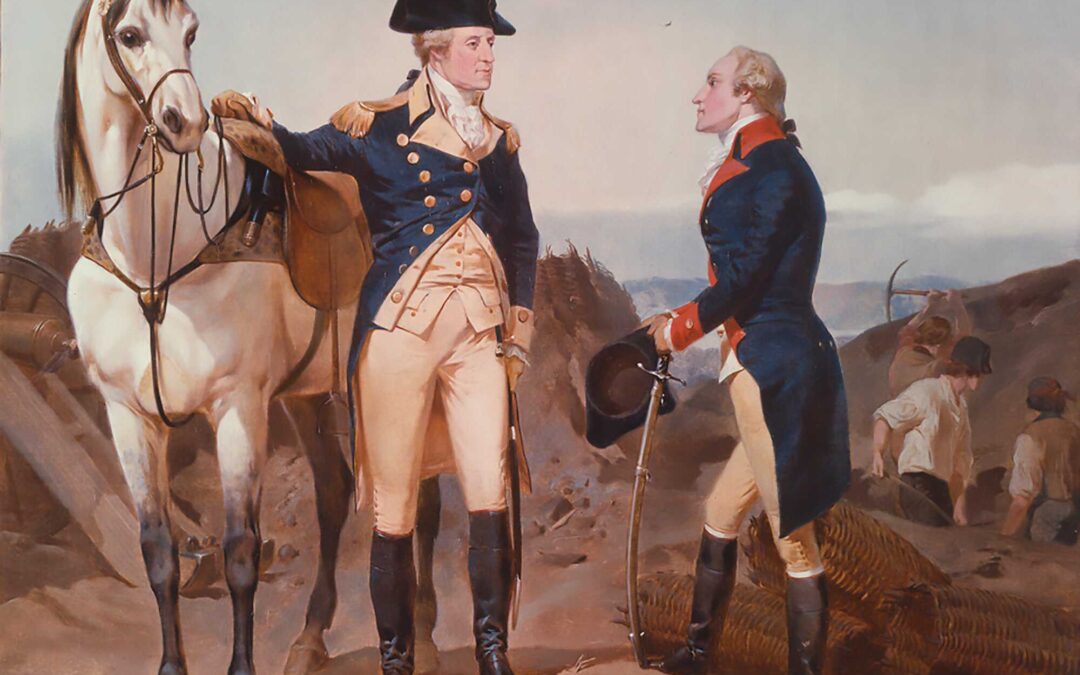
On a peninsula where the locals typically wore homespun and coarse clothing appropriate to the physical work of fishing and farming, two Continental officers in blue and buff uniforms, embellished with the finery and adornments of senior officers, stood out against the oranges, ambers and light browns of the coastal fall season. These were professional officers on official business. They wore their uniforms as was the custom of the time. Any other dress would have been dishonorable and an affront to their personal sense of military honor and professionalism.
Duportail and Hamilton carried themselves with the formality expected of senior Continental officers. Duportail, a French professional engineer with an aristocratic bearing, projected seriousness and reserve. Hamilton – younger, ambitious and alert – deferred to Duportail’s technical authority while serving as Washington’s trusted aide.
Duportail was recruited in France with Benjamin Franklin’s involvement, and came to America in 1777. Trained in the French engineering tradition, he became Washington’s chief engineer and helped professionalize American military engineering.
In 1779, Congress created the Corps of Engineers and appointed Duportail as its first commandant; at Yorktown, Virginia, he served as chief engineer for the allied siege.
Hamilton was born on the island of Nevis in the Caribbean and orphaned at a young age. He worked in maritime commerce before benefactors sent him to New York for schooling.
He attended King’s College in New York (now Columbia) and, in 1776, accepted a commission in the New York Provincial Artillery. By 1777 he was on Washington’s staff, valued for his writing, organization and knowledge of the French language.
Their horses, clothing and serious demeanor set them apart from almost everyone they encountered along the Old Shore Road, which ran along the interior high ground of Cape May County and roughly parallels today’s Route 9. They were likely guided and protected by members of the local militia.
Adding to the whispers were rumors that the officers were seeking to hire coastal pilots knowledgeable of the various inlets and bays along the Jersey coast. Sources of potable water and potential suppliers of food and amenities were discussed, as were the rivers and roads that were conducive to the conveyance of post riders and supply wagons.
Though Duportail and Hamilton remained dignified and circumspect in discussing these matters, rumors spread quickly. In this case, the rumors could not come near the actual truth of the matter. Duportail and Hamilton were on a secret mission assigned to them directly by Washington, the commanding general of the Continental Army.
They were to meet with Vice Admiral Comte d’Estaing, commander of a fleet of French warships, to convey and coordinate Washington’s various plans for attacking and, if successful, retaking New York City. Additionally, they were to secure pilots to guide French ships along the coast and provide reconnaissance of local resources and infrastructure to support the fleet’s effort.
Duportail and Hamilton departed from Washington’s headquarters near West Point. The Continental Army held the Hudson Highlands to prevent a British thrust up the Hudson River that could sever New England from the middle colonies. Britain had attempted a version of this strategy in 1777; by 1779, with New York City still serving as the base of British operations, Washington treated the threat as ongoing.
As Washington looked south towards Stony Point and Kings Ferry, New York, the British battalions that blocked his way down the Hudson also provided a reminder of Washington’s earlier defeats at the hands of Britain’s professional Army, Navy and officer corps.
General Howe had bested Washington at Long Island, Kip’s Bay, White Plains and the disastrous surrender at Fort Washington. Washington’s solace was several brilliant delaying actions and retreats that kept his army from destruction, but there was very little in retreat to suggest the rebellion’s ultimate victory.
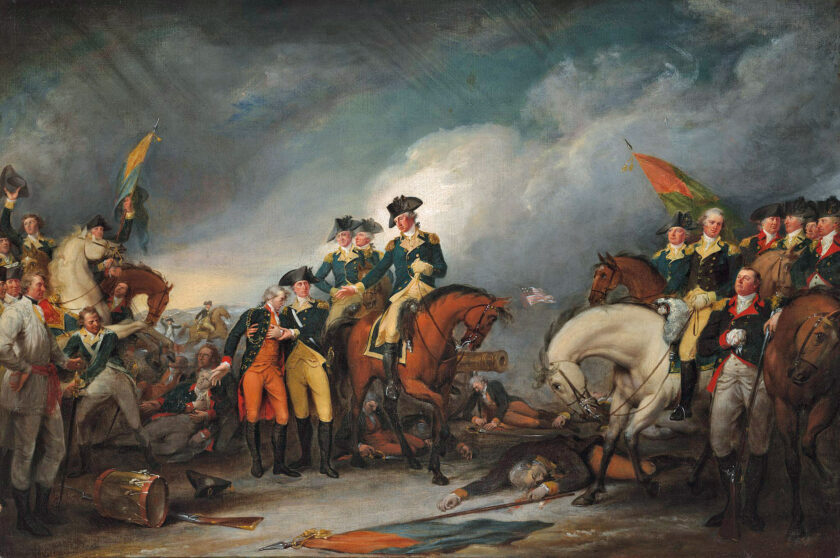
New York City was Washington’s bane. His sense of loss was not relieved by the small but symbolic victories at Trenton and Princeton. It was made considerably worse by the significant losses at Brandywine and Germantown in Pennsylvania, and consequently the loss of Philadelphia.
The recent tactical draw against the withdrawing British Army at Monmouth Court House showed the promise of a better-led, trained and equipped Continental Army, but a significant victory eluded Washington and the ongoing humiliation of the New York City campaign of 1776 burned inside him throughout the remainder of the Revolutionary War.
Washington had renewed his obsession with retaking New York City early in the spring of 1779. He continually planned his attack with representatives of the French Government, his generals and staff officers.
The French Fleet would be instrumental in any attack and the logistics of supporting it were continually rehashed following the failures in providing such support in the summer of 1778. Washington had a deserved reputation for not repeating his mistakes and he took his hard-earned experiences to heart in all his future planning.
Word had reached Washington that d’Estaing was sailing north from the Caribbean. The expectation and hope of French representatives and the Continental Congress were that after stopping off in Savannah to support the war efforts there, he would head north with his fleet to the Delaware Capes.
Washington ordered Major Henry “Light Horse” Lee to take his unit to Monmouth County on the Jersey side of New York City and prepare to contact d’Estaing if he arrived at Sandy Hook first. Lee’s assigned duties also included gathering military intelligence in and around New York City and its harbors.
Duportail and Hamilton were responsible for gathering intelligence, especially on the available infrastructure and resources to support the French Fleet. Washington subsequently ordered them to act as his direct emissaries and carry his plans to d’Estaing if the French Fleet arrived off the Delaware Capes so they could prepare for what may come.
In part two next week, we’ll trace what became of that mission, how our area figured into the work of Duportail and Hamilton, and what the historical record tells us about this little-known story.