Coastal Conversations
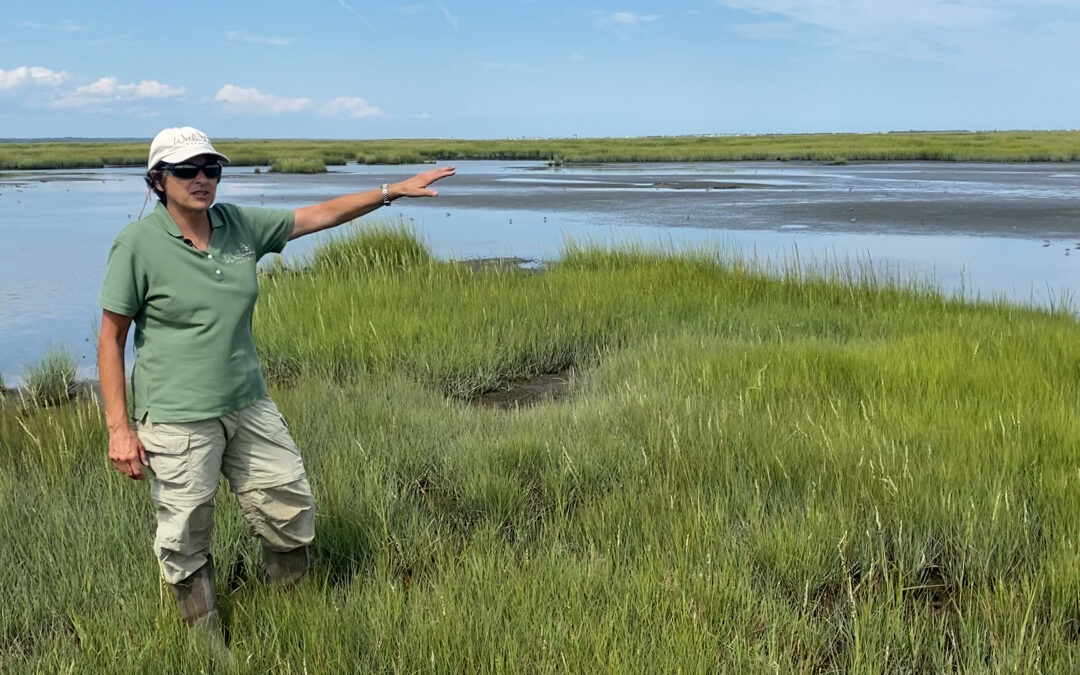
Protecting coastal ecosystems requires vision, dedication, and collaboration, and Lenore Tedesco brings all three to her role as executive director of The Wetlands Institute in Stone Harbor. Through her leadership, the Institute continues to advance research, conservation, and education efforts that help safeguard the fragile wetlands that are so vital to the Jersey Shore’s environment and coastal communities.
In addition to overseeing daily operations, Dr. Tedesco works closely with staff, board members, volunteers, and community partners to expand programs and strengthen outreach. Her role includes guiding research initiatives, supporting conservation efforts, and developing educational opportunities and public events that connect visitors with the importance of protecting coastal wetlands.
Here are some excerpts from our Coastal Conversation.
AS: As executive director of The Wetlands Institute, what inspired you to dedicate your career to coastal conservation and environmental education?
LT: I grew up along a tidal marsh and was influenced by my grandmother, who was a remarkable woman. She went to college in the 1920s and got a biology degree. We spent many wonderful days walking beaches, and she instilled in me an innate curiosity and set me on a path to becoming a scientist.
AS: What is your background and training in conservation?
LT: I trained as a marine geologist and spent more than 20 years studying coastal systems, water resources, and environmental change. I’ve always been driven to apply that research in ways that benefit both wildlife and communities. At The Wetlands Institute, research, conservation, and education come together, with the marsh serving as both a laboratory and a classroom. That connection allows us not only to understand these changing systems, but to help protect and restore them, supporting wildlife, strengthening communities, and deepening our connection to the natural world.
AS: The wetlands play a critical role in protecting coastal communities. Why are they so important to the health of our environment?
LT: Wetlands are among our most important, and often overlooked, natural systems. They provide vital habitat for wildlife and serve as nurseries for many commercial fish. They also help protect coastal communities by absorbing floodwaters, reducing storm surge, and limiting erosion. Just as importantly, wetlands connect people to nature and inspire stewardship. But these systems are disappearing, and with them, we lose habitat and one of our most effective, cost-efficient forms of natural protection. Protecting and restoring wetlands is essential for the future of both ecosystems and communities.
AS: Under your leadership, the Institute continues to expand its research, conservation, and education programs. What initiatives are you most excited about right now?
LT: One of the most exciting parts of our work is seeing how quickly marshes can recover when conditions improve. At sites like Scotch Bonnet Island, where we’ve raised the marsh surface to address rising seas, we’re already seeing wildlife return and vegetation begin to reestablish clear signs of progress. Just as important, ongoing monitoring is giving us valuable data on how these systems respond over time, helping us refine restoration efforts and strengthen future projects.
AS: Education is a major part of the Institute’s mission. How do your programs help visitors, especially young people, better understand and appreciate coastal ecosystems?
LT: Education at The Wetlands Institute focuses on hands-on connections to the natural world, giving students the chance to explore the marsh through wildlife observation and field-based learning. These immersive experiences turn abstract concepts into something real, helping them understand how these ecosystems function and why they matter. We also connect our research and restoration work to real-world challenges like marsh loss and coastal resilience. Ultimately, the goal is to inspire curiosity and stewardship, encouraging people to care about and protect these environments.
AS: The Jersey Shore faces challenges, such as rising sea levels and habitat loss. How is the Institute working to address these environmental issues?
LT: Wetlands along the Jersey Shore are under increasing pressure as rising conditions make it harder for marshes to maintain the elevation they need to survive. At The Wetlands Institute, the focus is on working with natural systems to help marshes adapt. Through efforts like the Seven Mile Island Innovation Lab, nature-based solutions are raising marsh elevation, restoring balance with tidal flooding, supporting wildlife, protecting coastal communities, and improving restoration efforts through ongoing research and monitoring.
AS: Community involvement seems to be a key part of your work. How do volunteers and local supporters help advance the Institute’s mission?
LT: Community involvement is central to the work at The Wetlands Institute. Volunteers play a direct role in conservation, from protecting diamondback terrapins to rescuing horseshoe crabs through hands-on programs like reTURN the Favor. Strong partnerships with universities, nonprofits, and government agencies also make large-scale restoration possible, bringing together research, engineering, and community engagement to create meaningful, lasting impact.
AS: The Wetlands Institute hosts many special events and public programs. How do these experiences help connect people with nature?
LT: Public programs at The Wetlands Institute are designed to give people a direct, hands-on connection to the marsh. Whether it’s a guided walk, a turtle release, or an interactive activity, these experiences spark curiosity and create lasting appreciation for coastal ecosystems. From daily programs to larger seasonal events, there are many ways to get involved. These shared experiences often bring people back year after year, building a strong sense of connection and inspiring a desire to help protect these environments.
AS: Looking ahead, what is your vision for the future of The Wetlands Institute and the protection of our coastal wetlands?
LT: Looking ahead, our vision is to advance research and nature-based solutions that protect wetlands while expanding opportunities for people to connect with them. At The Wetlands Institute, projects like the Salt Marsh Trail revitalization will restore habitat and strengthen coastal resilience. At the same time, we’re evolving our campus and programs to better serve the community and support growing research, helping develop solutions that can be applied far beyond New Jersey.
Thank you to Lenore Tedesco for sharing her time and insight. Her dedication and leadership at The Wetlands Institute underscores the importance of protecting our coastal ecosystems for future generations.
Coastal Conversations highlights people in our community who are making a meaningful impact. If you know someone who would be a great fit for a future column, please contact me at ShoreCoastalConversations@gmail.com.
From the shore to your door, let’s keep the conversation going.