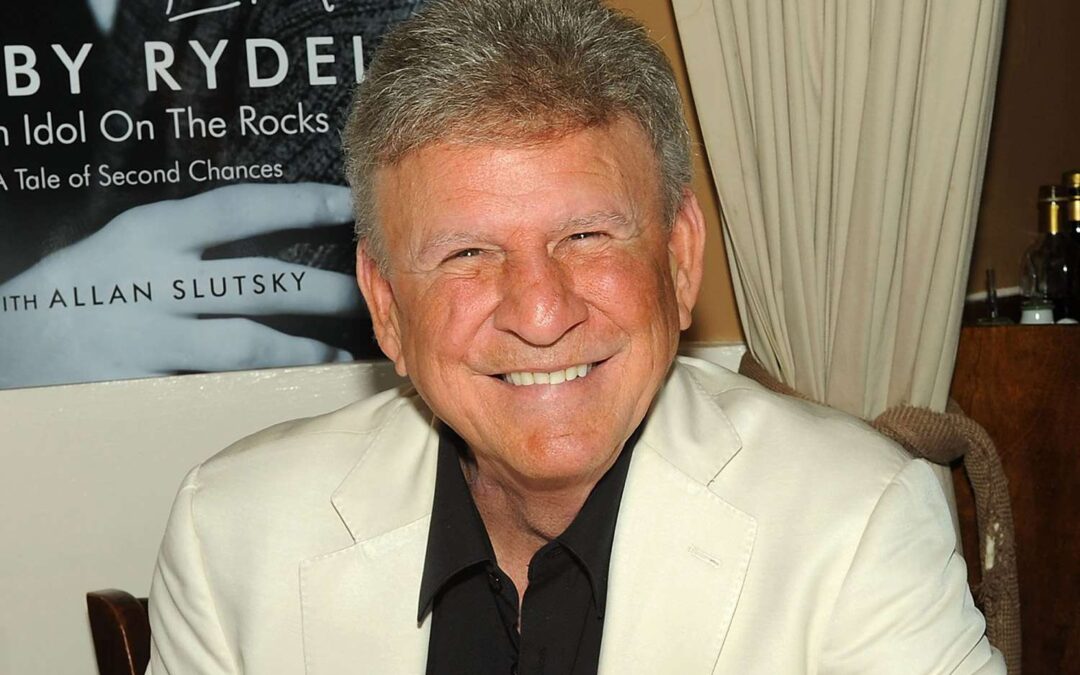
The late and great Bobby Rydell was a show business rarity: He became an international name who never succumbed to the bright lights of Hollywood, but chose instead to live in the Philadelphia area for all of his life.
Because of his stardom, popularity and accessibility, Rydell was one of the Jersey Shore’s most frequent visitors, and by way of his 1963 hit song, “Wildwood Days,” the personification of what summer at the Shore is all about. Rydell probably appeared in every Shore town with a stage during his career, but Atlantic City was the spot he returned to again and again.
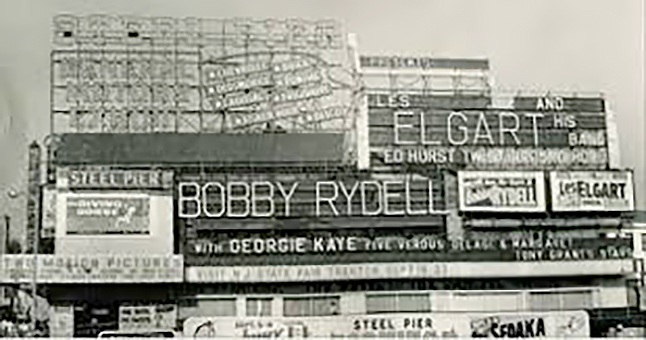
He appeared at the Steel Pier in Atlantic City on eight occasions that we know of, from 1959 to 1974, and with the advent of legalized gambling, performed as a solo attraction, and with The Golden Boys of Bandstand revue in most of the city’s casinos/hotels until his passing in 2022.
While Rydell enjoyed working at the Steel Pier through the years, he probably would have preferred being booked at the 500 Club. Though grateful for his incredible teenage following, his real love was performing a night club act for adults, ala Frank Sinatra and Dean Martin. To that end, in 1961, he was the youngest performer ever to appear at New York City’s famed Copacabana.
He would have loved to continue working in that milieu, and did from time to time throughout his career, but his managers, and his record company insisted that he continue churning out hopeful hits for the younger set. And hits they were including “Volare,” “Kissin’ Time,” “Sway,” “Wild One” and “We Got Love.” There was an occasional misfire, like his 1963 recording of “Steel Pier,” released around the same time as “Wildwood Days,” which went nowhere.
In his autobiography, “Bobby Rydell: Teen Idol on the Rocks,” he detailed just what it was like to work at the Steel Pier. “Steel Pier may have been fantasyland for Jersey Shore vacationers,” he wrote. “For me, it was where I went to work. And I worked very hard. Usually, the pier’s theater had four or five scheduled shows a day. If I had a hot record on the charts, I would sometimes do as many as 10. Sounds like fun, huh? It was – for maybe the first three or four shows. But from that point on, it became a test of survival.”
Though Rydell was having a challenging time trying to get out of the “teen idol” box with his records, he certainly made inroads to appeal to older, more sophisticated audiences by way of his various television variety show appearances on shows hosted by Red Skelton and Jack Benny. On those programs, Rydell proved an adept mimic, comic sketch artist, swinging jazz drummer and singer of American popular songs. What he didn’t know at the time was that Hollywood was taking notice of his talent and versatility.
The talk was that after two false starts with television pilots that didn’t sell, Rydell was being considered for a movie role in the film version of the 1960 hit Broadway musical, “Bye Bye Birdie.” He was up for the part of Hugo Peabody, the jealous boyfriend of Kim McAfee, played by Ann Margaret, a major fan of the Elvis-like character on his way to the Army, Conrad Birdie.
He not only got the role, but it was expanded to take advantage of his versatility. His reviews were terrific, and the consensus was that he was on his way to becoming a film star.
Two things held him back. One was that he didn’t particularly enjoy acting. “I quickly came to the conclusion that I liked singing much better,” he commented after the film was released. The other factor was that Rydell didn’t want to move to the West Coast. His home was Philadelphia and that’s where he remained.
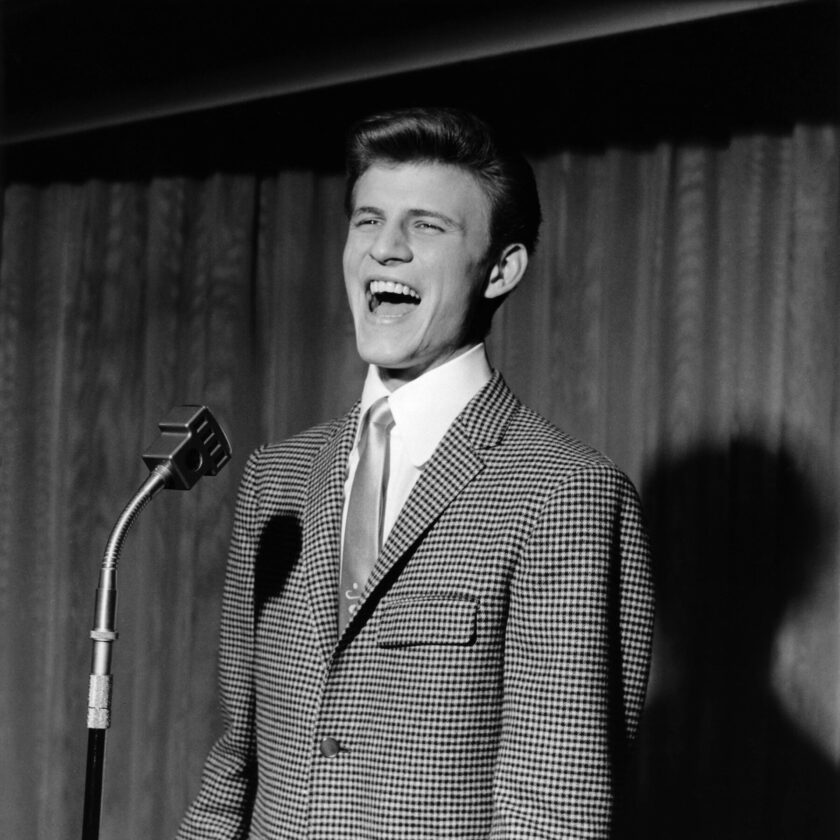
Some of those who followed his career believed that hurt him in the long run, but with the arrival of The Beatles, performers like Rydell found the going tough. Certainly Rydell worked and survived during those years, but it was nothing like the pandemonium he inspired in the early 1960s. By the early-1970s, it didn’t matter that he had sold millions of records, that Frank Sinatra Jr. and Frank Sinatra Sr. were fans and that Buddy Rich loved Bobby Rydell’s drumming. The business had become a struggle.
Enter promoter Dick Fox.
Around 1985, Fox had an idea for something that came to be called, “The Golden Boys of Bandstand,” an oldies nightclub act that paired Rydell with two other Philadelphia-born-and-bred teen idols: Frankie Avalon and Fabian Forte. The Golden Boys was one of the great show business success stories, and the package toured the world until Rydell’s excessive drinking caused serious health problems.
There was an Australia tour planned for 2012, but it had to be cancelled because of his poor health. In July of that year, he had a double organ transplant – a kidney and liver – and six months later, he went back to work and did three sold-out nights in Las Vegas. The following year he had double-bypass heart surgery. Six weeks later, he headlined at the Keswick Theatre in Glenside, Pa., and on Labor Day, 2013, he returned to Atlantic City and became one of the final acts to perform at the now-shuttered Atlantic Club Casino Hotel.
He survived and thrived, both as a single attraction and as a member of The Golden Boys. But wherever his career took him through the years, he always had a soft spot for Atlantic City.
“We’re a lot alike, me and A.C.,” he wrote. “We’ve taken a lot of hits in recent years, but we’re still standing and doin’ our thing.”
I spoke to Bobby about five days before his passing on April 5, 2022, three weeks before his 80th birthday. He wasn’t well, and I suspected he knew he didn’t have long. But because Frank Sinatra Jr. had been so complimentary to him through the years, he really wanted to be a part of the book that Andrea Kauffman and I were writing about Frank Jr. He told me he felt it was something he had to do.
As hard as it must have been for him, Bobby Rydell pulled it off.