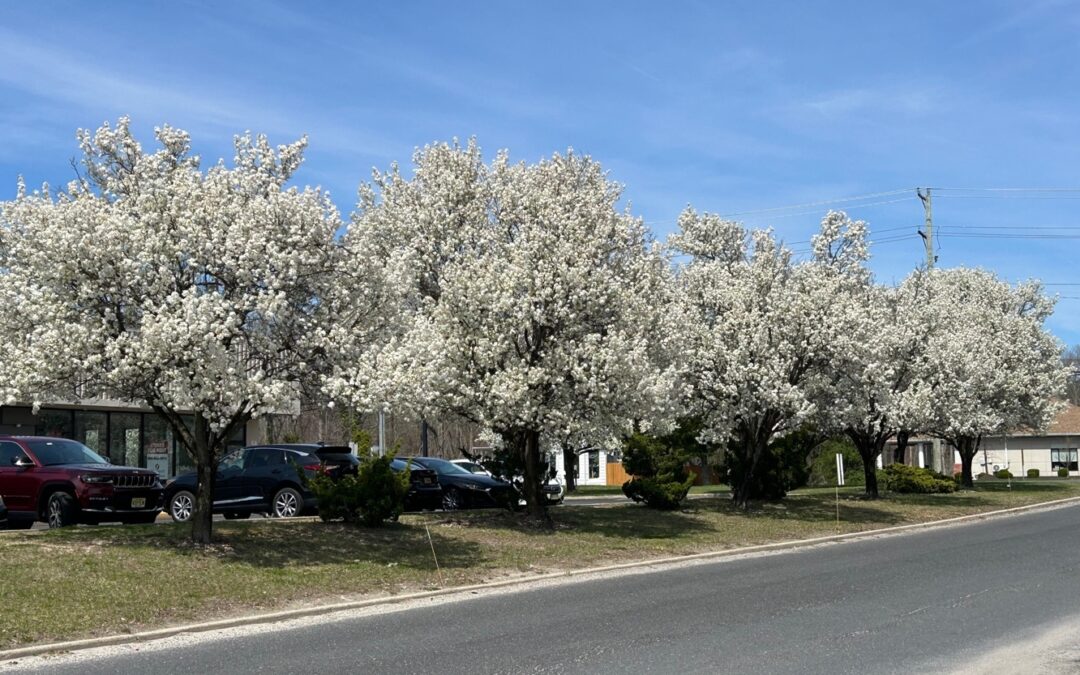
As spring arrived, you undoubtedly noticed an abundance of white flowering trees growing just about everywhere. These trees are the highly invasive Bradford pear.
The Bradford pear is a specific type of tree that belongs to the Callery pear family. It became very popular for city planners, land developers, landscape architects and nurseries due to its affordability and ability to meet landscaping requirements. As a result, thousands of these trees were planted in street corridors, parking lots, shopping centers and parks.
In April, when the trees bloom, their white canopy stands out, making them easy to recognize. As the petals open, they emit a strong odor similar to rotting fish.
These trees were intentionally planted to beautify streetscapes and properties, but they have also started appearing in areas where they were not intended. The previously acclaimed tree is now problematic.
So many of them have been planted that replacing them will be extremely expensive. If removed, it would leave areas devoid of trees until their replacements reach a substantial size.
The problem with this tree is that it is not native to America; it is highly invasive and has spread rapidly into fields, forests, roadsides and parks. Their spreading is competing with and crowding out the native trees that are beneficial to wildlife.
Local wildlife depends upon the local trees, plants and flowers to sustain themselves. Non-native trees and plants do not provide that service. To sustain our wildlife, it’s important that we utilize native plants and trees and remove the non-native species so wildlife can flourish.
Callery/Bradford pears are just one example of invasive vegetation threatening local environments. Many other non-native plants and trees have invaded ecosystems, causing significant ecological disruption.
The white canopy of the Bradford pear serves as a visual reminder of the extent to which non-native trees have spread. As the white petals drop and are replaced with green leaves, the trees will blend in with their surroundings, making them harder to distinguish.
Invasive plant species are a major driver of ecosystem degradation. Second to habitat loss, invasive plants pose the biggest threat to wildlife as they displace native vegetation and disrupt the ecological balance.
Callery pears have migrated and are invading forests and fields. In 2009, the New Jersey Invasive Species Council produced a strategic management plan and found that 30% of the state’s flora were nonnative species.
Environmental advocates worked to get legislation passed that would prohibit the sale and introduction of invasive, foreign species. The New Jersey Invasive Species Management Act, which took effect in January 2026, will restrict the sale, propagation, import and distribution of designated “prohibited invasive species.” Nurseries and stores will no longer be allowed to sell or distribute invasive plants and trees.
Until the law goes into full effect, it is highly recommended that when purchasing trees, shrubs and plants, you make sure that they are native to New Jersey.
You can read more about the act at: https://princetonhydro.com/nj-invasive-species-management-act/