
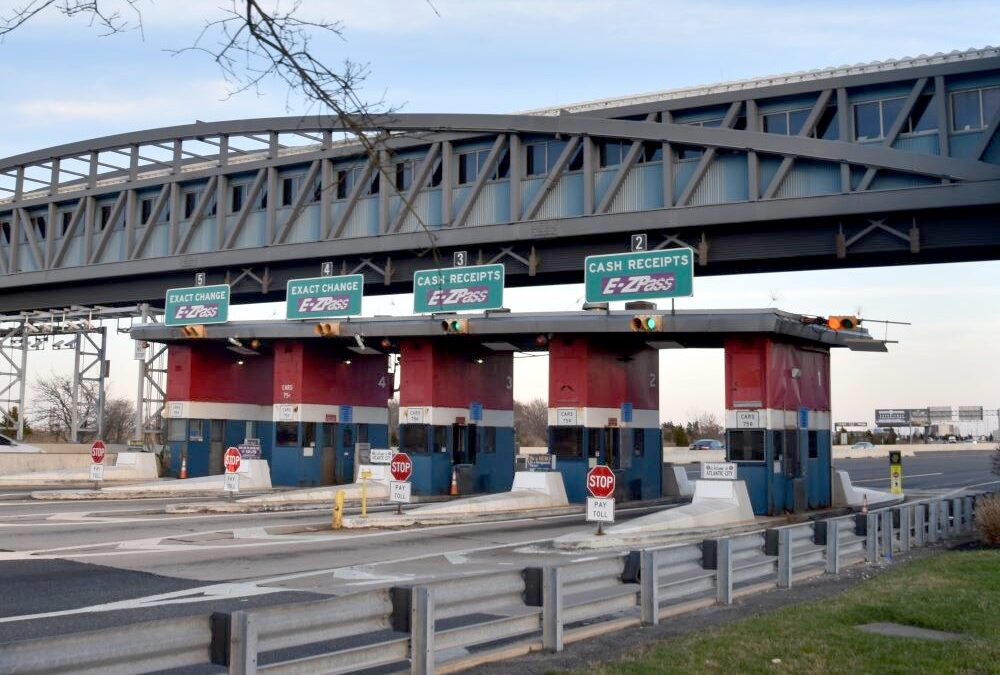
Beginning in 2026, drivers using the Atlantic City Expressway should expect higher costs and a major change in how tolls are collected.
The South Jersey Transportation Authority has approved a 3% toll increase for all motorists, along with a new surcharge for drivers who do not pay with E-ZPass. At the same time, the Expressway will transition to an all-electronic, cashless tolling system, which is scheduled to go live on Jan. 4.
It will be the first state toll road in New Jersey to operate without cash and could serve as a model for similar systems on the New Jersey Turnpike and Garden State Parkway.
The toll changes were approved by the authority’s Board of Commissioners in November while also adopting a $118 million operating budget and a $42 million capital improvement budget for 2026.
Under the new structure, tolls paid through E-ZPass will rise by 3%, an increase tied to inflation under a policy adopted in March 2020. In addition, drivers without E-ZPass will be charged a higher “toll by plate” rate, which bills motorists based on license plate images captured as vehicles pass under electronic gantries. Both the toll increase and the toll-by-plate fee will take effect Jan. 4.
Toll-by-plate customers will pay $13.60 — more than twice the E-ZPass rate of $6.30 — reflecting the additional costs associated with photographing plates, processing payments and mailing bills, according to authority documents.
The Expressway’s move mirrors actions taken by other toll agencies, including the Port Authority of New York and New Jersey, which charge higher rates to drivers who do not use electronic toll tags.
Since 2020, tolls on the Atlantic City Expressway have increased five times, following a 37% jump that year. By the end of 2025, cumulative increases will total 49%, and the approved 2026 hike would bring the five-year total to about 52%, NJ Advance Media reported.
Despite the added cost for non-E-ZPass users, most drivers already rely on the electronic system. As of October, about 91% of Expressway traffic paid tolls using E-ZPass, according to the latest available data.
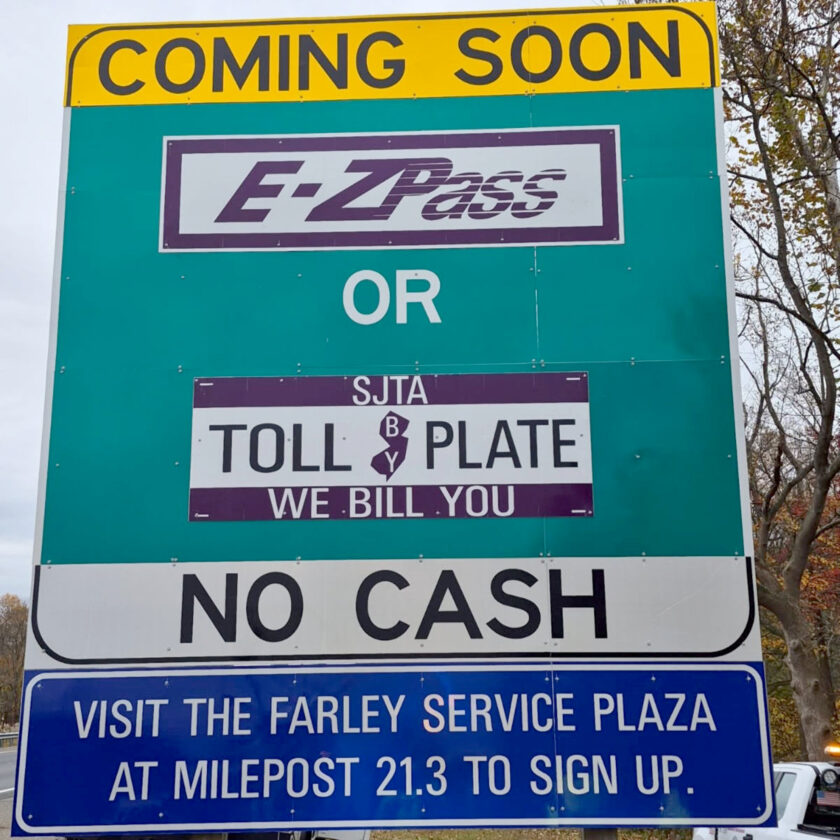
The shift to cashless tolling is part of a $30.59 million project that includes installing overhead gantries at 11 locations and removing traditional toll plazas. Officials say the change is expected to reduce congestion, particularly during peak summer travel when traffic to the Jersey Shore is at its heaviest.
Originally planned to open in May 2025, the project was delayed to avoid construction during the busy summer season.
The authority’s broader capital budget includes funding for bridge rehabilitation, facility upgrades, Atlantic City International Airport improvements and systemwide maintenance work.
In 2023, as construction began on the state’s first all-electronic tolling system on the Atlantic City Expressway in Egg Harbor Township, New Jersey Department of Transportation Commissioner Diane Gutierrez-Scaccetti told NJ Advance Media the project could ease summer congestion at toll plazas and advance a nationwide push for seamless toll collection.
Photo credit: South Jersey Transportation Authority