In honor of this past weekend’s Doo Dah parade in Ocean City that brought over 300 low and slow dogs to the Boardwalk to slowly strut their stuff, I thought I would introduce everyone to the one and only basset hound breed.
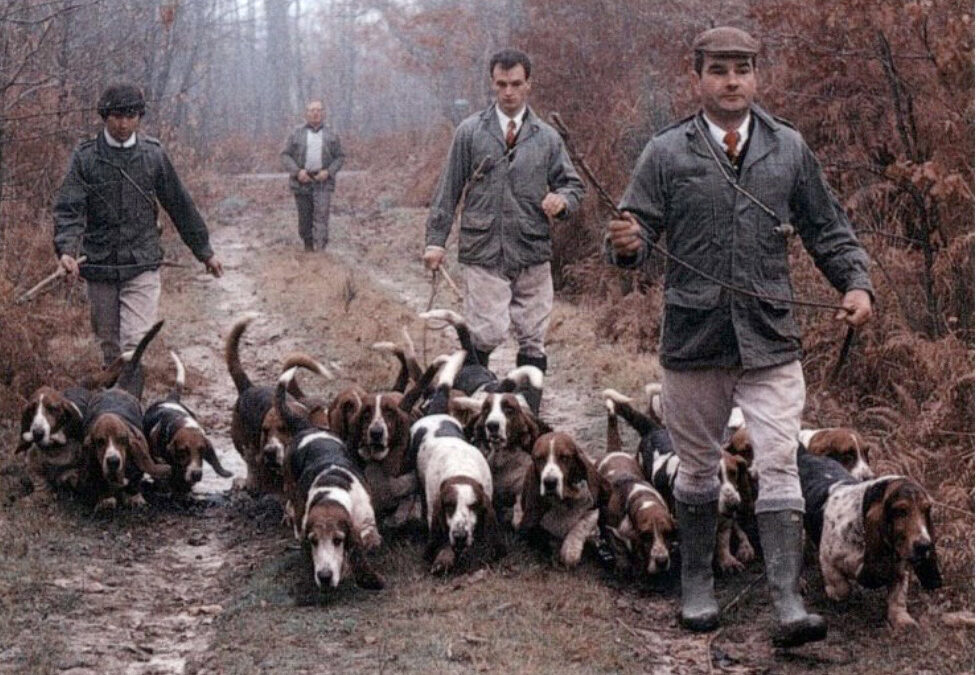
Perhaps one of the most recognizable AKC breeds, the basset hound is an ancient dog that is thought to have originated in roughly 700 A.D. in the Ardennes region of France. Known earlier as St. Hubert Hounds, these low-legged dogs were bred by the friars of the St. Hubert Abbey and were primarily used for hunting rabbits. The word “bas,” when translated from French to English, means low or dwarf. Basset hounds were used to assist hunters who were walking on foot and needed a low-slung dog to flush the rabbits out of briars and brush. The basset could have originally been a mutation of other hounds, including the bloodhound, who is the only other hound that can outsniff them.
During the 1700s and 1800s, the basset hound became the dog of the French aristocracy, for whom hunting was a way of life. Marquis de Lafayette even gifted George Washington a basset hound during the Revolutionary War. The breed made its way to England and came to the United States by way of Red Bank, New Jersey, in 1883. The American Kennel Club recognized them as a breed in 1925, and the Basset Hound Club of America was formed in 1935. The official breed standard of the basset has not changed since January 1964.
The intentional breeding down of this hound breed made it ideal for the hunting job that it was used for. Basset hounds were meant to be able to hunt for long periods of time, so while they may be stubborn out on a walk, they should have endurance. Their heads should be domed with long velvety ears used to stir up and collect the scent. While they should not be over 14 inches in height, they should have large, flat feet that make them steady in the hunt and heavy, round bones that make them sturdy. Some less scrupulous breeders breed overexaggerated “knuckled over” front legs, which is not what a basset should look like. They also should have a massive, strong chest used to push through the weeds, brush, and briars. The average adult weight should be roughly between 45 and 60 pounds. The Basset Hound Club of America recommends that when looking for a puppy, you look for a breeder who tests their breeding stock for glaucoma, Thrombopathia, Mucopolysaccharidosis I (MPS I), Lafora Disease, and has hip and elbow orthopedic certifications.
While they are known for their gentle demeanor, being loyal to their owners and families, and being very sociable, the basset hound is, at all times, a hound! They love to sniff things out and will need the mental stimulation of being allowed to do so. Given the chance to get out and walk and sniff daily, the basset hound then becomes a couch potato. As with most scent hound breeds, bassets hunted in packs. They will view your family as their pack and make wonderful family pets.
To learn more about the basset hound, or if you would like to bring one into your life after seeing 300 of them in Ocean City, visit the Basset Hound Club of America’s web page to find a reputable breeder.
If you have any questions, please feel free to email me at heidi@fouronthefloordogtraining.net.
Heidi Clayton started Four On the Floor Dog Training to provide positive, reward-based dog training in South Jersey. She breeds, trains and shows bull terriers under the SoraBully’s Bull Terriers kennel name. Email questions to heidi@fouronthefloordogtraining.net or learn more at https://fouronthefloordogtraining.net