

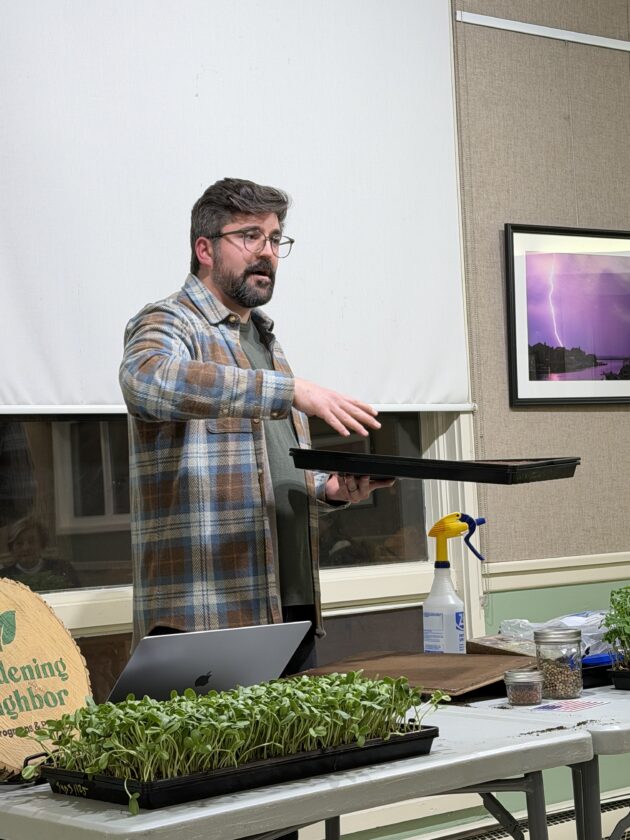
Members of the Green Thumb Garden Club of Somers Point braved frigid temperatures on Tuesday, Feb. 3, to learn from local farmer Adam Brusky, owner of Gardening Neighbor, as he shared his knowledge of growing microgreens. Brusky rolled in with trays of sunflowers and pea shoots as part of his display, and curious garden club members could hardly wait for the presentation to begin before asking questions. Fortunately, Brusky was able to educate the crowd on all aspects of microgreens, including a demonstration of how to grow them at home.
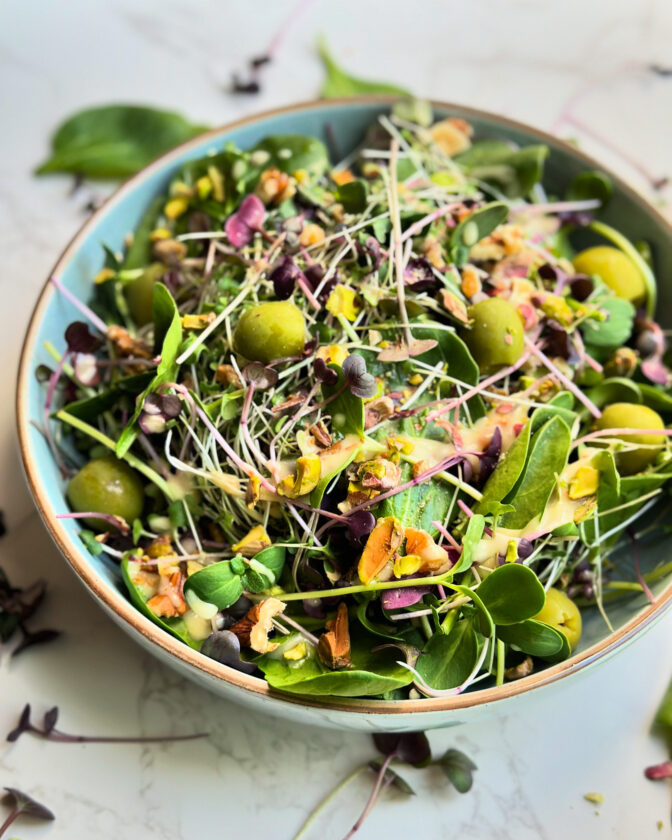
Microgreens are the nutrient-dense seedlings of vegetables and herbs which are harvested soon after their first leaves appear. After germination, these seedlings can be ready for consumption in as little as 10 to 12 days, just after the cotyledon (first leaves) develop. At this point, the microgreens will typically only be about one to two inches tall. Brusky explained how microgreens differ from sprouts and baby greens. Sprouts are often grown in water, without light, and the entire seed, root, and shoot are eaten a few days after planting. Microgreens usually require a growing medium and light. They are cut just above the soil line and only the cotyledon leaves and stems are used. While both are nutritious, microgreens usually have a richer flavor and longer shelf life. Baby greens are harvested later, after the true leaves form and require more time and space to grow. Microgreens can be used as garnishes and will elevate your favorite dishes. You can also get creative and use specific microgreens that will complement the flavor of the main ingredient.
Since Brusky grows microgreens for his Egg Harbor Township business, Gardening Neighbor, commercially, he uses large shelves with growing lights to handle multiple trays of plants. This provides him with a ready supply to fill orders, sell at farmers markets, and have fresh stock available for local chefs. While his presentation showed gardeners how to grow microgreens using this large-scale method, he was also able to demonstrate that, for personal use, you can also simply grow a small container of microgreens on your sunny windowsill. All you need is a container with drainage holes and some potting soil. Microgreens are great plants for the impatient gardener, since you can enjoy your harvest in under two weeks. Beginners may want to start with seeds that are fast germinators for success and instant gratification. Radishes, peas, sunflowers, and kale will grow quickly. Once you gain more confidence, you can move up to seeds such as cilantro, basil, or Swiss chard, which will all take a little longer to grow. Brusky joked that these more difficult types of microgreens are packed with flavor and frustration!
Although Brusky gave detailed information about growing your own microgreens, you may decide to forego growing them yourself and buy them ready-to-go. Microgreens can be found at grocery stores, but Brusky cautions that they may be packed wet, which could lead to them getting moldy and having a short shelf life, lasting only a few days. However, if you harvest your own or purchase microgreens from a local farmers market, they can last two to three weeks in the refrigerator.
If you would like more information about microgreens, you can contact Mr. Brusky at: www.gardeningneighbor.com.
Tammy Thornton lives with her husband, children, and crazy pets while enjoying a life of gardening, cooking, and going to the beach.