
As we huddle under blankets and layers of clothing during these snowy, icy days, we should remember our feathered friends who remain outdoors searching for food. During the winter months, birds must change their diet from juicy bugs and caterpillars to accessible food such as seeds and nuts. Especially after a snow followed by freezing temperatures, many of their food sources will be limited, covered by layers of ice. Offering birds high-energy and high-fat foods during the winter months will help them survive the cold until spring, when natural sources of food will be more readily available.
Although it may seem as though some of the familiar songbirds have left us during the winter, many have remained but are unrecognizable in their winter wardrobe. Our state bird, the American goldfinch, can be easily picked out of a crowd in the spring and summer months, with the male birds donning vibrant yellow and black feathers, hoping to catch the eye of their female friends. Their winter ensemble, however, changes to a drab olive-brown, making them less conspicuous to predators by helping them blend in with their surroundings. This winter plumage is also denser, giving them extra protection from the cold. In addition to goldfinches, you may spy house finches, chickadees, nuthatches, Carolina wrens, robins, tufted titmice, cardinals, blue jays, mourning doves, sparrows, and various woodpeckers and warblers. Cardinals’ coloring remains as vibrant as ever in the winter, and I love to see the contrast of the bright red feathers of male cardinals against the white snow.
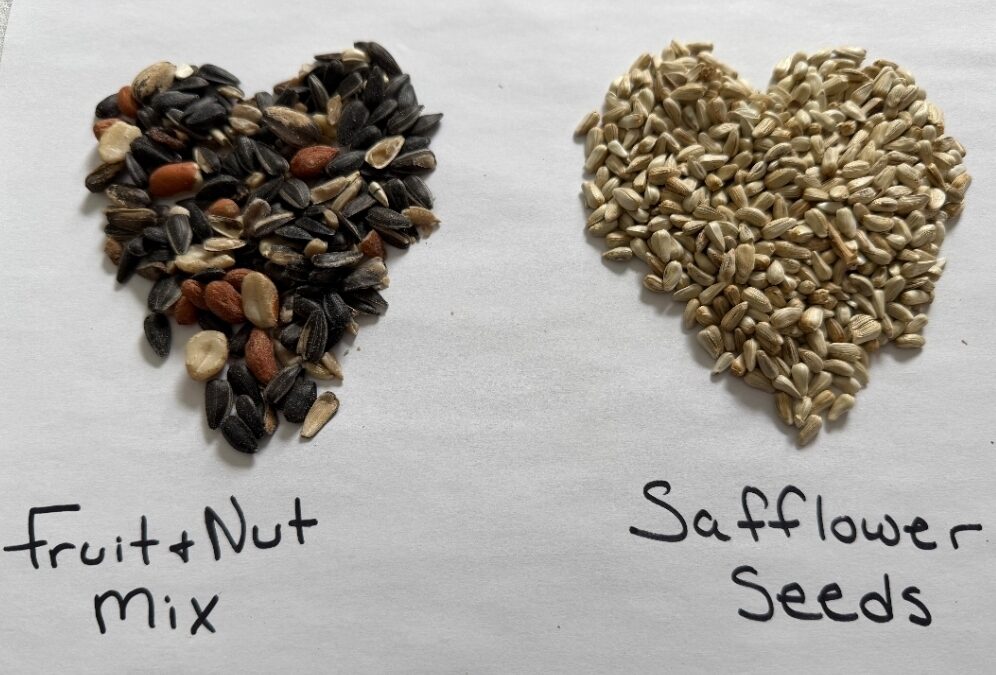
So what should you feed your backyard friends in the winter? Black oil sunflower seeds, peanuts, suet, and sunflower seeds are among the best high-energy sources for birds during the cold months. Since birds burn a great deal of their fat reserves during cold nights, they need to replenish these reserves during the day with high-fat and high-protein foods. My favorite seed types to offer the birds in my own backyard are a fruit and nut mix in my “squirrel-proof” feeder and safflower seeds for use in the more accessible feeders. Also, be sure to fill your birdbaths frequently during freezing temperatures. Though birds can eat snow, this also causes them to expend a lot of the energy that they need to conserve. I recently filled several of my birdbaths with fresh water and was surprised to see birds racing to get a spot to drink. In no time, I counted twelve robins and other birds vying for position around the birdbaths. This was a good reminder of how desperate they were for a fresh water source since everything around us was frozen solid.
In addition to bird seed, providing natural food sources from your garden will not only help birds to survive the winter, but will make them feel at home for nesting in the spring and summer. Robins go crazy for holly berries, and if you believe the old wives’ tale, this old wife could have told you that it was going to be a harsh winter, based on the fact that all of the American holly trees around us were covered in those bright red berries. South Jersey songbirds also enjoy winterberries, bayberries, juniper/cedar berries, and chokeberries. To my surprise, my backyard birds were also enjoying the berries from my euonymus shrubs. Towards the end of the gardening season, refrain from deadheading your flowers, because the seed heads will also provide food for these wintering birds. The seeds of coneflowers, black-eyed Susans, asters, sunflowers, marigolds, and zinnias will all be a welcome treat for these little birds.
If you decide to offer bird seed in the winter, be consistent, since these songbirds may rely on this food during the coldest months. Also be sure to keep your birdbaths and feeder clean. Hopefully, in the spring, these same birds will know that they are in a safe, welcome place to call home and will thank you with their sweet serenades. We only need to hang on a little longer, since in seven Sundays, it will be spring! We would love to hear from our readers. Which birdseed or seeds growing in your garden are attracting birds to your home? Send your questions and comments to shorelocalgardener@gmail.com.
Tammy Thornton lives with her husband, children, and crazy pets while enjoying a life of gardening, cooking, and going to the beach.