Family Tides
Sensory play has become something of a parenting buzzword lately, popping up everywhere from social media feeds to community events advertising hands-on activities for young children.
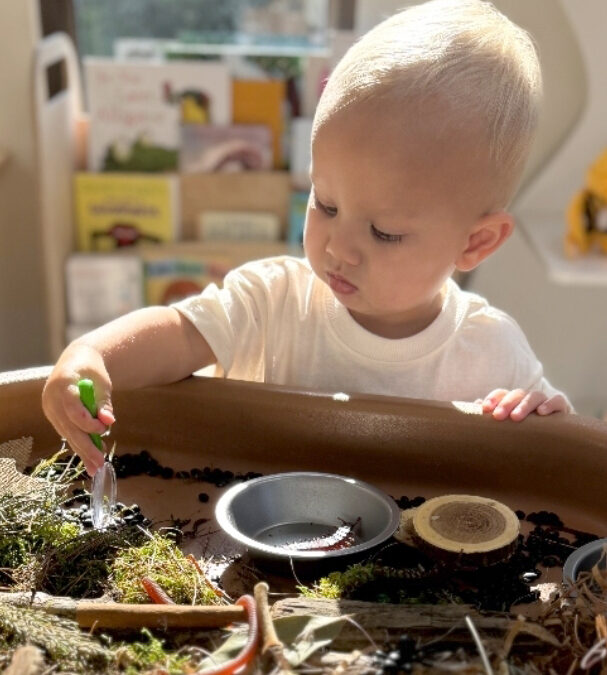
But what might look like simple mess-making with slime and rice bins to outsiders is actually a meaningful learning opportunity — sensory play encourages open-ended play, nurtures creativity and supports cognitive growth, emotional regulation, language development and more.
“As a buzzword for most people, sensory play just looks like a sensory bin — rice, chickpeas, pouring, scooping. And yes, while that’s part of it, I like to think of sensory as a whole. So, it’s your environment, smell, sound and feeling. Sensory is all the inner workings in your body connecting with the environment,” said Jasmine Ross, a local occupational therapist who creates sensory dough kits and offers sensory classes through her company, Busy Hands Dough Co.
Sensory play typically focuses on activities that engage a child’s senses such as sight, sound, taste, touch and smell. Ross said sensory play is important because it’s “how the child learns about their environment and the world around them” and aids in developing foundational skills.
“A child’s daily occupation, per se, is play. Play is everything to them from the moment they’re born all the way up until full development,” explained Ross. “It’s how they learn about life and the environment around them, and that starts with their hands and sometimes their mouth; it’s play exploration.”
Simple activities like scooping and pouring in a rice bin build early math skills as children explore volume and cause and effect, learning how much fits and what happens when it overflows. Mistakes become part of the process.
“It’s building fine motor skills, early literacy, language skills, crossing the midline, early math skills [and] emotional regulation,” Ross said.
Inspired to pursue occupational therapy by her mother, who also worked in the field, Ross founded Busy Hands Dough Co. during the COVID-19 pandemic as a way to keep her two eldest children — then ages 2 and 6 months — engaged.
She soon discovered that her food-grade, nontoxic, preservative-free sensory dough kits, which she still makes by hand to this day, were also beneficial for her older occupational therapy patients, particularly those with Alzheimer’s disease and dementia.
“I started making kits and bringing them into my therapy groups once I did go back to work,” Ross explained. “I always say that I wholeheartedly believe in sensory across the lifespan.”
Since then, Ross has reached many more little hands through Busy Hands sensory kits, her pop-up events and the weekly sensory class she offers at The Kindly Co in Linwood.
“I like to intentionally design my sensory kits to engage children in open-ended play opportunities that support early childhood development. All sensory play classes are deeply rooted in occupational therapy principles and support the child where they are developmentally, all within a low-pressure environment,” Ross said.
Though occupational therapists are trained to develop activities with specific goals and adapt them to create certain experiences for a child, Ross said parents and caregivers have plenty of opportunities to engage children in sensory play at home.
“Truth be told, the kids will be entertained with a pot of water and a spoon. Everyday household items can be sensory play,” said Ross. “The magic is in the interaction with your kids and the simple materials and how you connect with them. Anything in the room can be meaningful play; it’s just how you use it.”
Ross said she often tries to involve her children in everyday tasks such as cooking.
“When I’m cooking in the kitchen, I try to incorporate the kids in that activity because cooking is a very hands-on sensory activity,” she said, adding that sometimes she’ll give her youngest a pot with a little water and flour and let him stir it with a spoon and pretend he’s cooking. Other times, she’ll put out a piece of cheese with cookie cutters.
“Then they’re eating it too, so then they’re tasting it. And now I just created a whole multisensory activity,” Ross said.
While making a mess can be part of the experience, Ross acknowledged that some parents may be hesitant to embrace messy play at home, noting that her workshops and pop-up events provide spaces where children can engage in sensory play without the added stress of cleanup.
Busy Hands Dough Co. sensory kits are sold locally at Bright Stars Academy in Egg Harbor Township, The Kindly Co in Linwood and Bowfish Studios in Ocean City, or can be purchased online at busyhandsdoughco.com.
Ross is hosting a Valentine’s Day-themed sensory event at Express Pizza in Ocean City on Feb. 7 from 10:30 a.m. to 12 p.m., where children will make heart-shaped pizza. After cooking, kids can explore a sensory DIY dough table to create chocolate- and strawberry-themed sensory dough to take home. Register on the Busy Hands website.
Ross also teaches a two-hour sensory and open-play class at The Kindly Co on Fridays from 9:30 to 11:30 a.m. Registration is required, and classes often fill up quickly. For more information, visit thekindlycoplay.com.
For information on upcoming sensory events and pop-ups, follow busyhandsdoughco_ on Instagram.
Photo courtesy of Jasmine Ross
Madison Russ is an award-winning journalist, copy editor and adjunct professor of communication based in Atlantic County. An Ocean City native, Madison is passionate about telling stories that matter to locals, often spotlighting nonprofits and exploring the area’s vibrant arts scene.