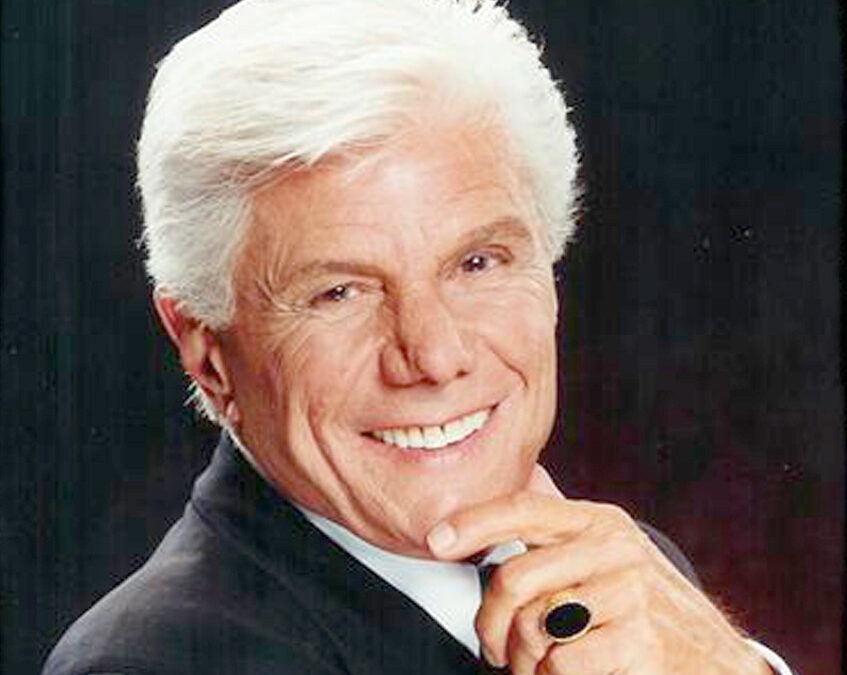
Although entertainers Frank D’Rone and Frankie Randall were different stylistically, they also had a lot in common. Both were singers and instrumentalists with a jazz orientation. Both were protégés – Randall of Frank Sinatra, and D’Rone of Nat “King” Cole. Both faced career challenges with the advent of The Beatles and both, in their own way, helped shape the Atlantic City entertainment scene of the 1980s and 1990s.
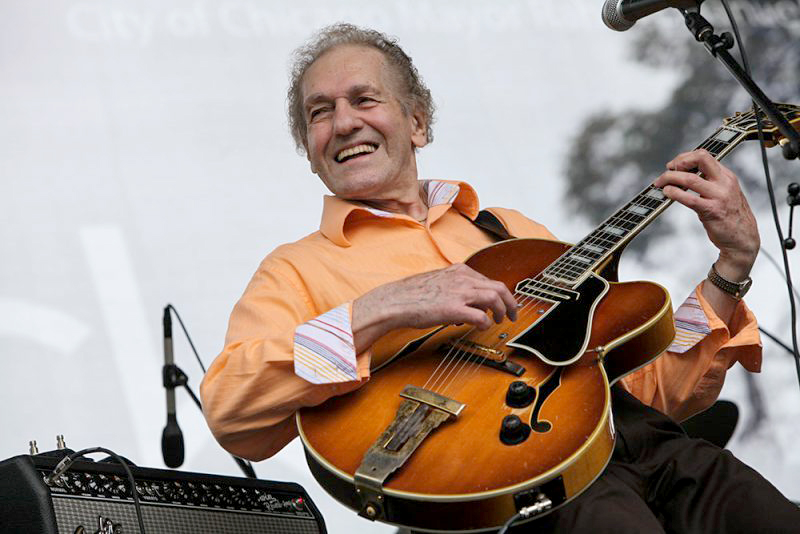
Frank D’Rone was a singer and first-rate jazz guitarist who was performing in his native Providence, R.I., from the age of 5. He worked with a variety of no-name New England road bands, but didn’t begin making a name for himself until he moved to Chicago in 1957.
His playing and singing in the Chicago area caught the attention of Mercury Records, as well as star vocalist/pianist Cole, around 1958. Although his early singles for Mercury were geared to the teen market, his real breakthrough came with the release of “Frank D’Rone Sings” in 1959. Cole wrote the liner notes calling D’Rone, “a singer with an individual sound that invites no comparisons.”
D’Rone did well for a number of years. He recorded for Columbia Records, and made countless television appearances on “The Tonight Show,” and other programs.
Things changed for D’Rone when The Beatles came on the scene. Mark Stryker, in a profile of D’Rone that appeared in Jazz Times magazine, explained what happened.
“Despite his gifts, D’Rone never broke the glass ceiling of being a singer’s singer,” Stryker wrote. “Like many others who straddled the jazz/pop faultlines, he got buried by the British Invasion and the hegemony of rock in the ’60s. After his Mercury contract ended, he made a few youth-oriented singles for Columbia that went nowhere. A single LP for Cadet in 1968 was his last recording until the 1980s.”
But D’Rone always worked. One of his frequent performance spots was Elaine’s Lounge inside the original Golden Nugget on the Boardwalk. D’Rone became an Atlantic City favorite. Musicians and celebrities, including Sinatra, would pack the room to hear the master.
Despite what may have been career setbacks, he continued to evolve artistically. What listeners heard at Elaine’s was the work of a true jazz artist.
“He leaned more into jazz in later years,” according to Stryker, “often scat-singing in unison with his guitar. If you caught him live, count yourself privileged. If you didn’t, the records await.”
Frank D’Rone, beloved by Atlantic City audiences, died in 2013 at the age of 81.
Frankie Randall
Frankie Randall was one of the few performers in the world of jazz who also became a successful casino executive.
He had the smarts, musically and otherwise, having graduated from Fairleigh Dickinson University with a degree in psychology.
He apprenticed as a jazz pianist and Sinatra-styled singer, at Sinatra’s favorite New York haunt, Jilly’s, where he was “discovered” by the man himself. Sinatra raved about him, which led to a contract with Roulette Records, then with RCA, in 1964.
“I could not believe I was in the same room with him – and he was listening to me play the piano,” Randall told the Fairleigh Dickinson alumni magazine in 2003.
Like D’Rone, he did very well for a while, which included writing the theme song for the television series “Flipper,” appearing in bit parts in a few movies and guesting frequently on Dean Martin’s 1966 summer variety show.
Then came the British Invasion. He tried making the transition to pop, at least on record, and recorded something for RCA called “The Mods and the Pops” in 1968. The results were forgettable.
Las Vegas was a haven for middle-of-the-road performers like Tony Bennett, Steve and Eydie and many others who had been pushed aside – at least in terms of having major label record contracts – by The Beatles and similar groups. Randall was one of those performers. He became a regular in the Vegas lounges and caught the attention of Golden Nugget owner Steve Wynn.
In 1982, two years after Wynn brought the Nugget to the Atlantic City Boardwalk, Randall was hired to perform for a four-week engagement. Wynn was impressed by the audience’s response to Randall, and a year later, asked Randall to become the Golden Nugget’s entertainment director. “I asked Frank Sinatra to be the first act,” he remembered. “Frank appeared regularly at the Nugget, and we brought the casino from the seventh-ranked property to number one in Atlantic City.”
Randall then became vice president for Bally’s Grand Hotel and Casino – Bally’s bought the Nugget in 1987 – while continuing to perform. “It was a wonderful time when I represented the hotel and performed regularly.”
When Bally’s Grand became a Hilton in 1996, Randall’s time in Atlantic City was basically over. He continued performing and working for Wynn in Las Vegas, but began spending more and more time in Palm Springs, where he became known as “Frank Sinatra’s pianist.” By that point, he told the Fairleigh Dickinson magazine, “I am in a position in my life where I take only the jobs I know I will enjoy.”
Frankie Randall died in 2014 at the age of 76.
It was a golden time for Atlantic City entertainment when Randall and D’Rone were on the scene. D’Rone defined what good, jazz-oriented lounge entertainment was about; and Randall, by way of his work as a performer and executive, made the Golden Nugget the centerpiece of Atlantic City entertainment.
These unique and extraordinary talents defined the template for what the city’s entertainment would be for nearly 20 years. Though tastes have changed, and time has moved on, their music and their contributions to the city remain timeless.
Bruce Klauber is the author of four books, an award-winning music journalist, concert and record producer and publicist, producer of the Warner Brothers and Hudson Music “Jazz Legends” film series, and performs both as a drummer and vocalist.