
From record heat and extreme humidity to damaging storms, wildfire and drought, 2025 was a year of weather extremes along the Jersey Shore. Some events were brief but intense, while others unfolded over months with lasting impacts. Ranked from 10 to 1, these were the most significant weather events of the year.
10) Fortescue’s stifling high dew point on July 25
Fortescue, jutting into Delaware Bay in Cumberland County, saw bay waters in the 80s combine with sultry southern winds to push dew points to 88 degrees. Heat indices soared to 121 degrees at 4 p.m. Even at 8 p.m., it felt like 109 degrees.
Most New Jersey locations have never recorded an 88-degree dew point, making this localized event impactful enough for the top 10.
9) Severe heat to severe weather on July 25
Inland highs reached 100 degrees (Toms River), with most areas in the mid-upper 90s. That evening, a powerful cold front triggered severe thunderstorms, downing trees and power lines in Ocean and Monmouth counties. Beach Haven saw a waterspout; Seaside Park gusted to 66 mph.
8) White Christmas drought continues
For the 16th-straight year, most of the Jersey Shore had no White Christmas (at least 1 inch of snow on ground Christmas morning) – the longest streak on record. Here were the last ones.
Atlantic City Airport: 2009
Long Branch: 2009
Lower Township: 2000
7) Impressive late winter cold
Feb. 18-20 brought the latest three-day sub-freezing streak in decades. At Atlantic City Airport, State Marina and Lower Township, it was the latest since 1993. Airport and Long Branch stayed below 30 degrees all three days, last seen in 1980.
6) June 21-25 heat wave
Atlantic City Airport hit 102 degrees on June 24-25 – the third-earliest triple-digit heat streak on record, and second-earliest for 102 degrees. It was the first back-to-back, 100-degree or greater days since July 2011, breaking daily records on June 23 (98 degrees), 24, and 25.
The beaches felt it, too: Atlantic City Marina reached 93 degrees (June 23, first 90 degrees since 2022) and tied a record at 95 degrees (June 25). During the June 21-26 wave, both sites set records for warmest nighttime lows.
5) Oct. 12-13 nor’easter
This is the first of two big tidal flooding events of the year. Powerful onshore winds caused bay water to stack up, flooding five consecutive high tides as water couldn’t fully drain.
Waretown (Ocean County) recorded its highest tide since records began in 2018, with several gauges hitting top 10 levels since 2000. Roads flooded in unusual places.
In Sea Bright, 18 people were rescued from 12 vehicles on Ocean Avenue. Gusts exceeded 50 mph in Atlantic City, Harvey Cedars, Little Egg Harbor and Seaside Heights on Oct. 12-13; Sea Girt hit 51 mph.
Six of 81 inspected beaches sustained major erosion; eight more had moderate.
4) Whipping winter winds
I cheated for this one, but since the strongest winds were after December 2024, I’ll count it for 2025.
December-March wind speed averages at Atlantic City and Ocean County airports were the highest since 2010-11. It was Lower Township’s windiest since 2017-18.
January set a record with 16 days of 40+ mph gusts across the NJ Weather Network. The winter tied or set the most wind advisories record from the National Weather Service for Atlantic/Cape May since 2006.
During the Feb. 16-17 wind event, Atlantic City International Airport howled at 71 mph. That gust was the second-highest winter gust since 1943. Plus, over 200,000 were without power statewide.
Despite perceptions, though, long-term data shows no overall increase in windiness.
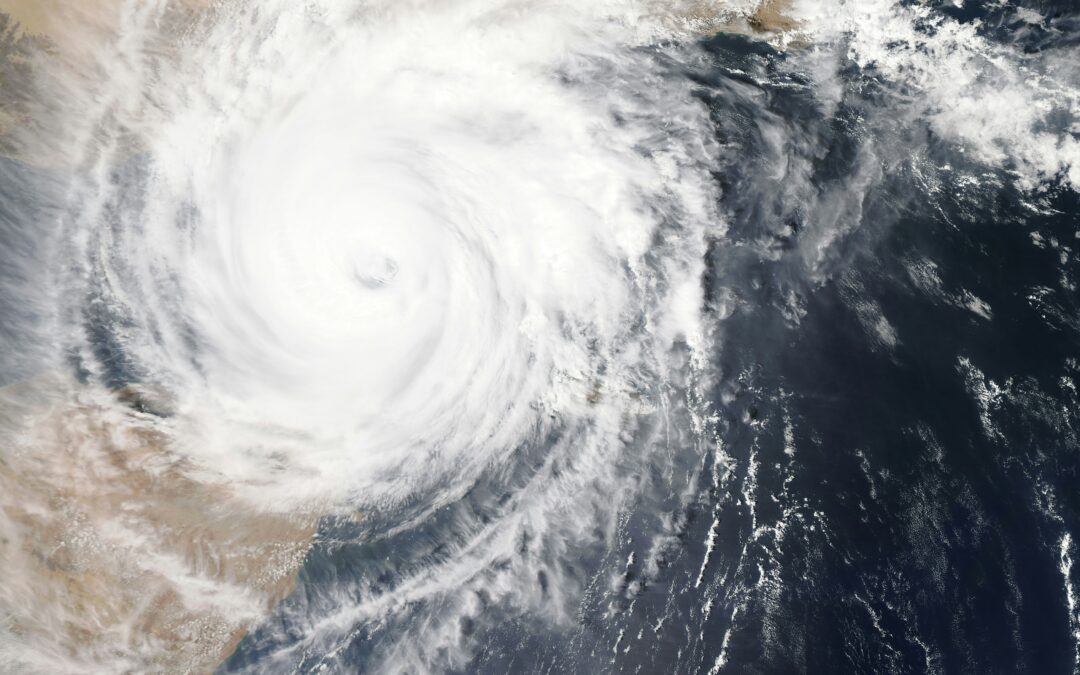
3) Hurricane Erin Aug. 20-22
Likely the most impactful hurricane with virtually no rain in shore history, the eye of the storm was always at least 400 miles away from the Jersey Shore.
It still brought record summertime tides in Atlantic City, Absecon, Sea Isle, Stone Harbor and Cape May (bayside). Elsewhere, it was the highest since Tropical Storm Irene made landfall in August 2011.
Beaches were closed Aug. 20-22, 50 water rescues occurred in Margate. The Black and White Horse Pikes between Atlantic City and the mainland had water rescues, too.
Waves reached 10-15 feet with extremely long, 15+ second wave periods.
Nine beaches saw moderate erosion. Thankfully, there were no fatalities.
2) The April Jones Road Fire
The Jones Road Fire was spotted at 9:45 a.m. on April 22. It ranks as New Jersey’s 14th-largest wildfire, burning over 23 square miles – or more than 15,000 acres – in Ocean County.
Two teenagers sparked it by failing to fully extinguish a bonfire. Dry conditions, strong winds and low humidity fueled rapid spread.
Thousands evacuated and the Garden State Parkway closed. One commercial building and outbuildings burned, but no homes or lives were lost. Firefighters contained it on May 12, 2025.
New Jersey saw 662 wildfires from Jan 1 to April 25 – twice the previous year’s total – due to abnormally dry conditions, per the United States Drought Monitor.

1) Drought
The Jones Road Fire was caused, in part by the drought. The first four months of 2025 continued the significant drought that ramped up severely during the driest fall on record in 2024.
Voluntary water restrictions were in place. New Jersey American Water Co. urged customers to reduce water usage.
The United States Drought Monitor had at least part of the Jersey Shore in one of the four stages of drought until May 20. An “extreme drought,” the second highest level of drought, gripped Ocean County south to Cape May until early March.
Groundwater from the Kirkwood-Cohansey aquifer in the southern half of the shore counties was “extremely dry” through May. Streamflows at the Jersey Shore were “extremely dry” for 32 weeks in a row to start off the year.
The NJDEP ended the Drought Warning in the state on June 11. This was thanks to the fifth wettest May on record dating back to 1895. However, it was only temporary as it got dry again.
A Drought Warning returned to the state on Dec. 5. Voluntary water restrictions are back in place. Extremely dry streamflows and groundwaters returned during the fall for most of the Jersey Shore. As of Dec. 29, most of Cape May County joins the western half of the state in drought according to the United States Drought Monitor.
More than likely, December will wind up drier than average. That puts a lot of pressure on January and February to have more precipitation than average. If not, more fires like the Jones Road one threaten going into spring.
Finally
Dave Robinson, the state climatologist, and I will compare our top 10 during our Monthly Weather Roundup. Look for that on the Cup A Joe Weather and Drone website as well as social media channels on Dec. 30.
Joe Martucci, a certified broadcast meteorologist and digital meteorologist, is also the president and director of meteorology for Cup A Joe Weather and Drone. You can connect with him at www.cupajoe.live.