
Remembering the 1968 message that gripped the world
It was Christmas Eve 1968 and the crew of the first manned space flight to the Moon was almost ready to come home.
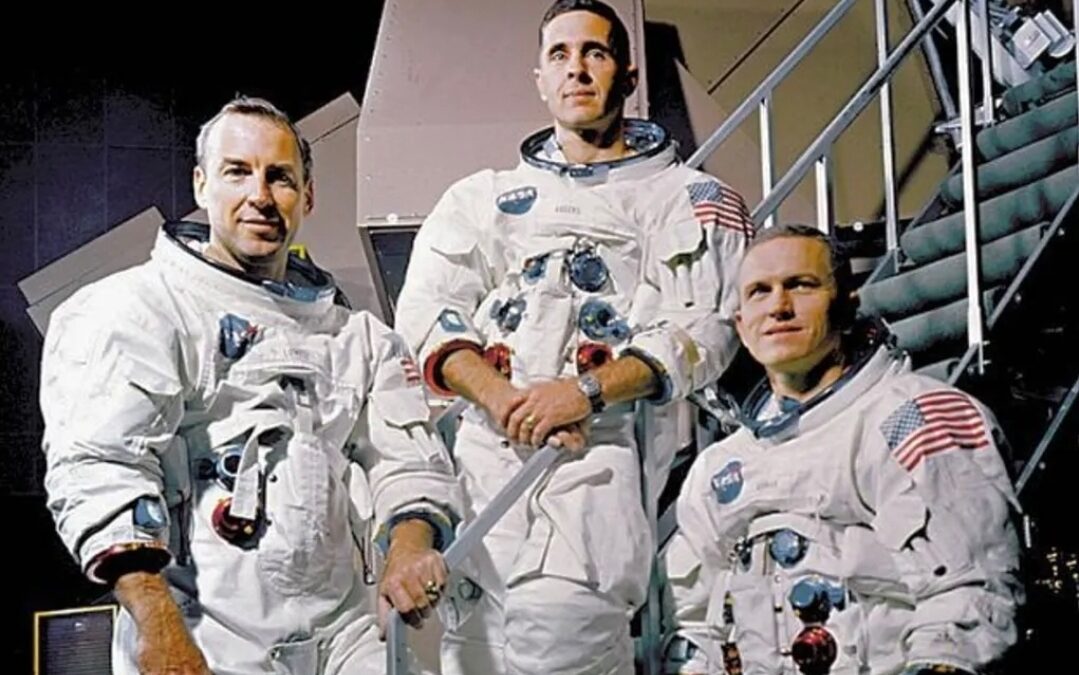
Astronauts Frank Borman, Jim Lovell and William Anders were orbiting the Moon aboard Apollo 8, the 18th manned space mission in NASA’s buildup to the Apollo 11 lunar landing.
Although projects Mercury, Gemini and now Apollo had made many manned space flights, this was historic, being the first to fly beyond Earth orbit and making the 239,000-mile journey to the Moon.
An important part of the flight plan was a Christmas Eve message to the world. At 9:30 p.m. Tuesday, Dec. 24, as the spaceship was completing the ninth of its 10 lunar orbits, the crew went live on television to a global audience estimated at 1 billion – the largest ever for a single broadcast.
What happened next will be remembered as one of the most poignant Christmas Eve moments of all time.
It was a troubled time in America. Dr. Martin Luther King Jr. had been assassinated in April, Robert F. Kennedy was shot to death in August, riots were becoming commonplace and communism was on the rise in Europe and Asia.
“The Vietnam War, protests, assassinations and upheaval throughout the country led many persons abroad to question whether the vaunted American system might be on the verge of decay and disintegration,” wrote Teasel Muir-Harmony, in a Dec. 11, 2020 post about Apollo 8 on smithsonianmag.com.
The NASA public affairs office was well aware of the significance of the moment, and advised Borman, the mission commander, that he should be prepared, but they didn’t give him much to work with. Years later he recalled that his only instruction was to “say something appropriate.”
With so much at stake, and so little to go on, Borman consulted several trusted friends and associates in search of the right words.
Borman understood the political ramifications of the moment – that it wasn’t just about science and curiosity. It was also about countering the rise of communist and Soviet power that threatened freedom around the world, reported Muir-Harmony, author of “Operation Moonglow: A Political History of Project Apollo,” and curator of the Project Apollo collection at the Smithsonian National Air and Space Museum.
With no satisfactory answers at hand, it was Christine Laitin, the wife of a friend of a friend, who came up with the idea of reading from Genesis. Her idea: “‘Why don’t you begin at the beginning?’ – which the crew ultimately did,” Muir-Harmony wrote.
At 9:30 p.m., after a brief description of what they were seeing out the window, the three astronauts took turns reading from a script, typed on fireproof paper that had been tucked away in the flight plan, written around the first 10 verses of the Book of Genesis from the King James Bible, opening and closing with Christmas greetings.
No one knew how such a message would be received, but the response was overwhelming.
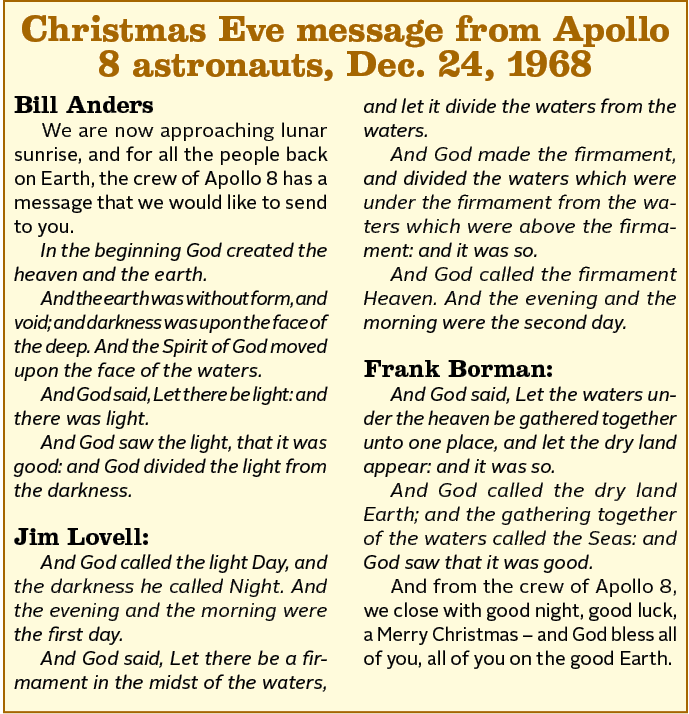
NASA received thousands of telegrams, letters and cards in response to the message. One often-cited telegram stated, “You saved 1968.” International media also covered the broadcast, with a BBC correspondent describing it as “a stroke of genius.”
In 2008 Lovell, speaking at a 40th anniversary Apollo 8 event, said it was important that it was inclusive.
“The first 10 verses of Genesis is the foundation of many of the world’s religions, not just the Christian religion,” Lovell noted.
It resonated with opinion writers, too. On Dec. 25, The Washington Post wrote:
“In a year that has often seemed to be a series of disasters, the flight of Apollo 8 is a triumphant finale… It was as if, in the reading of those ancient verses from the first chapter of Genesis, the crew of Apollo 8 had found a way to bridge the distance between the most primitive beginnings of our species and its most sophisticated reach toward the stars.”
Walter Cronkite agreed. In an interview with PBS, Cronkite, a fixture on CBS space flight broadcasts, recalled that he was skeptical at first about whether the approach was appropriate. But before it was done, he had tears in his eyes.
“It was really impressive and just the right thing to do at the moment. Just the right thing,” Cronkite said.
Apollo 8 gave the world another gift, although the impact of this one wouldn’t be known for some time after the Dec. 27 splashdown.
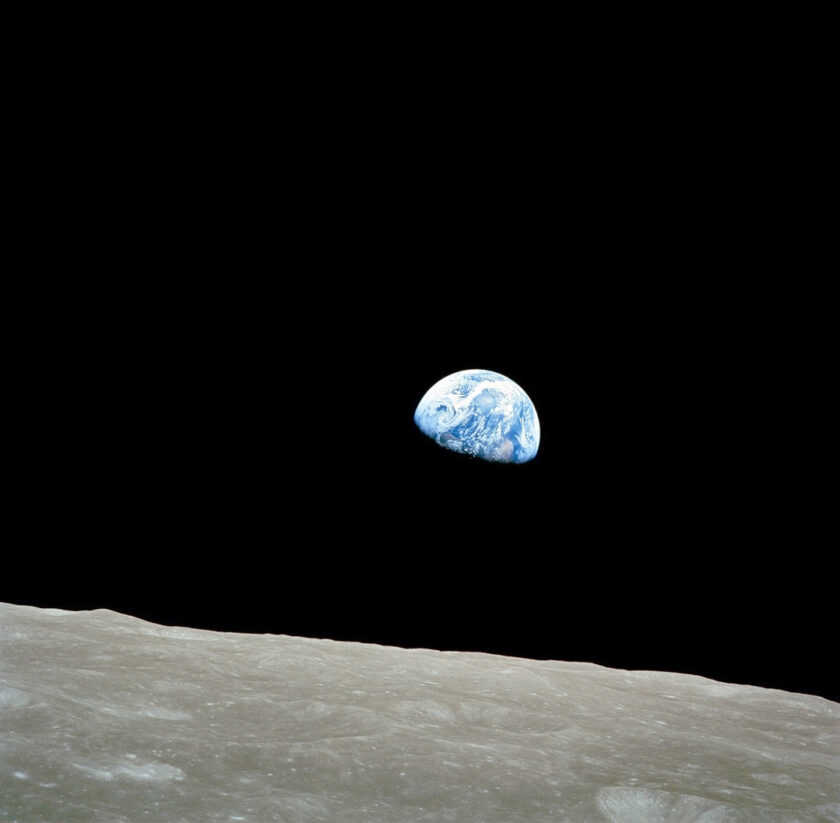
It happened on the spaceship’s fourth orbit as it emerged from the far side of the Moon. The crew was rotating the spaceship, making the Earth visible in the windows for the first time.
Astronaut William Anders looked outside.
“Oh my God! Look at that picture over there! There’s the Earth comin’ up. Wow, is that pretty!” Anders said to his crewmates.
It was the bright side of the Earth, beyond the moon horizon.
He scrambled to load some color film into his Hasselblad camera and snapped off three shots.
The Earth, looking like a small, fragile, blue, white and green ball was something that had never been seen before. Space probes had photographed it, but not in color. It would go on to become one of the most iconic and influential photos of all time.
“Earthrise,” as the astronauts called it, helped spark the global environmental movement.
On Anders’ passing in June of 2024, writer Madelyn Dooley, writing in earthday.org, credited the photo with the widespread success of the first Earth Day in 1970.
“The photo was a catalyst for the founding of the modern environmental movement, and just over one year after ‘Earthrise,’ the world celebrated its first Earth Day – 20 million inspired Americans, 10% of the country’s population at the time – participated in demonstrations protesting and spreading awareness about environmental degradation.”
Major changes later followed including the Environmental Protection Agency, the Clean Air Act and the Clean Water Act.
Life magazine later called it one of the 100 photographs that changed the world, and the acclaimed wilderness photographer Galen Rowell called it “the most influential environmental photograph ever taken.”
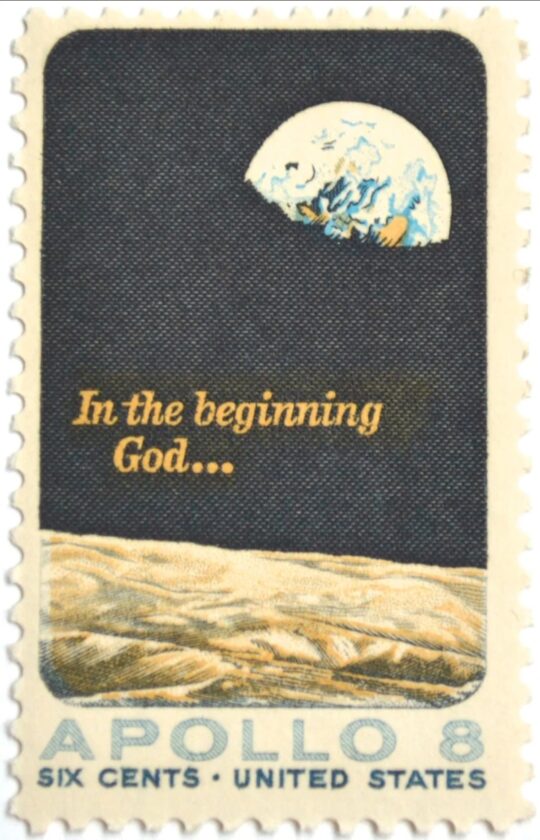
When in 1969 the United States Postal Service created a stamp to commemorate the Apollo 8 flight, it used “Earthrise,” and the words: “In the beginning God…” to create its design.
Anders later said: “We came all this way to explore the Moon, and the most important thing is that we discovered the Earth.”
Copy editor and Contributing Writer James FitzPatrick has been a community journalist in Atlantic and Cape May counties for more than 30 years, including 20 years as editor of The Current Newspapers. He lives in Hammonton.