Remembering When
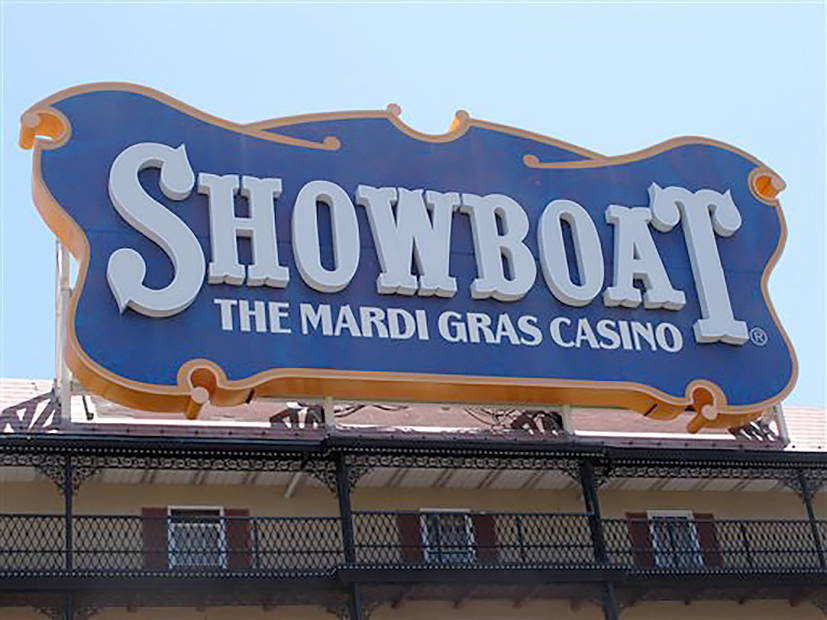
Recently, a friend of mine asked if what is currently called Showboat Hotel Atlantic City would one day re-acquire the gaming license it voluntarily forfeited when it closed in that darkest of casino-era years, 2014.
In an instant, I mentally accessed all the data I possessed on the subject. Then, I mustered an air of authority and replied, “I have no idea.” But the question definitely got me thinking about what was, when it opened on March 30, 1987, Atlantic City’s 10th hotel-casino.
The Showboat was the last gambling den to debut during what might be called the local gambling industry’s first phase. The next to open, almost three years later to the day, was Trump Taj Mahal Casino-Resort, which, along with Steve Wynn’s Mirage in Las Vegas, launched the modern era of the mega-casino.
What was then called Showboat Hotel Casino & Bowling Center was based on the original Showboat in Las Vegas. Like its predecessor, what was then the easternmost gaming hall on the Boardwalk had a Mississippi Riverboat theme. The interior was heavy on gilded décor and flocked wallpaper, but its most striking accoutrement was the 60-lane, state-of-the-art bowling alley that occupied a large swath of the second level (Showboat Las Vegas had had great success with its bowling facility).
The idea, as it was explained at the time, was that the bowling alley was a way to keep gamblers on property longer and also offer something for those (including kids) who did not hit the casino floor. Ultimately, the idea never quite caught on here the way Showboat suits had expected/hoped; the lanes were shut down in 2001 and replaced by a coffee shop and new buffet.
That’s show biz
Elsewhere, Showboat had the requisite high-end restaurants and other amenities common to casinos of that era. However, it did not have a dedicated headliner-size venue in the manner of the Superstar Theater at what is now Resorts Casino Hotel, or the famed Copa Room at the 18-years-gone Sands Hotel & Casino–probably because it never emphasized such entertainment.
However, it did occasionally host performers in its Mississippi Ballroom, most notably show biz legend Bob Hope, who performed there as part of the grand-opening festivities (also on the bill was New Orleans-style jazz trumpeter, Al Hirt). Another memorable booking was that of another New Orleans-bred musical legend, Rock & Roll Hall of Famer Fats Domino.
The Showboat’s other performance space was the Bourbon Street Lounge, which was a traditional casino saloon with a small stage. For several years in the 1990s, it was the home of the Basin Street Follies, which was a no-frills variety show whose talent roster changed every two weeks. Each bill would feature a singer and comic as well as jugglers, acrobats, magicians and similar specialty acts.
These shows offered guests the opportunity to see members of the last generation of “Borscht Belt” comedians like Mal Z. Lawrence and Freddie Roman. But one young standup artist who performed in an edition of the “Follies” was a then-unknown young man from Queens named Ray Romano.
Showboat’s biggest dive into the show business pool occurred in 2005 when then-owner Harrah’s Entertainment (now Caesars Entertainment), opened a branch of House of Blues, the chain of high-profile concert halls whose initial ownership team included Dan Aykroyd, John Candy and Jim Belushi.
During its nine years of operation, House of Blues presented a Who’s Who of pop and rock artists; among those who played there were Counting Crows (who christened the room); The Allman Brothers Band; Huey Lewis & The News; The Roots; Billy Idol; Lynyrd Skynyrd; Stone Temple Pilots and Alanis Morrisette.
Betting on history
Showboat was never positioned as a cutting-edge facility (except for its bowling center), but it did make history when, in 1993, it opened Atlantic City’s first legal horse-betting parlor. However, other properties soon followed with their own race books, so the impact on its bottom line was not necessarily dramatic.
Doubling down on a theme
While the spirit of New Orleans was present from the day Showboat opened, in the summer of 1995, it went all-in with it as a major expansion/renovation project with a Mardi Gras theme was completed. A second hotel tower, dubbed the Orleans Tower, opened, and much of the casino-level main concourse, which ran from the Boardwalk to Pacific Avenue, was lined with a series of New Orleans-themed animatronic characters.
A puzzling end
During its 37-year run as a gambling den, Showboat was never the market’s revenue champ, but neither was it awash in red ink. It mostly was a profit-generator, which made Caesar Entertainment’s decision to close it something of a head-scratcher.
Caesars’ C-suiters claimed they made the move in order to shore up the bottom lines at the other AyCee properties it owned at the time, Bally’s Atlantic City, Caesars Atlantic City and Harrah’s Resort Atlantic City. The company turned out the lights on Aug. 31, 2014, putting some 2,000 employees out of work.
At first, Caesars could find no buyers for the Showboat. But on Dec. 13, 2014, Stockton University purchased the property whose deed included the prohibition of it being reopened as a casino. But legal red tape ultimately put the kibosh on the school’s plans to create on the site a full-blown campus that included student housing.
In January 2016, Philadelphia-based real estate developer Bart Blatstein purchased the complex and began its transformation into the family-friendly attraction it is today.